THE CLASSIC COLLECTION✦The Countess FannyCLASSIC FREE BOOKS
The Countess Fanny
Marjorie Bowen
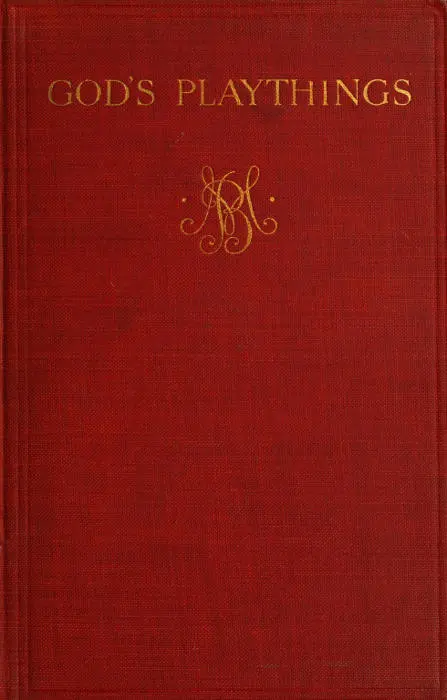
THE CLASSIC COLLECTION · 1913
"God's Playthings" by Marjorie Bowen is a historical novel written in the early 20th century. The narrative opens with the dramatic tale of James Scott, Duke of Monmouth, a historical figure involved in a rebellion against King James II of England, exploring themes of ambition, loyalty, and the tragic consequences of political intrigue. The story introduces Duke Monmouth's complex character, characterized by both noble aspirations and deep vulnerabilities, as he navigates the perils of his rebellion and confronts the bitter reality of his fate. The opening of "God's Playthings" immerses readers in a rich historical tapestry, vividly portraying the events surrounding Monmouth's rebellion. It begins with a letter from Monmouth, revealing his desperation and hope for mercy from the King, illustrated against the backdrop of betrayal and shifting loyalties. As the narrative progresses, it delves into Monmouth's internal struggles, depicting his reluctance to engage in treachery despite the urgings of others, ultimately leading to a poignant climax of existential questions about identity and legacy. This early portion effectively sets up a dramatic and emotionally charged story that promises to explore the intersections of personal ambition and tragic downfall.
Introduction adapted from the source catalogue; source summaries may be automatically generated.
Free to read · English · 76,247 words · No account needed
MAKE TIME FOR A GOOD BOOK
On by default. Untick to stop anonymous reading totals. Each page counts after 10 seconds in view. How this works.
Anonymous counting is on unless you have switched it off.
They found a rope and tied his arms behind him, and with the ends of this rope struck him across the shoulders. The important official, nursing a smarting face, was incoherent in the coarse violence of his abuse.
The woman trembled at the edge of the group, stupidly afraid.
“Who is he?” she asked again and again.
They took the question up.
“Who are you? Scélérat!”
“One who has served the Republic,” he replied, white with the pain of
his close-bound arms.
They pushed him into the centre of the room while they paused to consider what they should do with their prize, and as he stood there, swaying a little, but upright, the light was full on his face, which had once been so famous in Paris.
The stern outlines, the dark colouring, the fiery expression were the same; unwashed, unshaven, starved as he was, the little timid man, who had lived in Paris, recognised him.
“Deauville! Deauville!” he shrieked to his master, dancing in his excitement, “it is Condorcet! Condorcet!”
The Marquis made no denial; his silence was confirmation and he meant it to be; he knew that he was face to face with the end and he was for no further subterfuge; he had tasted already of the depths of humiliation, he was enduring the extreme of bitterness; there was nothing further to lose or gain in this world for Marie Jean Nicolas de Caritat.
Presently, while some were arguing about his identity, he said in his rough broken voice, with the clear accent that they hated–
“I am Condorcet. Make an end of it.”
They had no more doubts; his face and his voice had betrayed him more completely even than his twelve eggs and his Latin Horace; they were elated at the capture of a man so long unsuccessfully searched for; they drank together, congratulating each other.
Only the woman serving them noticed the prisoner–noticed the cords cutting his wrists, the drop of pain on his brow, the effort he was making to keep upright on his feet.
In a dim, vague way she was aware of the mental torture he was enduring, compared to which the torture of cord and bleeding feet was slight; she felt that this was a proud man enduring the extremity of humiliation and that no more awful bitterness could be imagined in this world.
“He suffers,” she said under her breath, “he suffers.”
Presently they started; four men and the two from Bourg-la-Reine, towards which town’s prison they turned.
Condorcet was in the middle; the four with the prisoner went on foot,
the others on horseback.
Your reading position is saved on this browser. Take it to another device with a library code. Reading pages adapt to text, rather than matching a printed edition.
Marjorie Bowen
Marjorie Bowen
Marjorie Bowen
Marjorie Bowen
BEHIND THE BOOK
This eBook is for the use of anyone anywhere in the United States and most other parts of the world at no cost and with almost no restrictions whatsoever. You may copy it, give it away or re-use it under the terms of the Project Gutenberg License included with this eBook or online at www.gutenberg.org. If you are not located in the United States, you will have to check the laws of the country where you are located before using this eBook. Read the source licence.
The original source file, including credits and licence, is retained by this library. Request an original-format copy at no charge. Please include the book title and Project Gutenberg identifier #49504.
KEEP YOUR CURIOSITY GOING
Cécile Tormay

Moritz Busch
Coulson Kernahan
John L. Ransom

Maurice Baring
Frances Wright