THE CLASSIC COLLECTION✦The Countess FannyCLASSIC FREE BOOKS
The Countess Fanny
Marjorie Bowen
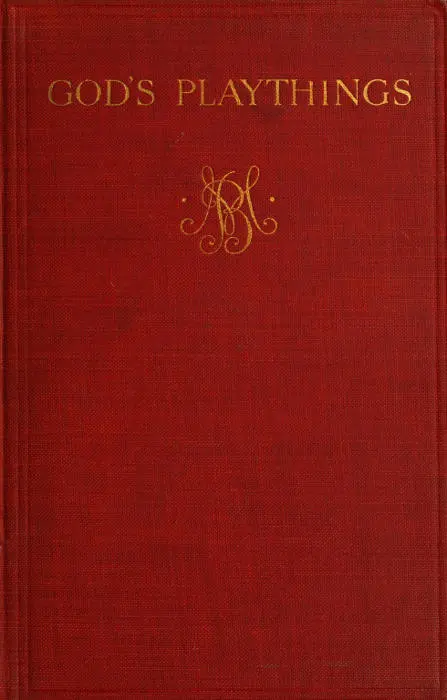
THE CLASSIC COLLECTION · 1913
"God's Playthings" by Marjorie Bowen is a historical novel written in the early 20th century. The narrative opens with the dramatic tale of James Scott, Duke of Monmouth, a historical figure involved in a rebellion against King James II of England, exploring themes of ambition, loyalty, and the tragic consequences of political intrigue. The story introduces Duke Monmouth's complex character, characterized by both noble aspirations and deep vulnerabilities, as he navigates the perils of his rebellion and confronts the bitter reality of his fate. The opening of "God's Playthings" immerses readers in a rich historical tapestry, vividly portraying the events surrounding Monmouth's rebellion. It begins with a letter from Monmouth, revealing his desperation and hope for mercy from the King, illustrated against the backdrop of betrayal and shifting loyalties. As the narrative progresses, it delves into Monmouth's internal struggles, depicting his reluctance to engage in treachery despite the urgings of others, ultimately leading to a poignant climax of existential questions about identity and legacy. This early portion effectively sets up a dramatic and emotionally charged story that promises to explore the intersections of personal ambition and tragic downfall.
Introduction adapted from the source catalogue; source summaries may be automatically generated.
Free to read · English · 76,247 words · No account needed
MAKE TIME FOR A GOOD BOOK
On by default. Untick to stop anonymous reading totals. Each page counts after 10 seconds in view. How this works.
Anonymous counting is on unless you have switched it off.
“Ruler and Master of Florence, Friar, even as Lorenzo was Ruler and Master, even as the Medici were great are you great, and to-day you have had proof of it.”
“Who are you?” demanded Frà Girolamo.
“One who loved Lorenzo and found Florence pleasant in his days.”
“I did not hate Lorenzo–I would have saved his soul.”
“You refused him absolution!”
“Because,” replied the Friar, “he would not repent of his sins.”
The stranger laughed impatiently.
“Usurper! You hold his place, while his son, at the Borgia’s footstool, eats in Rome the husks of charity.”
Frà Girolamo answered sternly, while the light of enthusiasm kindled to
red fire in his eyes.
“Who are you who speak for the wicked? Piero de’ Medici abused his power; he would have sold our liberty to the French–lustful, vain, hollow; he was banished Florence for his sins and a price put upon his head. Woe to this city if he returns! At the Borgia’s footstool, you say! It is fitting that such a prince should fly to such a Pope!”
The stranger came a short step nearer and loosened his hand on his hood so that his face was visible to the Friar, who observed that he wore one of the hideous masks of the Medicean Carnival, mottled and spotted to represent a plague-stricken countenance; he noticed the Friar’s start of aversion and laughed again.
“This should have gone to feed yonder pyre!” he said. “Oh, credulous Friar, do you think that you have burnt all the sins in Florence?”
Girolamo Savonarola answered simply.
“I have done what God put it into my heart to do. Let Him judge me. For you, ask me what question you would have answered, or if this is but idleness, let me on my way.”
“This is your day of triumph,” said the other man with a passionate ring in his voice. “You to-day have burnt all the Medici rejoiced in–painting, statuary, music, books, poetry, gay dresses, perfumes, cards and dice; and those people who praised Lorenzo for making this Florence so beautiful and splendid have danced round your pyre in gladness!”
Frà Girolamo regarded him steadily.
“Are not you also,” he asked gently, “pleased to see this city brought a little way to repentance?”
“Friar,” answered the stranger vehemently, “I am your enemy. I stand for all you would destroy–the lust of the world, the pride of the beautiful, the power of the devil. I am also a ruined, outcast, beggared man, one of those your rule has banished from Florence. If I were discovered I should be murdered, and that would be better than to starve in Rome.”
Your reading position is saved on this browser. Take it to another device with a library code. Reading pages adapt to text, rather than matching a printed edition.
Marjorie Bowen
Marjorie Bowen
Marjorie Bowen
Marjorie Bowen
BEHIND THE BOOK
This eBook is for the use of anyone anywhere in the United States and most other parts of the world at no cost and with almost no restrictions whatsoever. You may copy it, give it away or re-use it under the terms of the Project Gutenberg License included with this eBook or online at www.gutenberg.org. If you are not located in the United States, you will have to check the laws of the country where you are located before using this eBook. Read the source licence.
The original source file, including credits and licence, is retained by this library. Request an original-format copy at no charge. Please include the book title and Project Gutenberg identifier #49504.
KEEP YOUR CURIOSITY GOING
Cécile Tormay

Moritz Busch
Coulson Kernahan
John L. Ransom

Maurice Baring
Frances Wright