THE CLASSIC COLLECTION✦Marsena, and Other Stories of the WartimeCLASSIC FREE BOOKS
Marsena, and Other Stories of the Wartime
Harold Frederic
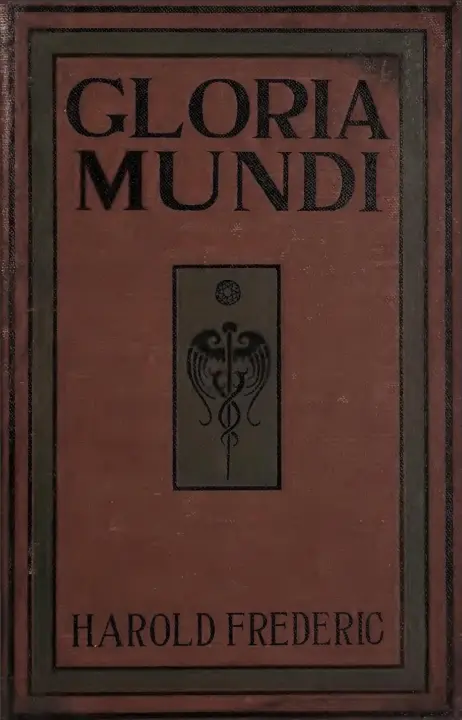
THE CLASSIC COLLECTION · 1898
"Gloria Mundi" by Harold Frederic is a novel written in the late 19th century. The story begins with the chance encounter of two main characters—an English-speaking young woman traveling in France and a young man who is excited yet anxious about his journey to England. Their meeting unfolds amidst misunderstandings and cultural differences, presenting a compelling exploration of identity, social class, and personal aspirations. At the start of the novel, we see the tension that arises when a young woman traveling alone in a reserved train compartment must confront a young man who inadvertently invades her space due to a ticketing mishap. As both characters navigate their initial misunderstandings, they engage in a hesitant but revealing conversation that highlights their unique backgrounds and feelings about their journeys. The young man, who is on the brink of a significant change in his life associated with an inheritance, finds himself inexplicably drawn to the young woman, who presents a blend of self-assurance and intellectual depth. Their interaction sets the stage for a deeper exploration of their identities and what each seeks in the world around them.
Introduction adapted from the source catalogue; source summaries may be automatically generated.
Free to read · English · 119,022 words · No account needed
MAKE TIME FOR A GOOD BOOK
On by default. Untick to stop anonymous reading totals. Each page counts after 10 seconds in view. How this works.
Anonymous counting is on unless you have switched it off.
Lady Cressage, meantime, had not quitted Caermere or disclosed any design of doing so, and it is there we return to her, where she sat at her ease under the palms in the glass-house, with a book open before her.
The spattering reports of a number of guns, not very far away, caused her presently to lift her head, but after an instant, with a fleeting frown, she went back to her book. The racket continued, and finally she closed the volume, listened with a vexed face for a minute or two and then sprang to her feet.
“Positively this is too bad!” she declared aloud, to herself.
Unexpectedly, as she turned, she found confronting her another young woman, also clad in black, even to the point of long gloves, and a broad hat heavy with funereal plumes. In her hand she held some unopened letters, and on her round, smooth, pretty countenance there was a doubtful look.
“Good-mornin’, dear,” said this newcomer. Her voice, not unmusical in tone, carried the suggestion of being produced with sedulous regard to a system. “There were no letters for you.”
There was a momentary pause, and then Lady Cressage, as if upon deliberation, answered, “Good-morning--Cora.” She turned away listlessly as she spoke.
“Ah, so it is one of my ‘Cora’ days, after all,” said the other, with a long breath of ostentatious reassurance. “I never know in the least where to have you, my dear, you know--and particularly this mornin’; I made sure you’d blame me for the guns.”
“Blame”--commented Lady Cressage, musingly--“I no longer blame anybody for anything. I’ve long since done with my fancy for playing at being God, and distributing judgments about among people.”
“Oh, you’re quite right about this shootin’ the home covers,” protested the other. “I gave Eddy a fair bit of my mind about it--but you know what he is, when once he’s headed in a given direction. You might as well talk soft to the east wind. And, for that matter, I was dead against his bringin’ these men down here at all--though it may surprise you to hear it.”
Lady Cressage, still looking away, shook her head very slightly. “No--I don’t find myself particularly surprised,” she said, with an effect of languor. “Really, I can’t be said to have given the matter a thought, one way or the other. It is neither my business nor my wish to form opinions about your husband’s friends. We were speaking of something else, were we not?”
Your reading position is saved on this browser. Take it to another device with a library code. Reading pages adapt to text, rather than matching a printed edition.
Harold Frederic
Harold Frederic
Harold Frederic
Harold Frederic
BEHIND THE BOOK
This eBook is for the use of anyone anywhere in the United States and most other parts of the world at no cost and with almost no restrictions whatsoever. You may copy it, give it away or re-use it under the terms of the Project Gutenberg License included with this eBook or online at www.gutenberg.org. If you are not located in the United States, you will have to check the laws of the country where you are located before using this eBook. Read the source licence.
The original source file, including credits and licence, is retained by this library. Request an original-format copy at no charge. Please include the book title and Project Gutenberg identifier #54988.
KEEP YOUR CURIOSITY GOING
Coulson Kernahan

Maurice Baring
Frances Wright
Cécile Tormay

Frederic Jesup Stimson

W. H. P. (William Henry Pope) Jarvis