
Last letters from the living dead man
David Patterson (Spirit) Hatch
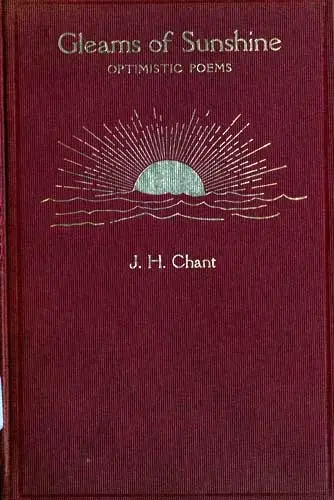
THE CLASSIC COLLECTION · 1915
"Gleams of Sunshine: Optimistic Poems" by Joseph Horatio Chant is a collection of poetry written in the early 20th century. The poems reflect themes of hope, faith, and devotion, with strong emphasis on the divine and the beauty of nature. The work serves as a testament to the power of optimism and the human spirit amidst life's trials, inviting readers to find joy and meaning in their experiences. The beginning of the collection presents an invocation that sets the tone for the poems to follow. The author expresses a longing for divine guidance in his poetic endeavors, acknowledging a higher purpose in his writing. Chant introduces his thoughts on universal brotherhood and divine care, weaving together themes of struggle, faith, and the beauty found in companionship and nature. The opening portion establishes a heartfelt connection to spirituality, suggesting that despite human flaws and challenges, there is a transcendent force guiding and uplifting the human experience.
Introduction adapted from the source catalogue; source summaries may be automatically generated.
Free to read · English · 21,691 words · No account needed
MAKE TIME FOR A GOOD BOOK
On by default. Untick to stop anonymous reading totals. Each page counts after 10 seconds in view. How this works.
Anonymous counting is on unless you have switched it off.
Her queenly heart with pity throbs
For every suffering subject's woes;
In lowly cot, 'midst groans and sobs,
She like a ray of sunshine goes.
As sweet perfume by outward gale
Is carried far o'er sea and land,
So queenly virtues never fail
To touch true hearts on every strand.
In every land, her name is blest;
She is beloved by old and young;
From pole to pole, from east to west,
The song, "God save the Queen," is sung.
Through sorrows deep her path has led,
And tender ties have sundered been;
Bright hopes were buried with her dead,
And love has kept their memory green.
By grief secluded from the world,
Her path through lonely years she trod,
And oft her life has been imperilled;
But she has leaned upon her God.
And as she wept a nation's tears
In heartfelt sympathy were shed;
Forgetting their own griefs and biers,
They wept beside the royal dead.
With grateful hearts her natal day
We loyal Britons hail again,
And join with millions as they pray
"God bless our Queen! Long may she reign!"
And when at last life's glories fade,
And robes of state are laid aside,
When nature's debt to dust is paid
And charms no more earth's pomp and pride,
May angel bands her spirit bear
Up to the palace of her King,
Where she a fadeless crown shall wear,
And the new song with rapture sing.
A stately church by pious hands erected long ago, Was found to lack a vesper bell, by which the poor might know The hour of prayer, the hour of mass, and who had lately died, The hour when gent and bonny lass, so timid at his side, Would stand before the surpliced priest, and twain would pledge their troth, The hour in which the priest would vent on heretic his wrath. The faithful then were called upon to bring from home and mine The metal for the holy bell, which must be strong and fine. In smelting pot of massive size they placed the needed ore; A molten mass it soon became, but ere in mould they pour, And thus provide a bell for God to grace His temple fair, In crowds the people came, to see the metal glowing there. Then as they passed, with hearts devout, each took a silver coin And dropped it in the glowing mass--no priest did this enjoin. They wished to show their grateful love to Him who bore their sin; A simple form which love took on, not done God's grace to win. Nor did they hope to win applause from priest and saintly friar; If God were pleased they asked no more, nor more did they desire; Nor did they deem their silver lost, though little dreamed they then The grand result of their small gifts, which now is known to men. Their coins were for a moment seen, like flakes of snow on sward, And then they melted out of sight, yet, seen by their blest Lord, They mingled with the glowing mass, and when in high church tower The bell was hung and daily rung, all people felt its power. Its booming tones were soft and sweet, and echoed o'er their hills In a grand symphony of praise, subduing all their wills, And calling forth from old and young a burst of rapturous praise. Their gifts, though small, were not despised; God turned them into lays. This world is one great smelting pot in which life's ore is cast, And from it God will some day bring a bell, destined to last And ring aloud in thunder tones wherever man is found. Oh, may we, by kind words and deeds, give it a silver sound! Each word though short, each deed though small, if for the Master's sake Are said and done, like silver coin, our blessed Lord will take, And skillfully will blend them with the coarser ore of earth, And grander music none have heard e'er since time had its birth. Then from this bell of silver tone will sound o'er hill and vale: "The work men do in Jesus' name is never known to fail."
Your reading position is saved on this browser. Take it to another device with a library code. Reading pages adapt to text, rather than matching a printed edition.
BEHIND THE BOOK
This eBook is for the use of anyone anywhere in the United States and most other parts of the world at no cost and with almost no restrictions whatsoever. You may copy it, give it away or re-use it under the terms of the Project Gutenberg License included with this eBook or online at www.gutenberg.org. If you are not located in the United States, you will have to check the laws of the country where you are located before using this eBook. Read the source licence.
The original source file, including credits and licence, is retained by this library. Request an original-format copy at no charge. Please include the book title and Project Gutenberg identifier #24605.
KEEP YOUR CURIOSITY GOING
David Patterson (Spirit) Hatch

David Patterson (Spirit) Hatch

David Patterson (Spirit) Hatch

Edwin Abbott Abbott

Richard Watson
T. G. (Theophilus Gould) Steward