THE CLASSIC COLLECTION✦My diaries, being a personal narrative of events 1888-1914, Part 2 (1900-1914)CLASSIC FREE BOOKS
My diaries, being a personal narrative of events 1888-1914, Part 2 (1900-1914)
Wilfrid Scawen Blunt
THE CLASSIC COLLECTION · 1900
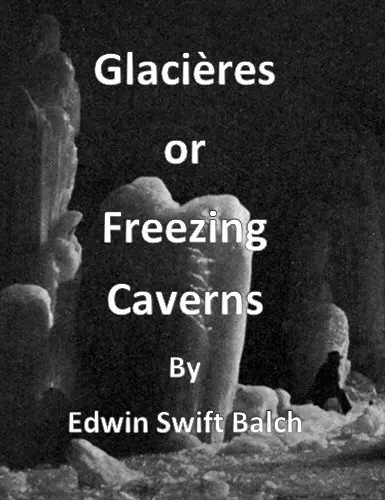
"Glacières; or, Freezing Caverns" by Edwin Swift Balch is a scientific publication written in the late 19th century. The book explores the phenomena of subterranean ice formations known as glacières, documenting the author's personal experiences and observations of various freezing caverns throughout Europe. Balch emphasizes the unique characteristics and environmental conditions that contribute to the formation and maintenance of these icy caves. At the start of the work, the author recounts his initial encounter with subterranean ice while descending King's Ravine on Mount Adams, where he was surprised to find ice present even in late summer. He then describes his travels through the Alps and visits to several glacières in France, capturing the details of each location's unique features, like ice columns and stalactites. This opening section not only sets the tone for an adventurous exploration of nature but also invites readers into a scientific inquiry about climatic conditions, geology, and the mesmerizing beauty found within these natural wonders.
Introduction adapted from the source catalogue; source summaries may be automatically generated.
Free to read · English · 80,213 words · No account needed
MAKE TIME FOR A GOOD BOOK
On by default. Untick to stop anonymous reading totals. Each page counts after 10 seconds in view. How this works.
Anonymous counting is on unless you have switched it off.
Freezing gorges, however, show, also, certain degrees of kinship to freezing caverns and taluses, principally in the protection afforded to the ice against external destructive influences. The ice is almost always found in positions where it receives little, if any, of the direct rays of the sun and, also, where it is scarcely, if at all, exposed to any winds. The sides of the fissures and surrounding trees generally afford the necessary protection. Some of the forms which the ice assumes in gorges, such as long pendent icicles, are also more characteristic of underground than of overground ice.
The freezing troughs or basins found in Siberia are evidently closely related to gorges, and the fact that the ice is found in less sheltered places may be explained by the high northerly latitudes of these troughs, in general between fifty-seven and sixty degrees.
The Winter's Cold Theory.--The places where ice is found underground differ in one important respect from gullies and troughs, and that is, in the fact that above the ice there is rock or soil, which, in true caves, takes the form of a roof. This causes some important distinctions between overground and underground perennial ice. It means that the ice is formed directly in the caves, and that it is genuine subterranean ice, and not, except perhaps near the entrance, solidified snow. The roof, while not admitting the winter snows, is, however, a protection against warm summer rains, and, of course, entirely cuts off radiation from the sky. If, therefore, it keeps out some cold, it also acts as a protector against heat.
That the cold of winter is the source of the cold which produces the ice which forms underground, and that it is through its influence, with the assistance of certain secondary causes, that some caves are converted into what are practically natural ice houses, seems to me the true explanation of the phenomenon of subterranean ice, not only since it is the simple and obvious explanation, but also because all the facts, so far as I have myself observed, are in accord with this theory.[56]
[56] Among those who have written or said that the cold of winter plays a more or less important part in the formation of subterranean ice may be mentioned: Poissenot, 1586; Gollut, 1592; DeBoz, 1726; Nagel, 1747; Cossigny, 1750; Jars, 1774; Hacquet, 1778; Girod-Chantrans, 1783; Hablizl, 1788; Prévost, 1789; Townson, 1797; Humboldt, 1814; Dearborn, 1822; Deluc, 1822; Dewey, 1822; Lee, 1824; Reich, 1834; Hayden, 1843; Guyot, 1856; Rogers, 1856; Petruzzi, 1857; Smyth, 1858; Hager, 1861; Thury, 1861; Browne, 1865; Raymond, 1869; Krenner, 1874; Ritchie, 1879; Benedict, 1881; Schwalbe, 1881; Fugger, 1883; Trouillet, 1885; Girardot, 1886; Russell, 1890; Martel, 1892; Krauss, 1894; Lohmann, 1895; Balch, 1896; Cvijic, 1896; Butler, 1898; Kovarik, 1898; Cranmer, 1899.
Your reading position is saved on this browser. Take it to another device with a library code. Reading pages adapt to text, rather than matching a printed edition.
BEHIND THE BOOK
This eBook is for the use of anyone anywhere in the United States and most other parts of the world at no cost and with almost no restrictions whatsoever. You may copy it, give it away or re-use it under the terms of the Project Gutenberg License included with this eBook or online at www.gutenberg.org. If you are not located in the United States, you will have to check the laws of the country where you are located before using this eBook. Read the source licence.
The original source file, including credits and licence, is retained by this library. Request an original-format copy at no charge. Please include the book title and Project Gutenberg identifier #52216.
KEEP YOUR CURIOSITY GOING
Wilfrid Scawen Blunt
Wilfrid Scawen Blunt

E. W. (Edgar Watson) Howe
Francis Greenleaf Allinson & Anne C. E. (Anne Crosby Emery) Allinson
Cyrenus Cole

John Martineau