THE CLASSIC COLLECTION✦My diaries, being a personal narrative of events 1888-1914, Part 2 (1900-1914)CLASSIC FREE BOOKS
My diaries, being a personal narrative of events 1888-1914, Part 2 (1900-1914)
Wilfrid Scawen Blunt
THE CLASSIC COLLECTION · 1900
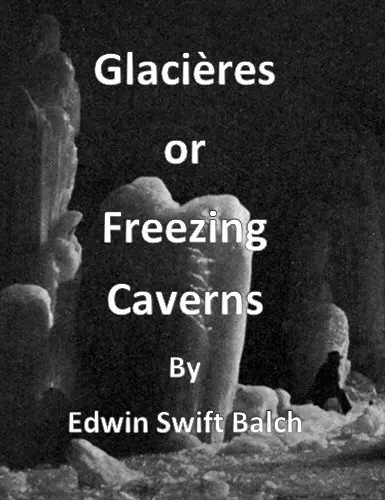
"Glacières; or, Freezing Caverns" by Edwin Swift Balch is a scientific publication written in the late 19th century. The book explores the phenomena of subterranean ice formations known as glacières, documenting the author's personal experiences and observations of various freezing caverns throughout Europe. Balch emphasizes the unique characteristics and environmental conditions that contribute to the formation and maintenance of these icy caves. At the start of the work, the author recounts his initial encounter with subterranean ice while descending King's Ravine on Mount Adams, where he was surprised to find ice present even in late summer. He then describes his travels through the Alps and visits to several glacières in France, capturing the details of each location's unique features, like ice columns and stalactites. This opening section not only sets the tone for an adventurous exploration of nature but also invites readers into a scientific inquiry about climatic conditions, geology, and the mesmerizing beauty found within these natural wonders.
Introduction adapted from the source catalogue; source summaries may be automatically generated.
Free to read · English · 80,213 words · No account needed
MAKE TIME FOR A GOOD BOOK
On by default. Untick to stop anonymous reading totals. Each page counts after 10 seconds in view. How this works.
Anonymous counting is on unless you have switched it off.
Ludchurch Chasm, Staffordshire. (R. K. Dent and Joseph Hill's Historic Staffordshire, quote Dr. Plot, 1686.)--Mr. Bunford Samuel called my attention to this book, in which Dr. Plot is quoted as saying that as late as the 17th of July, snow has been found in Ludchurch Chasm. Messrs. Dent and Hill do not mention anything of the kind as occurring now.
Blowing Cave in Denbighshire, Wales.--A newspaper cutting says that there are such strong eruptions of winds from a cave in this neighborhood as to toss back to a great height in the air any article of apparel thrown in.
Tin Croft Mine, Cornwall. (J. Prestwich, Collected papers, etc., page 206, quotes Mr. Moyle.)--Ice has been found in abundance in this mine at a depth of nearly 100 meters.
Glacière de Chaux-les-Passavant. Described in Part I., page 8. (Poissenot, Nouvelles Histoires Tragiques de Benigne Poissenot, licencié aux lois. A Paris, chez Guillaume Bichon, rue S. Jacques, a l'enseigne du Bichot, 1586, avec privilege du Roy, pages 436-453. Gollut, Les Mémoires historiques de la Repub. Sequanoise, et des princes de la Franche Comté de Bourgogne, par M. Lois Gollut, Advocat au Parlement de Dôle; A Dôle, 1592. Trouillet, Mémoires de la Société d'Émulation du Doubs, 1885. Girardot, Mémoires de la Société d'Émulation du Doubs, 1886.)
The earliest notice of a glacière which I have been able to find is in the shape of a letter giving an account of a visit to the Glacière de Chaux-les-Passavant in 1584, by Benigne Poissenot, a French lawyer. The account, which I have translated as literally as possible, is in a special chapter, as follows:--
"Sir:--Since our separation, I have had this pleasure (heut) to hear news of you only once, having found your brother in Paris; who, having assured me of your good health (disposition), informed me of how since we had seen each other you had travelled to Italy, even as far as Greece, of which you had seen a large portion: and that sound and safe, after so long a journey, you had reappeared and landed at Havre de Grace where you wished to go, that is to say at home. All the pleasure which a friend can receive, knowing the affairs of another self, joined to such a happy result, seized my heart, at the recital of such agreeable news: and I did not fail shortly after, to write you amply all which had happened to me since I left you until my return to France: congratulating you at having escaped from marine abysses and perilous passages on land, on which travellers are often constrained to risk their life. From this time, I have always stayed in Paris or in the neighborhood, according to the good pleasure of dame fortune, who ruled me in her wise and fed me with her dishes the most common and ordinary until the first day of January of the year 1584, when I received my first gift in the shape of a strong and violent disease, which tormented me more than a month: from which, having become cured with the help of God, and having with time recovered my health and my strength at the arrival of spring, I was seized with the desire to smell the air of the country. And in fact having thrown away my pen and travelled about (battu l'estrade) through high and low Burgundy, I stopped at Bezenson, Imperial City, to spend the summer. This city is still to day just the same as Julius Cæsar describes it, in the notable mention he makes of it, in the first book of his commentaries of the war in Gaul, there remaining there all the vestiges of the most remarkable things, which he tells of in his description. There are also very fine fountains, from all of which water streams from the representation of some god of antiquity, as a Neptune, a Bacchus, a Pan, a Nereide or others: except before the state house, where the statue of Charles the Fifth, representing him in a most natural manner, is placed on an eagle, which from its beak, pours out such a great quantity of water that this is the most beautiful, among all the other fountains. And as I do not doubt that while traversing Italy, you both saw and examined with curiosity the most handsome singularities, which presented themselves to your eyes and that on your return, passing through Avignon and Dauphiné, as your brother informed me, you had the advantage over me of seeing the wonders of the country, of which you had heard me speak sometimes, regretting that the war, during the time I was in that quarter, had prevented my going to the spot, to see the burning fountain as in Dodone, and the fountain called Jupiter, which torches of fire light up and which grows less till midday and then grows till midnight, and then diminishes and fails at midday: and another in Epirus which we call to day Albania, the tower without venom and the inaccessible mountain: then as I said, since you have contemplated these things and several others not less admirable, I wish to entertain you about a marvel which I saw, during my sojourn in Bezenson, to know from you, whether in all your journey, you saw a similar thing. Know then that the day of the festival of St. John Baptist, a young man, provided with an honest knowledge, with whom I had made some little acquaintance, presented me with an icicle, to cool my wine at dinner, and which I admired greatly, on account of the time of the year in which we then were, begging him who gave it to me to tell me where he had discovered this rare present for that time. He answered me that every year, the day of the solemnity of the festival of St. John Baptist, the inhabitants of a village, which he named, were bound to come to offer the great church of St. John of Bezenson, a goodly quantity of ice, which they got in a wood, and brought to town at night on horses, for fear that by day it should melt, and that one of his cronies had given to him what he had given to me.
Your reading position is saved on this browser. Take it to another device with a library code. Reading pages adapt to text, rather than matching a printed edition.
BEHIND THE BOOK
This eBook is for the use of anyone anywhere in the United States and most other parts of the world at no cost and with almost no restrictions whatsoever. You may copy it, give it away or re-use it under the terms of the Project Gutenberg License included with this eBook or online at www.gutenberg.org. If you are not located in the United States, you will have to check the laws of the country where you are located before using this eBook. Read the source licence.
The original source file, including credits and licence, is retained by this library. Request an original-format copy at no charge. Please include the book title and Project Gutenberg identifier #52216.
KEEP YOUR CURIOSITY GOING
Wilfrid Scawen Blunt
Wilfrid Scawen Blunt

E. W. (Edgar Watson) Howe
Francis Greenleaf Allinson & Anne C. E. (Anne Crosby Emery) Allinson
Cyrenus Cole

John Martineau