
A Son of Ishmael: A Novel
L. T. Meade
THE CLASSIC COLLECTION · 1900
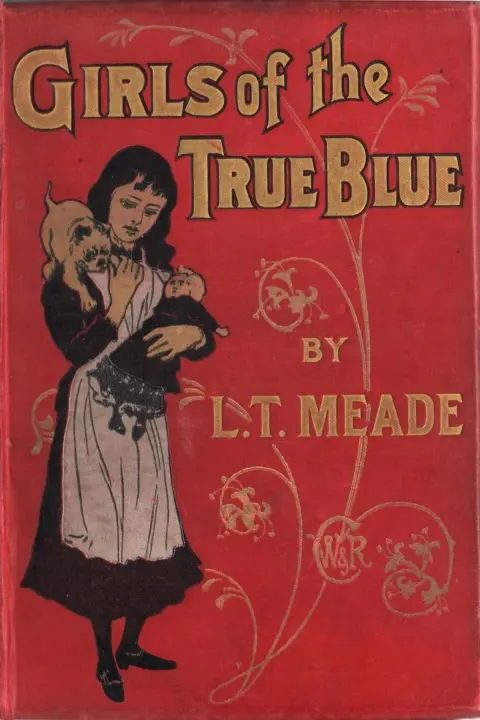
"Girls of the True Blue" by L. T. Meade is a novel written in the early 20th century. The story centers around Nan Esterleigh, an eleven-year-old girl who faces the turmoil of losing her mother and adjusting to a new life after her mother's death. The novel explores themes of grief, resilience, and the journey of childhood amidst personal challenges. The opening of the book introduces Nan during a poignant moment with her dying mother, showcasing her strong bond with her despite their dire circumstances. After her mother's passing, Nan's life transitions as she is taken in by Mrs. Richmond, who promises to care for her. Despite her grief, the narrative hints at Nan's determination to keep her mother's memory alive while struggling with feelings of being a "charity-girl." The early chapters also introduce new characters, such as the future cousin, Augusta Duncan, hinting at upcoming dynamics and challenges for Nan as she navigates her new life.
Introduction adapted from the source catalogue; source summaries may be automatically generated.
Free to read · English · 90,309 words · No account needed
MAKE TIME FOR A GOOD BOOK
On by default. Untick to stop anonymous reading totals. Each page counts after 10 seconds in view. How this works.
Anonymous counting is on unless you have switched it off.
No wonder the bird was dull and unable to sing. His water-trough was empty, and he had scarcely any seed left in his seed-drawer.
“Impossible!” said Miss Roy. “Nancy to forget the bird she loves so much! And yet I must believe my own sight.”
She felt very angry. Cruelty to dumb animals was the one sin she could not overlook. Taking the trough, she proceeded to fill it with water; and she was just replenishing the seeds when the door opened, and Augusta, singing a gay song, and carrying a bunch of groundsel in her hand, entered the room.
“Oh, Miss Roy, you here!” she cried. “I was bringing a piece of groundsel for Sunbeam. Why, what is the matter? Is the bird ill?”
“It looks like it,” said Miss Roy.
She did not want Augusta to share her discovery. But that young lady was a great deal too astute to be easily hoodwinked.
“Why, what is it?” she said. “What can be the matter?”
Then she went up to the cage, and made precisely the same discovery
Miss Roy had made.
“Oh, I say!” exclaimed Augusta. “How downright wicked!”
“I will put it right,” said Miss Roy, trembling a little. “Leave me the groundsel. Go—please go.”
A voice below shouted Augusta’s name, and she ran off. Miss Roy attended to the suffering bird, giving him seed and water and a nice bunch of groundsel. He began to eat and drink at once, and before she left the room she had the satisfaction of seeing that he was much revived.
“I will see to this matter myself,” she said under her breath. “There must be no dumb creature in this house liable to such neglect. Alas, how little one knows any one! Mrs. Richmond may have given that bad mark for just such another act of carelessness. It seems to explain things. But who would have thought it of Nancy?”
At lunch that day Augusta suddenly looked up and fixed her bright eyes
on Nancy.
“I have a crow to pluck with you,” she said.
“What is it?” asked the little girl.
“Come, Augusta,” said the Captain, “none of this! I am sure Nancy has not done anything wrong.”
“Oh, hasn’t she? You ask Miss Roy.—Miss Roy, don’t you think the little favourite wants a word of caution?”
“You ought not to call Nancy by that silly name,” said Miss Roy; but she looked uneasy and troubled.
Augusta said nothing more, but nodded in a very knowing way to Nancy. Immediately after dinner she rushed up to the child, slipped her hand through her arm, and pulled her aside.
Your reading position is saved on this browser. Take it to another device with a library code. Reading pages adapt to text, rather than matching a printed edition.
BEHIND THE BOOK
This eBook is for the use of anyone anywhere in the United States and most other parts of the world at no cost and with almost no restrictions whatsoever. You may copy it, give it away or re-use it under the terms of the Project Gutenberg License included with this eBook or online at www.gutenberg.org. If you are not located in the United States, you will have to check the laws of the country where you are located before using this eBook. Read the source licence.
The original source file, including credits and licence, is retained by this library. Request an original-format copy at no charge. Please include the book title and Project Gutenberg identifier #42556.
KEEP YOUR CURIOSITY GOING
Coulson Kernahan

Maurice Baring
Frances Wright
Cécile Tormay

Frederic Jesup Stimson

W. H. P. (William Henry Pope) Jarvis


