THE CLASSIC COLLECTION✦A dead man’s diaryCLASSIC FREE BOOKS
A dead man’s diary
Coulson Kernahan
THE CLASSIC COLLECTION · 1917
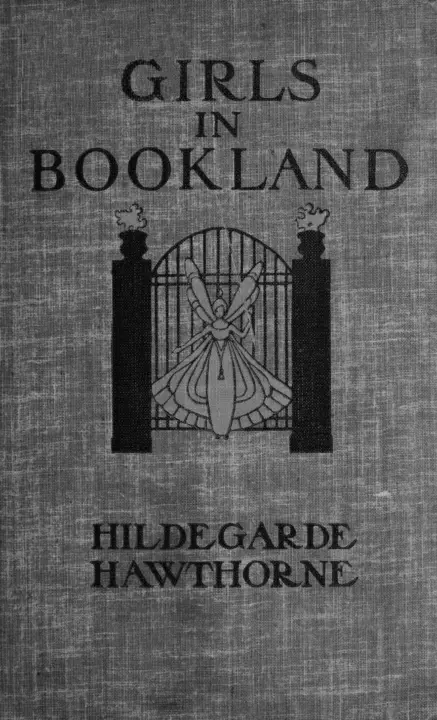
"Girls in Bookland" by Hildegarde Hawthorne is a fictional children's book written in the early 20th century. The story revolves around two sisters, Rose and Ruth, whose adventures lead them through magical realms via a mystical "Magic Gate," allowing them to interact with notable characters from literature, such as Sappho and Jo March from "Little Women." The themes explore the power of imagination, friendship, and the joy of storytelling. The opening of the book introduces Rose and Ruth as whimsical young sisters who feel lonely during a snowstorm at their ranch. They dream of adventure and desire to meet other children, expressing wishes for a magic carpet to take them to far-off places. Their longing for excitement becomes reality when a fairy advises them to journey through the Magic Gate, which promises to connect them with enchanting characters from different eras and stories. The girls soon find themselves embarking on adventures with characters such as Sappho, immersing themselves in her world in ancient Greece, setting the stage for further literary encounters throughout the book.
Introduction adapted from the source catalogue; source summaries may be automatically generated.
Free to read · English · 57,742 words · No account needed
MAKE TIME FOR A GOOD BOOK
On by default. Untick to stop anonymous reading totals. Each page counts after 10 seconds in view. How this works.
Anonymous counting is on unless you have switched it off.
“I am Deborah, the Rector’s eldest daughter,” she said quietly. “Perhaps you have never been in the house of a Rector before? It is a great pity that my honoured father is absent or you might be permitted to go in and curtsey to him. Peter ...” this somewhat sharply, addressing a slender lad in a blue coat with waistcoat and trousers of nankeen, who had pulled Ruth’s curls and was smiling mischievously as she looked from one side to the other, trying to catch her tormentor in the act.
“Deborah,” he returned, mincingly.
“Leave off your teasing ways,” she said, shaking her head. “He is a bad, wild boy, Ruth, if he is my own brother.”
“I don’t mind,” asserted Ruth, and she fixed a daring eye upon him. “Come near enough and I’ll pull your curls ... since you have them!”
He laughed, and took a seat beside her. Deborah turned back to Rose, who was looking curiously around at the circle of proper little maidens who were eating and drinking so very, very nicely, and seeming so exceedingly staid and grown-up.
“Don’t you ever make a noise?” she asked Deborah.
“Why should we make a noise?” Deborah’s face expressed genuine
amazement.
Rose sighed. She began to feel an irresistible impulse to leap up and give one good yell—Red Indian yell, she muttered to herself.
A little girl with exceedingly blonde curls, pink cheeks and blue eyes, a plump and pretty little face, whispered:
“Would you like to see the sampler I am working? It is very sweet—three rules for a good girl, the digits, the letters, and a rose.”
“Don’t boast, Matty,” chided Deborah.
“It isn’t boasting to say what it looks like,” retorted Rose, who began to dislike Deborah.
“Oh, but I’m sure Deborah is right,” Matty whispered again. “She is a superior child, every one says so.”
At this moment Ruth and Peter burst out into a hearty laugh. All the grave childish faces turned to them, and many a small hand in the act of conveying a delicious morsel of cake to a waiting mouth, paused midway.
“And then Windy Bob gave a yell you could hear half a mile,” Ruth was saying, “and got out his knife and started to cut the rope. But Rickety Bob just needed that little minute to get ahead—and WIN!” She ended with a shout.
“What is she talking about?” asked Matty, interestedly.
“I guess she’s telling about the race between Windy Bob and Rickety Bob, the two oldest cowpunchers in Wyoming,” said Rose. “It was a corking race, all right.”
Your reading position is saved on this browser. Take it to another device with a library code. Reading pages adapt to text, rather than matching a printed edition.
BEHIND THE BOOK
This eBook is for the use of anyone anywhere in the United States and most other parts of the world at no cost and with almost no restrictions whatsoever. You may copy it, give it away or re-use it under the terms of the Project Gutenberg License included with this eBook or online at www.gutenberg.org. If you are not located in the United States, you will have to check the laws of the country where you are located before using this eBook. Read the source licence.
The original source file, including credits and licence, is retained by this library. Request an original-format copy at no charge. Please include the book title and Project Gutenberg identifier #62976.
KEEP YOUR CURIOSITY GOING
Coulson Kernahan

Maurice Baring
Frances Wright
Cécile Tormay
Francis Greenleaf Allinson & Anne C. E. (Anne Crosby Emery) Allinson

Frederic Jesup Stimson