
The land of the Pueblos
Susan E. (Susan Elston) Wallace
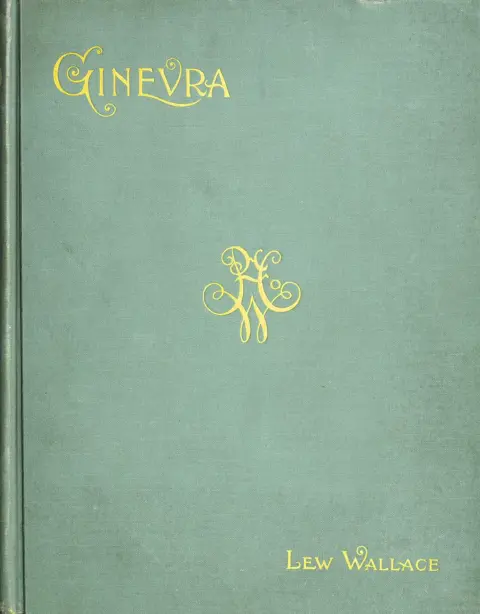
THE CLASSIC COLLECTION · 1886
"Ginevra: or, The Old Oak Chest, a Christmas Story" by Susan E. Wallace is a tragic tale written in the late 19th century that reflects the traditional Christmas story's themes. The narrative provides a historical glimpse into the life of Ginevra, the beloved daughter of a proud baron living in a gloomy English castle. While the setting is imbued with Christmas cheer, the story ultimately delves into sorrow, focusing on the doomed fate of its protagonist. The story unfolds within a medieval backdrop, centering on Ginevra, a beautiful young lady, who attracts suitors, including her betrothed, Lord Lovel. However, the narrative takes a dark turn when she playfully hides in an old oak chest on the eve of her marriage, only to become trapped. The ensuing search for Ginevra stretches on for days but reveals no trace of her, leading Lovel and her father, the Baron, to despair. As time passes, the baron remains haunted by her absence until the chest is rediscovered many years later, revealing her tragic fate. Through its exploration of love, loss, and the ephemeral nature of life, the story emphasizes the themes of innocence and the unforeseen consequences of seemingly innocuous actions.
Introduction adapted from the source catalogue; source summaries may be automatically generated.
Free to read · English · 9,225 words · No account needed
MAKE TIME FOR A GOOD BOOK
On by default. Untick to stop anonymous reading totals. Each page counts after 10 seconds in view. How this works.
Anonymous counting is on unless you have switched it off.
When the night was far spent, a strange minstrel came to the door, and begged to look, if but for one moment, on the Lady Ginevra.
He was old and poor, and shook with cold. Room was made for him by the fire; and when he had eaten and drank, he lifted his harp, and, moving back from the crowd, passed under the mistletoe. Now, it was a great slight for one to do this and not be kissed, and, of course, nobody wanted to kiss an old beggar. He heard the laugh and jeer, and, looking up, saw the green branch; then his head sunk on his breast with shame. Ginevra saw it, and snatched an ivy wreath, and stepped toward him, saying playfully,
“Kneel down!”
He knelt and kissed the hem of her robe. Not even she was ever more
beautiful than then.
“I crown thy harp, and call thee knight”--she touched his shoulder. “Be thou wise, brave, and tuneful. Rise, Sir Minstrel, and let these lords and ladies hear thy bravest harping.”
For a moment the old man was overcome. Then he swept the harp with such skill and grace there was instant silence. He sang:
He had heard of her beauty, but the half had not been told; what his eyes had this night seen would ever be a part of sight; his hand was weak and old, but so long as he could touch a string it should be to her name; and at his dying hour thought of her tender pity would warm his heart as it had never warmed with wine.
Praises ran through the crowd; the Baron sent Alfred with a purse of broad gold pieces, but the minstrel put it back with a smile, and unclasped the ragged cloak; down dropped hood, mask, and gray hair; out stepped a youth, tall, straight, and handsome; on his neck a sparkling chain the Baron knew right well.
“It is Prince Edward! Long live the Prince!” he exclaimed.
And every man knelt and shouted, till the arches rang,
“Long live Prince Edward!”
He bowed his thanks, and lightly touched the harp again. His fingers strayed uncertainly among the strings, like one busy with memory; a moment more, and he seemed to catch the melody, and, resting his burning glance upon Ginevra’s fair face, he sang:
“In blinding snow, as wild winds blow,
I left the forest’s gloom,
And, following sounds that change the night
To brightness and to bloom,
“I’ve found where all sweet flowers live,
Where summer sings and never dies,
Its roses, Lady, on thy cheek,
Its violets in thine eyes.
Your reading position is saved on this browser. Take it to another device with a library code. Reading pages adapt to text, rather than matching a printed edition.
Susan E. (Susan Elston) Wallace
BEHIND THE BOOK
This eBook is for the use of anyone anywhere in the United States and most other parts of the world at no cost and with almost no restrictions whatsoever. You may copy it, give it away or re-use it under the terms of the Project Gutenberg License included with this eBook or online at www.gutenberg.org. If you are not located in the United States, you will have to check the laws of the country where you are located before using this eBook. Read the source licence.
The original source file, including credits and licence, is retained by this library. Request an original-format copy at no charge. Please include the book title and Project Gutenberg identifier #72586.
KEEP YOUR CURIOSITY GOING
Coulson Kernahan

Maurice Baring
Frances Wright
Cécile Tormay

Frederic Jesup Stimson

W. H. P. (William Henry Pope) Jarvis