
The land of the Pueblos
Susan E. (Susan Elston) Wallace
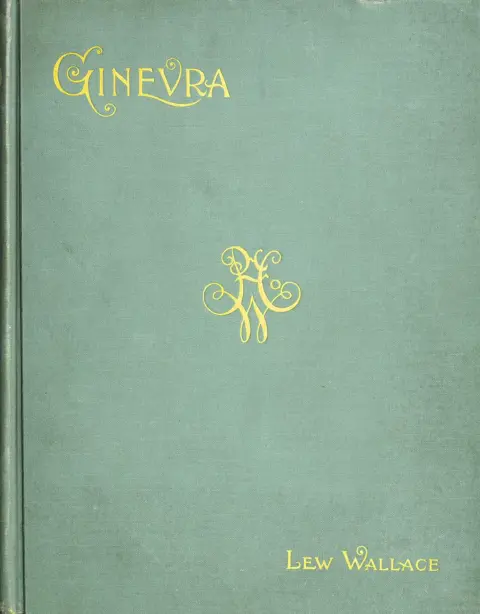
THE CLASSIC COLLECTION · 1886
"Ginevra: or, The Old Oak Chest, a Christmas Story" by Susan E. Wallace is a tragic tale written in the late 19th century that reflects the traditional Christmas story's themes. The narrative provides a historical glimpse into the life of Ginevra, the beloved daughter of a proud baron living in a gloomy English castle. While the setting is imbued with Christmas cheer, the story ultimately delves into sorrow, focusing on the doomed fate of its protagonist. The story unfolds within a medieval backdrop, centering on Ginevra, a beautiful young lady, who attracts suitors, including her betrothed, Lord Lovel. However, the narrative takes a dark turn when she playfully hides in an old oak chest on the eve of her marriage, only to become trapped. The ensuing search for Ginevra stretches on for days but reveals no trace of her, leading Lovel and her father, the Baron, to despair. As time passes, the baron remains haunted by her absence until the chest is rediscovered many years later, revealing her tragic fate. Through its exploration of love, loss, and the ephemeral nature of life, the story emphasizes the themes of innocence and the unforeseen consequences of seemingly innocuous actions.
Introduction adapted from the source catalogue; source summaries may be automatically generated.
Free to read · English · 9,225 words · No account needed
MAKE TIME FOR A GOOD BOOK
On by default. Untick to stop anonymous reading totals. Each page counts after 10 seconds in view. How this works.
Anonymous counting is on unless you have switched it off.
If thou shouldst ever come by choice or chance
To MODENA, where still religiously
Among her ancient trophies is preserved
BOLOGNA’S bucket (in its chain it hangs
Within that reverend tower, the Guirlandine),
Stop at a Palace near the Reggio-gate,
Dwelt in of old by one of the ORSINI.
Its noble gardens, terrace above terrace,
And rich in fountains, statues, cypresses,
Will long detain thee; thro’ their arched walks,
Dim at noonday, discovering many a glimpse
Of knights and dames, such as in old romance,
And lovers, such as in heroic song,
Perhaps the two, for groves were their delight,
Who in the spring-time, as alone they sat,
Venturing together on a tale of love,
Read only part that day.[A]----A summer-sun
Sets ere one half is seen; but ere thou go,
Enter the house--prythee, forget it not--
And look awhile upon a picture there.
’Tis of a Lady in her earliest youth,
The very last of that illustrious race,
Done by ZAMPIERI[B]--but by whom I care not.
He who observes it--ere he passes on,
Gazes his fill, and comes and comes again,
That he may call it up when far away.
She sits, inclining forward as to speak,
Her lips half-open and her finger up,
As tho’ she said “Beware!” Her vest of gold
Broidered with flowers, and clasped from head to foot,
An emerald-stone in every golden clasp;
And on her brow, fairer than alabaster,
A coronet of pearls. But then her face,
So lovely, yet so arch, so full of mirth,
The overflowings of an innocent heart--
It haunts me still, tho’ many a year has fled,
Like some wild melody!
Alone it hangs
Over a mouldering heir-loom, its companion,
An oaken chest, half-eaten by the worm,
But richly carved by ANTONY of Trent
With scripture-stories from the Life of Christ;
A chest that came from VENICE, and had held
The ducal robes of some old Ancestor.
That, by the way--it may be true or false--
But don’t forget the picture; and thou wilt not,
When thou hast heard the tale they told me there.
She was an only child; from infancy
The joy, the pride of an indulgent Sire.
Her Mother dying of the gift she gave,
That precious gift, what else remained to him?
The young GINEVRA was his all in life,
Still as she grew, forever in his sight;
And in her fifteenth year became a bride,
Marrying an only son, FRANCESCO DORIA,
Her playmate from her birth, and her first love.
Just as she looks there in her bridal dress,
She was all gentleness, all gaiety;
Her pranks the favourite theme of every tongue.
But now the day was come, the day, the hour:
Now, frowning, smiling, for the hundredth time,
The nurse, that ancient lady, preached decorum;
And, in the lustre of her youth, she gave
Her hand, with her heart in it, to FRANCESCO.
Great was the joy; but at the Bridal feast,
When all sat down, the Bride was wanting there.
Nor was she to be found! Her Father cried,
“’Tis but to make a trial of our love!”
And filled his glass to all; but his hand shook,
And soon from guest to guest the panic spread.
’Twas but that instant she had left FRANCESCO,
Laughing and looking back and flying still,
Her ivory-tooth imprinted on his finger.
But now, alas, she was not to be found;
Nor from that hour could anything be guessed,
But that she was not!
Weary of his life,
FRANCESCO flew to VENICE, and forthwith
Flung it away in battle with the Turk.
ORSINI lived; and long might’st thou have seen
An old man wandering as in quest of something,
Something he could not find--he knew not what.
When he was gone, the house remained awhile
Silent and tenantless--then went to strangers.
Full fifty years were past, and all forgot,
When on an idle day, a day of search
’Mid the old lumber in the Gallery,
That mouldering chest was noticed; and ’twas said
By one as young, as thoughtless as GINEVRA,
“Why not remove it from its lurking-place?”
’Twas done as soon as said; but on the way
It burst, it fell; and lo, a skeleton,
With here and there a pearl, an emerald-stone,
A golden clasp, clasping a shred of gold.
All else had perished--save a nuptial ring,
And a small seal, her mother’s legacy,
Engraven with a name, the name of both--
“GINEVRA.”
There then had she found a grave!
Within that chest had she concealed herself,
Fluttering with joy, the happiest of the happy;
When a spring-lock, that lay in ambush there,
Fastened her down forever!
Your reading position is saved on this browser. Take it to another device with a library code. Reading pages adapt to text, rather than matching a printed edition.
Susan E. (Susan Elston) Wallace
BEHIND THE BOOK
This eBook is for the use of anyone anywhere in the United States and most other parts of the world at no cost and with almost no restrictions whatsoever. You may copy it, give it away or re-use it under the terms of the Project Gutenberg License included with this eBook or online at www.gutenberg.org. If you are not located in the United States, you will have to check the laws of the country where you are located before using this eBook. Read the source licence.
The original source file, including credits and licence, is retained by this library. Request an original-format copy at no charge. Please include the book title and Project Gutenberg identifier #72586.
KEEP YOUR CURIOSITY GOING
Coulson Kernahan

Maurice Baring
Frances Wright
Cécile Tormay

Frederic Jesup Stimson

W. H. P. (William Henry Pope) Jarvis