The Making of the Great West, 1512-1883
Samuel Adams Drake
THE CLASSIC COLLECTION · 1879
"Georgia: Its History, Condition and Resources" by Samuel Adams Drake is a historical account written in the late 19th century. The book explores the geography, history, economy, and natural resources of Georgia, one of the original thirteen American colonies. It serves as a comprehensive guide for understanding the state’s development and significance, particularly in the context of its diverse landscapes and agricultural productivity. In this book, Drake provides an extensive overview of Georgia's natural features, highlighting its rivers, climate, and soil suitability for various crops, particularly cotton, which becomes a focal point of the state's economy. He traces Georgia's settlement history from its indigenous peoples through the founding by James Oglethorpe and the subsequent evolution leading to the Civil War. The text also delves into the state's post-war recovery and industrial growth, addressing changes in agriculture due to the abolition of slavery and the impact of transportation developments such as railways. Ultimately, Drake presents Georgia as a state rich in resources and opportunities, poised for a robust future in both agriculture and manufacturing.
Introduction adapted from the source catalogue; source summaries may be automatically generated.
Free to read · English · 6,541 words · No account needed
MAKE TIME FOR A GOOD BOOK
On by default. Untick to stop anonymous reading totals. Each page counts after 10 seconds in view. How this works.
Anonymous counting is on unless you have switched it off.
Statistics.--A carefully tabulated statement shows that, in addition to her cotton crop, Georgia produced, in 1876, 23,629,000 bushels of Indian corn, valued at $14,172,000; 2,840,000 bushels of wheat, worth $3,805,600; 5,700,000 bushels of oats, worth $3,876,000; and 23,600 tons of hay, worth $347,628. To these principal crops should be added the timber and naval stores exported from Atlantic outports. In January, 1877, there were in Georgia 118,300 horses, 404,900 oxen and other cattle, 96,200 mules, 270,400 milch cows, 378,600 sheep, and 1,483,100 swine, having a total valuation of $30,815,117. The State is admirably adapted for stock-raising, but, as cotton culture offers the quickest returns, it has hitherto engrossed the attention of planters and farmers. The grain and root crops are largely cultivated for the support of the agricultural population.
The rice crop of Georgia in 1870 was 22,277,380 ℔; tobacco, 288,596 ℔; molasses, 553,192 gals.; wine, 21,927 gals.; sugar, 644 hhds; sweet potatoes, 2,621,562 bush.; Irish potatoes, 197,101 bush.; butter, 4,499,572 ℔; honey, 610,877 ℔; wool, 846,947 ℔, increased in 1878 to about 1,000,000 ℔. The latest official census shows that 6,831,856 acres, valued at $94,559,468, are improved in farms; value of farm implements and machinery, $4,614,701; estimated value of all farm products, $80,390,228; estimated value of manufactured products, $31,196,115. The total valuation of the State in 1870 was $268,169,207, against $645,895,237, in 1860. The decrease is owing to the emancipation of the slaves; but the State is steadily gaining ground in increased acreage cultivated, increased number and value of manufactories, and increased productive capacity everywhere.
Mineral Products.--Georgia was perhaps the El Dorado of which the Spaniards who invaded Florida were in search. Before the gold discovery in California, the “placers” of Northern Georgia were profitably worked for many years; but since 1852 their produce has almost wholly ceased. The gold-bearing region is comprised in the counties of Lumpkin, Habersham, Forsyth, and Hall,--the precious metal being found in the alluvial deposits of the streams, and also intermixed with the quartz rock of the hills. A branch mint was established by the Government at Dahlonega, the shire town of Lumpkin county. In 1853 it coined gold bullion of nearly half a million dollars’ value; but, as in California, the placers, or surface deposits, have become exhausted. Besides this precious metal, Georgia contains, mainly in N. E. or Cherokee Georgia, coal and fossiliferous iron ore distributed along the ridges between the Tennessee and Alabama border. The Cohutta mountains contain copper, and also silver and lead ores. Iron ore, manganese, slate, baryta, and brown hæmatite are found on the western declivity of this range. Between the Cohutta mountains and the Blue Ridge is a vein of marble, and adjacent to it are the gold-bearing schists, which reappear on the south side of the Blue Ridge. Other minerals are granite, gypsum, limestone, sienite, marl, burrstone, soapstone, asbestos, shales, tripoli, fluor-spar, kaolin, porcelain clay, arragonite, tourmaline, emerald, carnelian, ruby, opal, calcedony, agate, amethyst, jasper, garnets, schorl, zircon, rose-quartz, beryl, and even diamonds.
Your reading position is saved on this browser. Take it to another device with a library code. Reading pages adapt to text, rather than matching a printed edition.
Samuel Adams Drake
Samuel Adams Drake
Samuel Adams Drake
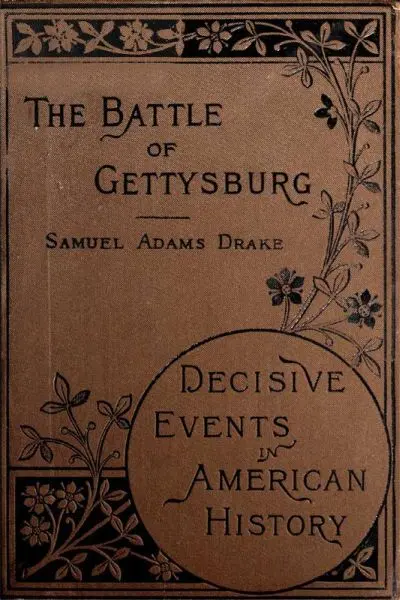
Samuel Adams Drake
BEHIND THE BOOK
This eBook is for the use of anyone anywhere in the United States and most other parts of the world at no cost and with almost no restrictions whatsoever. You may copy it, give it away or re-use it under the terms of the Project Gutenberg License included with this eBook or online at www.gutenberg.org. If you are not located in the United States, you will have to check the laws of the country where you are located before using this eBook. Read the source licence.
The original source file, including credits and licence, is retained by this library. Request an original-format copy at no charge. Please include the book title and Project Gutenberg identifier #48868.
KEEP YOUR CURIOSITY GOING
Wilfrid Scawen Blunt
Wilfrid Scawen Blunt

E. W. (Edgar Watson) Howe
Cécile Tormay

Moritz Busch
John L. Ransom