The Making of the Great West, 1512-1883
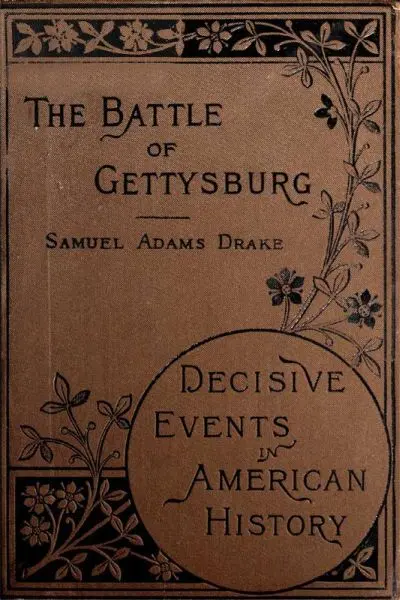
Samuel Adams Drake
THE CLASSIC COLLECTION · 1879
"Georgia: Its History, Condition and Resources" by Samuel Adams Drake is a historical account written in the late 19th century. The book explores the geography, history, economy, and natural resources of Georgia, one of the original thirteen American colonies. It serves as a comprehensive guide for understanding the state’s development and significance, particularly in the context of its diverse landscapes and agricultural productivity. In this book, Drake provides an extensive overview of Georgia's natural features, highlighting its rivers, climate, and soil suitability for various crops, particularly cotton, which becomes a focal point of the state's economy. He traces Georgia's settlement history from its indigenous peoples through the founding by James Oglethorpe and the subsequent evolution leading to the Civil War. The text also delves into the state's post-war recovery and industrial growth, addressing changes in agriculture due to the abolition of slavery and the impact of transportation developments such as railways. Ultimately, Drake presents Georgia as a state rich in resources and opportunities, poised for a robust future in both agriculture and manufacturing.
Introduction adapted from the source catalogue; source summaries may be automatically generated.
Free to read · English · 6,541 words · No account needed
MAKE TIME FOR A GOOD BOOK
On by default. Untick to stop anonymous reading totals. Each page counts after 10 seconds in view. How this works.
Anonymous counting is on unless you have switched it off.
In 1803 Georgia ceded to the general government all her territory west of the Chattahoochee, amounting to nearly 100,000 square miles, out of which the States of Alabama and Mississippi were subsequently formed. The cession of Louisiana to the United States was of great benefit to Georgia in ending hostilities which the Spaniards were continually inciting the Indians to commit upon the scattered settlements. By a treaty with the Creeks, Georgia became possessed of a large tract in the south-west of the State. The second war with England (1812-15) involved Georgia in hostilities with the Indians on her western border, who were finally subdued by General Andrew Jackson. In 1821 the cession of Florida to the United States relieved Georgia from the long series of Spanish aggressions beginning with her existence as a colony.
In 1825 a serious difficulty arose between the State and national authorities in consequence of proceedings by the Georgia executive to extinguish the title to lands in the State held by the Creeks and Cherokees. The head chief of the Creeks, M‘Intosh, was assassinated by his people for signing away these lands to the whites. By an Act of Congress passed in 1830, these Indians were subsequently removed to the Indian territory west of the Mississippi.
Georgia formally seceded from the Union in January, 1861. The Government forts and arsenals were seized. The first military operations were on the coast. In April, 1862, Fort Pulaski, one of the defences of Savannah, was recaptured by the Federal forces under Com. Du Pont. St. Mary’s, Brunswick, Darien, and St. Simon’s island were also occupied.
In the beginning of 1863 the Federal forces were in possession of middle and west Tennessee. In September they occupied Chattanooga in strong force, the Confederates falling back by the Western and Atlantic Railway to Lafayette, Ga. A further advance by General Rosecrans, the Federal commander, brought on the severely contested battle of Chickamauga, on the creek of that name (September 20). The Federals retreated to Chattanooga, which was soon threatened by the Confederates under Bragg. In November the Union army under General Grant drove Bragg from all his positions. In the spring of 1864 the Southern army was at Dalton, Ga., on the railway to Atlanta, which it covered. In May, General Sherman moved forward against this force a numerous and well-appointed Union army. Severe battles took place at Resaca, Kingston, and Allatoona Pass. A series of strategical movements, signalized by frequent bloody conflicts between the rival armies, resulted in the possession of Atlanta by the Union forces, September 2. From this point Sherman began in November his memorable march across Georgia to the sea. On December 10th he arrived in the neighborhood of Savannah, captured Fort M‘Allister by assault, and occupied the city on the 21st. A cavalry force under General Wilson entered Georgia from Alabama in April, 1865, capturing Columbus, West Point, and Macon, and making Davis, the Confederate States president, prisoner. In June, 1865, a provisional governor was appointed for the State by the president of the United States. A convention assembled in October at Milledgeville, which repealed the ordinance of secession, abolished slavery, and declared the war debt void. A new constitution was framed and ratified in 1868, and Rufus B. Bullock inaugurated as governor. The restoration of civil government under the new forms was not effected in Georgia without complications which retarded its re-establishment on a solid foundation, but the amendments to the national constitution were at length adopted, and her senators and representatives were admitted to seats in Congress in December, 1870. During the war Georgia furnished about 80,000 soldiers for the Confederate armies. She emerged from it with her industries prostrated, her treasury empty, her social and political system revolutionized, her most flourishing cities in ruins. Her great natural resources are fast advancing her to a commanding position among her sister States; and these resources are developing in the hands of a free people with greater rapidity and advantage than when half the population was enslaved. Texas possibly excepted, no Southern State has a greater future than Georgia.
Your reading position is saved on this browser. Take it to another device with a library code. Reading pages adapt to text, rather than matching a printed edition.
Samuel Adams Drake
Samuel Adams Drake
Samuel Adams Drake
Samuel Adams Drake
BEHIND THE BOOK
This eBook is for the use of anyone anywhere in the United States and most other parts of the world at no cost and with almost no restrictions whatsoever. You may copy it, give it away or re-use it under the terms of the Project Gutenberg License included with this eBook or online at www.gutenberg.org. If you are not located in the United States, you will have to check the laws of the country where you are located before using this eBook. Read the source licence.
The original source file, including credits and licence, is retained by this library. Request an original-format copy at no charge. Please include the book title and Project Gutenberg identifier #48868.
KEEP YOUR CURIOSITY GOING
Wilfrid Scawen Blunt
Wilfrid Scawen Blunt

E. W. (Edgar Watson) Howe
Cécile Tormay

Moritz Busch
John L. Ransom