
Last letters from the living dead man
David Patterson (Spirit) Hatch
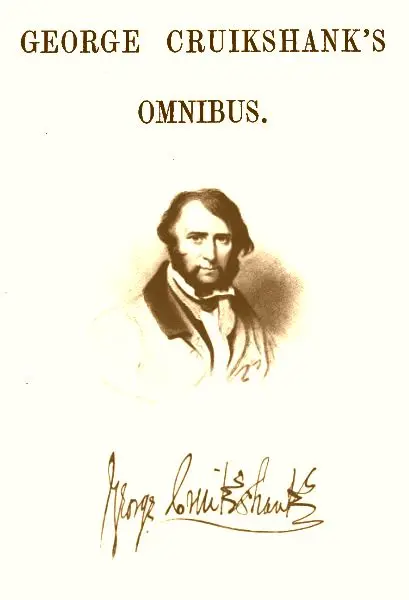
THE CLASSIC COLLECTION · 1842
"George Cruikshank's Omnibus" by George Cruikshank is a collection of illustrated works written in the early 19th century. This compilation showcases Cruikshank's artistic talent through a series of humorous and sometimes satirical essays, poems, and stories, featuring a variety of characters and themes reflective of Victorian society. The book promises to engage readers with its social commentary, whimsical illustrations, and the charm typical of Cruikshank’s style. The opening of this omnibus introduces readers to a preface that playfully addresses its younger audience, inviting them to explore a whimsical world of art, culture, and societal observations. Cruikshank describes his perspective as an artist navigating the curiosities and eccentricities of life, often employing humor to discuss serious subjects. Following the preface, we encounter a narrative focusing on “My Last Pair of Hessian Boots,” where the protagonist reminisces about his beloved boots, their mysterious disappearance, and the humorous misadventures that ensue as the boots seem to take on a life of their own. This sets the stage for Cruikshank’s engaging, illustrated storytelling that artfully blends humor with reflections on society.
Introduction adapted from the source catalogue; source summaries may be automatically generated.
Free to read · English · 167,330 words · No account needed
MAKE TIME FOR A GOOD BOOK
On by default. Untick to stop anonymous reading totals. Each page counts after 10 seconds in view. How this works.
Anonymous counting is on unless you have switched it off.
Agitator still! Aye, Agitator even in thine ashes thou must be called--whatsoever name else thou mayst be destined to survive! Whether Boney, Bonyparty, Buonaparte, Napoleon, Emperor! Whether in the future, as in the past, thou shalt be addressed by any one of that astounding collection of titles which the most metaphysical and admiring of thy biographers once gathered from the public journals and set forth in startling array--as Monster, Tyrant, Fiend, Upstart, Usurper, Rebel, Regicide, Traitor, Wretch, Villain, Knave, Fool, Madman, Coward, Impostor--or these again with suitable adjectives to reinforce them, as Unnatural Monster, Sanguinary Tyrant, Diabolical Fiend, Corsican Upstart, Military Usurper, Wicked Rebel, Impious Regicide, Perfidious Traitor, Vile Wretch, Base Villain, Low-born Knave, Rank Fool, Egregious Madman, Notorious Coward, Detestable Impostor;--or this other set of epithets, which, in more countries than France, and not unsparingly in our own, have since been associated with thy name--as Conqueror, Potentate, Preserver, Genius, Liberator, Law-giver, Statesman, Ruler, Regenerator, Enthusiast, Martyr, Hero, Benefactor--these again being reinforced as before, thus--Invincible Conqueror, Mighty Potentate, Glorious Preserver, Guardian Genius, Generous Liberator, Enlightened Law-giver, Magnificent Statesman, Wise Ruler, National Regenerator, Sincere Enthusiast, Devoted Martyr, Triumphant Hero, Beneficent Benefactor:--by these names, by any one of them possibly, thou mayst not be especially distinguished in after times; but as Agitator at least thou must be hailed while language lasts!
--It may justly be doubted whether the figure thus looking down upon a pyramid of skulls, is indeed "the man of thousand thrones"--whether he does "thus survive." The design is one of those that "show men as they ought to be, not as they are." That opening of the coffin at St. Helena opens up a world of curiosity, of wonder, and alarm. All the spectators were awed and astounded at the absence of the great Dictator of the Grave--Change! All the beholders were stricken to marble, or melted into water-drops, to see Death looking like Life; to survey the pale and placid features of the Emperor, expressing the serenity of repose, not the workings of decay--to witness a sign of power beyond that which ordinary clay may boast, and to feel that a "divinity did hedge" indeed the hero-king, in preserving all that was mortal of the exiled chief from the ravages of the worm. There lay the Emperor Napoleon--(he was recognised then by the authorities, and should the parties meet in the Shades, even George the Fourth can no longer style him General Buonaparte)--there lay the Emperor--not simply in his habit as he lived, but in the very flesh which he took with him out of Longwood. There was the positive and unwasted substance--and there too was the seeming spirit. The eyes only were wanting to give it reality and consciousness. The Mighty Watcher had fallen asleep, but who could say that he never again was to wake up? The restless Visionary had sunk, torpid, into a dream of years. The Monarch had abdicated the throne of Life without finally crossing its confines. At best, the spectacle presented an extraordinary compromise with the insatiate Destroyer. The Archer had for once half-missed his aim.
Your reading position is saved on this browser. Take it to another device with a library code. Reading pages adapt to text, rather than matching a printed edition.
BEHIND THE BOOK
This eBook is for the use of anyone anywhere in the United States and most other parts of the world at no cost and with almost no restrictions whatsoever. You may copy it, give it away or re-use it under the terms of the Project Gutenberg License included with this eBook or online at www.gutenberg.org. If you are not located in the United States, you will have to check the laws of the country where you are located before using this eBook. Read the source licence.
The original source file, including credits and licence, is retained by this library. Request an original-format copy at no charge. Please include the book title and Project Gutenberg identifier #47400.
KEEP YOUR CURIOSITY GOING
David Patterson (Spirit) Hatch

David Patterson (Spirit) Hatch

David Patterson (Spirit) Hatch
Coulson Kernahan

Ralph Waldo Emerson

Maurice Baring