
Last letters from the living dead man
David Patterson (Spirit) Hatch
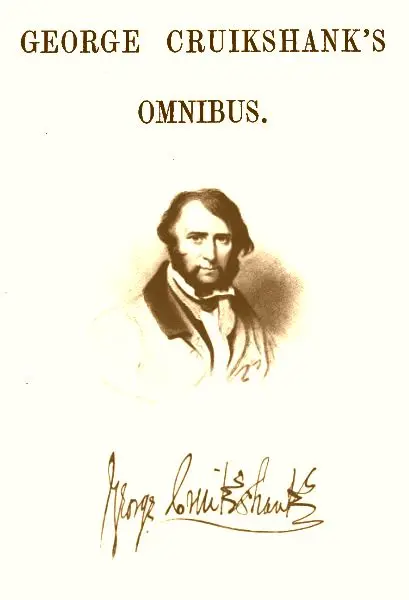
THE CLASSIC COLLECTION · 1842
"George Cruikshank's Omnibus" by George Cruikshank is a collection of illustrated works written in the early 19th century. This compilation showcases Cruikshank's artistic talent through a series of humorous and sometimes satirical essays, poems, and stories, featuring a variety of characters and themes reflective of Victorian society. The book promises to engage readers with its social commentary, whimsical illustrations, and the charm typical of Cruikshank’s style. The opening of this omnibus introduces readers to a preface that playfully addresses its younger audience, inviting them to explore a whimsical world of art, culture, and societal observations. Cruikshank describes his perspective as an artist navigating the curiosities and eccentricities of life, often employing humor to discuss serious subjects. Following the preface, we encounter a narrative focusing on “My Last Pair of Hessian Boots,” where the protagonist reminisces about his beloved boots, their mysterious disappearance, and the humorous misadventures that ensue as the boots seem to take on a life of their own. This sets the stage for Cruikshank’s engaging, illustrated storytelling that artfully blends humor with reflections on society.
Introduction adapted from the source catalogue; source summaries may be automatically generated.
Free to read · English · 167,330 words · No account needed
MAKE TIME FOR A GOOD BOOK
On by default. Untick to stop anonymous reading totals. Each page counts after 10 seconds in view. How this works.
Anonymous counting is on unless you have switched it off.
It was the last day of Bartholomew Fair, and from some unaccountable cause, we had not been near the spot. But it was not yet too late. We bustled up at the thought, hastily pinned our handkerchief inside our hat, emptied all our pockets--save one, divested our person of watch and jewelry, (for we hold it heinous to encourage picking and stealing,) and then hurried out in the direction of Smithfield, resolving in the plenitude of our joy to visit every show, have a ride in every swing, take a chance at every penny turn, roll the marble down every tower of Babel, and pink with every winning needle, for the sake of lang syne. Five years had we been away from England--five years had we been absent from our own dear Fair; and yet, how well we remembered our last walk over the same ground, about the same hour, and on the same errand. What pleasure it was now to see that so little change had taken place in the streets! There, stood the old oyster-rooms exactly the same as ever; yonder, was the public-house beside the gateway, just as dirty, just the same people at the doors, just the same noise within as when we last passed by. There was even the same crooked old post at the corner. Recollection seemed as it were to shake hands with these objects as old familiar friends, and we pushed on with even yet more joy in our bosom, and ardent expectation in our heart, to the great--the Prince of Fairs.
Our heart leaped for joy as we shot past a little shop, displaying drums, dolls, kettles, portable tea-services, singing cuckoos, bow-wow poodles, and armies of soldiers barracked in flat deal boxes, with a background of whips, scratchers, trumpets, squeakers, diminutive culinary apparatus, and Waterloo-crackers: we say, our heart leaped for very joy at the sight; but it leaped no more that night, for, from that moment disappointment marked us for her own. There now insensibly crept upon us strange forebodings and presentiments that all was not right, for although close upon the fair, we felt no wonted squeeze, heard no confusion of tongues, saw no confluence of people all driving and pouring up the road to one point. No announcements of hot green peas, fried sausages, cooked eels, or other Bartholomew delicacies, came wafted on the breeze;--no ginger-beer stands, corn-plaster venders, brass-sovereign sellers, or spiced-elder-wine compounders, lined the street: the throng was even less than we had seen upon an ordinary cattle-day. We grew frightened; and rushing forward, peeped into the fair itself. In that peep, the thermometer of our joy fell full five hundred degrees below zero. Why, where are the shows? where are the swings? where are the turn-abouts--the round-abouts? where are the people? where, where is the Fair? But down, struggling feelings, down, and let me write calmly. In 1841 there were but TWO SHOWS in the Great Bartholomew Fair! We now walked up the gingerbread walk--the only gingerbread walk. Time had been, when our first act was to store a pocket with the best spiced nuts, for until we had eaten a few of those little cakes, we never felt ourself in the fair; but now, we hadn't the heart to taste one. Nor nuts nor any gauds had charms for us. We gazed with a pitying eye on all. We saw black ruin hovering over and already darkening Smithfield's grandeur--we beheld destruction suspended only by the last weak thread of custom, which Time with his scythe, or pocket-scissors, was about to sever, to the extinction, the total annihilation, of our own--our beloved fair. In consequence of the prohibitory price asked for the lawful groundage, two shows had been forced to take unfurnished lodgings in Hosier-lane. This, was indeed a blow! To see two, old, aboriginal exhibitions--one miscellaneous, the other mechanical, with waxen kings, clock-work queens, and spring-wire princes, barbarously driven from their native fair--unhappy refugees, and sojourners in narrow-streets and Hosier-lanes! Rumours there were too, that one other miserable exile had sought an asylum in a neighbouring farrier's shop; that there, in the front of certain festoons of dirty red cloth which veiled an ugly forge, the pincers, hammers, anvils, and other appurtenances of farriery, wizards were manufacturing puddings in the company's hats, causing real beer to stream from any given part of any little boy, and pulverising watches in mortars, as choice ingredients for soup; but we lacked curiosity to go and test the truth of such reports--these shows were not in the fair, therefore over us possessed no magic influence. With a heavy heart we next sauntered by the groups of stalls, whereon were spread various fruits and seductive viands--articles of savour for such as were edaciously disposed; but nobody seemed hungry; people passed and repassed, and scarcely glanced at the temptations. True, oysters appeared somewhat in demand, as did certain vinegary relishes in tiny white saucers, but as to the more substantial boiled tripe, fried fish, pigs' feet, pickled salmon, &c., none but the smallest boys approached the stalls, and they, not to buy--only to enjoy a look. The very cries of the doll and toy women, as they recommended this article or that to the dreamy by-standers, seemed muffled with sadness; and the gipsy gambler who was casting dice upon an old tea-tray, and relieving one or two dirty-faced urchins of their farthings, seemed to be realising scarcely sufficient to pay for the flaring candle which lighted his dishonesty.
Your reading position is saved on this browser. Take it to another device with a library code. Reading pages adapt to text, rather than matching a printed edition.
BEHIND THE BOOK
This eBook is for the use of anyone anywhere in the United States and most other parts of the world at no cost and with almost no restrictions whatsoever. You may copy it, give it away or re-use it under the terms of the Project Gutenberg License included with this eBook or online at www.gutenberg.org. If you are not located in the United States, you will have to check the laws of the country where you are located before using this eBook. Read the source licence.
The original source file, including credits and licence, is retained by this library. Request an original-format copy at no charge. Please include the book title and Project Gutenberg identifier #47400.
KEEP YOUR CURIOSITY GOING
David Patterson (Spirit) Hatch

David Patterson (Spirit) Hatch

David Patterson (Spirit) Hatch
Coulson Kernahan

Ralph Waldo Emerson

Maurice Baring