THE CLASSIC COLLECTION✦A dead man’s diaryCLASSIC FREE BOOKS
A dead man’s diary
Coulson Kernahan
THE CLASSIC COLLECTION · 1910
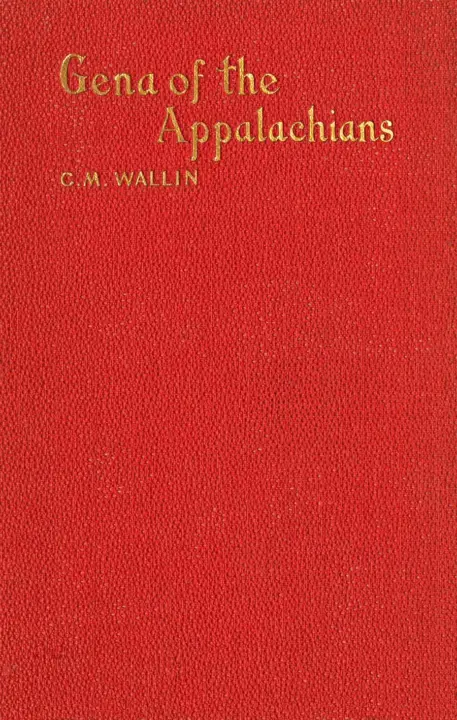
"Gena of the Appalachians" by Clarence Monroe Wallin is a novel written in the early 20th century. The book explores the life and struggles of Gena, the daughter of the notorious outlaw Lucky Joe, amidst the harsh realities of Appalachian life. It delves into themes of hardship, societal expectations, and the quest for personal redemption and kindness in a community marked by crime and poverty. The opening of the novel sets the tone through the somber burial of Lucky Joe, emphasizing the mix of fear and respect he commanded in life. Paul Waffington, a layman and Sunday-school speaker, is called upon to preside over his funeral, illustrating his role as a compassionate figure willing to help even in dire circumstances. The chapter quickly shifts focus to the aftermath of Lucky Joe's death, where Gena is left to fend for herself under the harsh rule of her foster father, Jase Dillenburger. As the story unfolds, it becomes clear that Gena's life is filled with toil, sorrow, and longing for a better future, with Paul Waffington emerging as a potential ally in her tumultuous life. The narrative effectively contrasts the idyllic beauty of the Appalachian landscape with the grim realities faced by its inhabitants, especially Gena.
Introduction adapted from the source catalogue; source summaries may be automatically generated.
Free to read · English · 30,365 words · No account needed
MAKE TIME FOR A GOOD BOOK
On by default. Untick to stop anonymous reading totals. Each page counts after 10 seconds in view. How this works.
Anonymous counting is on unless you have switched it off.
“Oh nothin’,” replied the boy climbing into his seat. “But you doan’t git Boaz Honeycutt to pass no forks of the road ’thout crossin’ an’ spitten’. No sire--ee! It’s bad luck. Onst I had a stone-bruise an’ a sore toe fur two year, summer an’ winter, ’account not crossin’ an’ spitten’ when passin’ the forks of a road. No sire--ee, you needn’t expect to see Boaz Honeycutt fail to cross an’ spit whin he comes to the forks of the road no more’n you ’spect to see a jay-bird awalkin’ on crutches.”
The next turn of the road brought the party out into the open again.
The hot July sun came down, and Emeline Hobbs moved uneasily in her
seat.
“Gee, but I’m dry!” she finally bawled out.
“What did you say, Miss Hobbs?” inquired Paul Waffington.
“I’m dry,” she again bawled out at him over her shoulder. “I salted the gravy too much this mornin’. Gee, but I’m dry--want water,” she finished.
“Oh! You’re thirsty. Well, here is a house, and a spring too. We shall all have some water here,” was Waffington’s reply.
Fen Green, the driver, brought the wagon to a stand. Paul Waffington got out of the wagon, jumped the fence and ran down the little path in the direction of the spring.
“Good morning, madam,” he said as he lifted his hat and bowed to the lady standing with her pailful of water near the spring.
“Does this spring belong to you, madam?” he inquired.
“Yes, sir.”
“Well, if you please, madam, we would like to get some water for the
ladies of our party.”
“All right,” came the reply. “There’s a gourd hangin’ up there on that stick, you can take ’em some water in it, I guess.”
“Fine spring you have here, fine farm, too, and plenty of everything growing on it too. Your husband must be a great worker, madam,” he ventured to say.
“He’s dead,” she simply said. “He died las’ month, an’ left me and the children here to do everything.”
“Too bad, too bad!” he said as he looked at her in a kind and
benevolent way.
“Yes, I wouldn’t have minded it much,” she called out after him as he went up to the road, “if it ’ed a happened atter the crops wuz gathered.”
The little company in the wagon had heard what the woman had said, and giggled. Paul Waffington saved his own face with the blowing of his nose in his handkerchief. But Boaz Honeycutt swelled up to the danger line, exploded, and said:
“Well, I wisht I may die!”
Your reading position is saved on this browser. Take it to another device with a library code. Reading pages adapt to text, rather than matching a printed edition.
BEHIND THE BOOK
This eBook is for the use of anyone anywhere in the United States and most other parts of the world at no cost and with almost no restrictions whatsoever. You may copy it, give it away or re-use it under the terms of the Project Gutenberg License included with this eBook or online at www.gutenberg.org. If you are not located in the United States, you will have to check the laws of the country where you are located before using this eBook. Read the source licence.
The original source file, including credits and licence, is retained by this library. Request an original-format copy at no charge. Please include the book title and Project Gutenberg identifier #74594.
KEEP YOUR CURIOSITY GOING
Coulson Kernahan

Maurice Baring
Frances Wright
Cécile Tormay

Frederic Jesup Stimson

W. H. P. (William Henry Pope) Jarvis