
The Writing of News A Handbook with Chapters on Newspaper Correspondence and Copy Reading
Charles G. (Charles Griffith) Ross
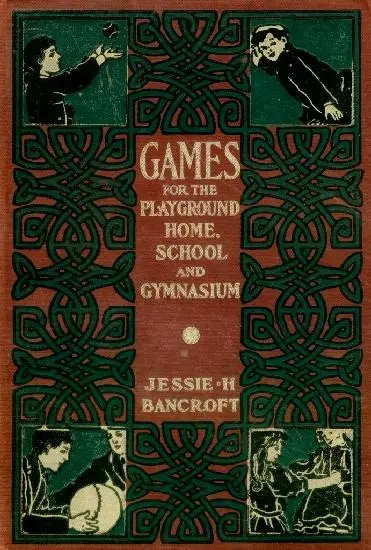
THE CLASSIC COLLECTION · 1909
"Games for the Playground, Home, School and Gymnasium" by Jessie H. Bancroft is a practical guide on various games, written in the early 20th century. The book serves as a comprehensive resource for educators and leaders involved in children's play, offering a diverse range of games suitable for various settings, such as schools, playgrounds, and camps. Its primary focus is to provide well-structured instructions for games that can promote physical activity, social skills, and character development among players of all ages. The opening of the book lays out Bancroft's intentions and the structure of the content that follows. It explains the purpose of the volume, which is to equip teachers and leaders with a practical manual containing active, quiet, and singing games that foster engagement in different environments. The introduction emphasizes both the educational aspects of games—such as enhancing physical abilities and social cooperation—and the gathering of material through diverse research methods, including original and bibliographical studies. The author highlights the significance of organized play in children's lives, actively detailing the appropriate conditions for different types of games, thus setting the stage for a rich collection that aligns fun and educational value.
Introduction adapted from the source catalogue; source summaries may be automatically generated.
Free to read · English · 145,870 words · No account needed
MAKE TIME FOR A GOOD BOOK
On by default. Untick to stop anonymous reading totals. Each page counts after 10 seconds in view. How this works.
Anonymous counting is on unless you have switched it off.
This is a very ancient game, supposed to have originated in the custom of making a foundation sacrifice at the building of a bridge. The tug of war is thought by Mr. Newell possibly to signify a contest between powers of good and evil for the soul of the victim sacrificed.
5 to 60 or more players.
Indoors; out of doors.
Here we dance, looby, looby, looby.
Here we dance, looby, looby, light.
Here we dance, looby, looby, looby, loo,
Every Saturday night.
Put your right hand in
Put your right hand out
Give your right hand a shake, shake, shake,
Hinkumbooby round-about.
Here we dance, looby, looby, looby, etc.
Put your left hand in, etc.
Here we dance, looby, looby, looby, etc.
Put your two hands in, etc.
Put your right foot in, etc.
Put your left foot in, etc.
Put your two feet in, etc.
Put your right elbow in, etc.
Put your left elbow in, etc.
Put your two elbows in, etc.
Put your right ear in, etc.
Put your left ear in, etc.
Put your head way in (bend deeply from the waist).
[Illustration music: Looby Loo
Here we dance looby, loo-by, loo-by,
Here we dance looby, loo-by, light;
Here we dance loo-by, loo-by, loo-by, loo,
Ev-'ry Sat-ur-day night. Put your right hand in,
Put your right hand out, Give your right hand a
shake, shake, shake, Hin-kum-boo-by round a-bout.
]
The players stand in a ring, clasping hands. For the first two lines
of the chorus,--
Here we dance, looby, looby, looby,
Here we dance, looby, looby, light,
the players sway from one foot to the other, throwing the free foot across the other in sort of a balance movement in rhythm to the music. On the last two lines of this verse,--
Here we dance, looby, looby, looby, loo,
Every Saturday night,
the circle gallops halfway around to the left for the first line, and reverses the action, returning to place on the last line.
For the alternate verses which describe action the movements are suited to the words; for instance, when the left hand is called for, the players lean far forward and stretch the left hand into the ring while singing the first line, turn around, and stretch the left hand outward for the second line, shake the hand hard on the third line, and on the last line jump or spin completely around.
Your reading position is saved on this browser. Take it to another device with a library code. Reading pages adapt to text, rather than matching a printed edition.
BEHIND THE BOOK
This eBook is for the use of anyone anywhere in the United States and most other parts of the world at no cost and with almost no restrictions whatsoever. You may copy it, give it away or re-use it under the terms of the Project Gutenberg License included with this eBook or online at www.gutenberg.org. If you are not located in the United States, you will have to check the laws of the country where you are located before using this eBook. Read the source licence.
The original source file, including credits and licence, is retained by this library. Request an original-format copy at no charge. Please include the book title and Project Gutenberg identifier #25660.
KEEP YOUR CURIOSITY GOING
Charles G. (Charles Griffith) Ross
Hannah Webster Foster

Emily Lawless
Edwin Hamlin Carr

Charles De Lano Hine
Andrew Ure