
The Writing of News A Handbook with Chapters on Newspaper Correspondence and Copy Reading
Charles G. (Charles Griffith) Ross
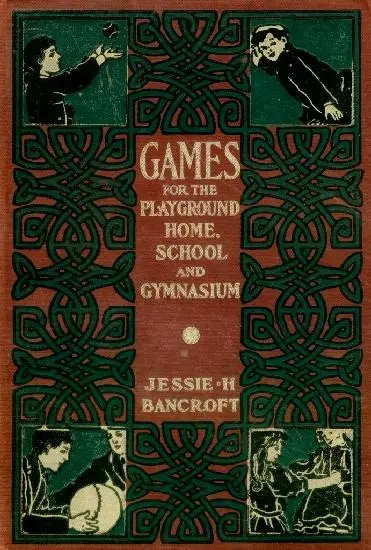
THE CLASSIC COLLECTION · 1909
"Games for the Playground, Home, School and Gymnasium" by Jessie H. Bancroft is a practical guide on various games, written in the early 20th century. The book serves as a comprehensive resource for educators and leaders involved in children's play, offering a diverse range of games suitable for various settings, such as schools, playgrounds, and camps. Its primary focus is to provide well-structured instructions for games that can promote physical activity, social skills, and character development among players of all ages. The opening of the book lays out Bancroft's intentions and the structure of the content that follows. It explains the purpose of the volume, which is to equip teachers and leaders with a practical manual containing active, quiet, and singing games that foster engagement in different environments. The introduction emphasizes both the educational aspects of games—such as enhancing physical abilities and social cooperation—and the gathering of material through diverse research methods, including original and bibliographical studies. The author highlights the significance of organized play in children's lives, actively detailing the appropriate conditions for different types of games, thus setting the stage for a rich collection that aligns fun and educational value.
Introduction adapted from the source catalogue; source summaries may be automatically generated.
Free to read · English · 145,870 words · No account needed
MAKE TIME FOR A GOOD BOOK
On by default. Untick to stop anonymous reading totals. Each page counts after 10 seconds in view. How this works.
Anonymous counting is on unless you have switched it off.
This is one of the old traditional dramatic games and is found
in many countries.
One player represents a mother, and the rest are her children, and stand in front of her in a line. One or all of them ask the mother the following question, the mother answering as indicated:--
"Mother, may I go out to play?"
"No, my child; it is such a wet day."
"Look how the sun shines, mother."
"Well, make three round courtesies and be off away."
The children thereupon make three "round courtesies" by whirling around and dipping down suddenly to spread the skirts out. They then run away and pretend to play. Soon they return and knock at the door. The mother asks:--
"What have you been doing all this time?"
"Brushing Jennie's hair and combing Jennie's hair."
"What did you get for it?"
"A silver penny."
"Where's my share of it?"
"The cat ran away with it."
"Where's the cat?"
"In the wood."
"Where's the wood?"
"Fire burnt it."
"Where's the fire?"
"Moo cow drank it."
"Where's the moo cow?"
"Sold it for a silver penny."
"What did you do with the money?"
"Bought nuts with it."
"What did you do with them?"
"You can have the nutshells, if you like."
The last words being rather disrespectful, the mother at once chases the children, calling, "Where's my share of the silver penny?" The players being chased, reply, "You may have the nutshells!" The mother thus catches the children, one after another, and pretends to punish them.
5 to 11 players.
Indoors; out of doors.
This is a traditional dramatic game.
One player represents an old witch, another a mother, another the eldest daughter, another a pot boiling on the hearth, and the balance are children, named for the days of the week, Monday, Tuesday, etc.
The old witch hides around the corner of a house or other convenient place, and peeps out, while the mother says to her eldest daughter, "I am going away, and I want you to let nothing happen to your sisters." To the others she says, "Monday, you take care of Tuesday, and Tuesday, you take care of Wednesday," etc., until she comes to the last child, when she says, "And Saturday, take care of yourself." Then to the eldest, "Be sure and not let the old witch take any of your sisters. You can also get the dinner, and be sure not to let the pot boil over."
Your reading position is saved on this browser. Take it to another device with a library code. Reading pages adapt to text, rather than matching a printed edition.
BEHIND THE BOOK
This eBook is for the use of anyone anywhere in the United States and most other parts of the world at no cost and with almost no restrictions whatsoever. You may copy it, give it away or re-use it under the terms of the Project Gutenberg License included with this eBook or online at www.gutenberg.org. If you are not located in the United States, you will have to check the laws of the country where you are located before using this eBook. Read the source licence.
The original source file, including credits and licence, is retained by this library. Request an original-format copy at no charge. Please include the book title and Project Gutenberg identifier #25660.
KEEP YOUR CURIOSITY GOING
Charles G. (Charles Griffith) Ross
Hannah Webster Foster

Emily Lawless
Edwin Hamlin Carr

Charles De Lano Hine
Andrew Ure