
The Fourth Estate, vol. 2
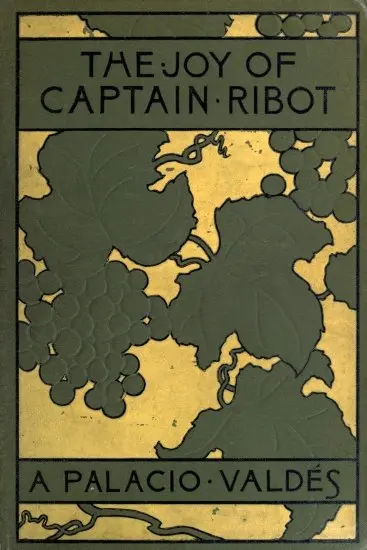
Armando Palacio Valdés
THE CLASSIC COLLECTION · 1891
"Froth: A Novel" by Armando Palacio Valdés is a fiction piece written in the late 19th century. The novel deals with the dynamics of fashionable life in Madrid, exploring themes of social pretension and class struggles through the lives of its characters. Notably, it introduces complex figures such as Clementina, the elegant protagonist, and a host of others intertwined in a web of societal expectations and personal ambitions. The opening of the novel sets the scene on a sunlit Calle de Serrano in Madrid, where we meet Clementina, an elegantly dressed woman whose confidence and allure draw the attention of passersby, including a youthful admirer who trails her. As she navigates the bustling street, her interactions with the world around her reveal her haughty nature and cultivation of a distinct social identity. The narrative quickly shifts to the elite circles she inhabits, showcasing her arrival at her sister-in-law's home, where various characters—both allies and rivals—come into focus. These include her husband Julian Calderón and others from the upper echelons of society, providing a vivid tableau of interpersonal relationships replete with humor, tension, and societal critique. The intricate details highlight the author’s deft portrayal of the superficiality lurking beneath the appealing exterior of fashionable life.
Introduction adapted from the source catalogue; source summaries may be automatically generated.
Free to read · English · 120,214 words · No account needed
MAKE TIME FOR A GOOD BOOK
On by default. Untick to stop anonymous reading totals. Each page counts after 10 seconds in view. How this works.
Anonymous counting is on unless you have switched it off.
At the same time he put his hand in his pocket and took out his note-book. M. Fayolle still smiled, saying that he could not bear to ask for it, knowing that the Duke was such a pauper, and that it would be dreadful indeed to see him reduced to beggary, a delicate joke which Requena did not seem to hear, being absorbed in counting out the paper. He laid out seven notes of one hundred dollars each and handed them to Fayolle, ringing a bell for a clerk to bring a form of receipt. Fayolle, on his part, counted them, and then said:
"You have made a mistake, Monsieur le Duc, the account is for eight hundred dollars, and you have only given me seven."
Salabert did not seem to have heard him. With his eyes half-closed, and shifting his cigar from one corner of his mouth to the other, he sat silent, looking at the pocket-book, after fastening it with an elastic band.
"This is one hundred dollars short," Fayolle reiterated.
"What? Short? Count once more. It is impossible!"
The horse-dealer counted.
"Three thousand five hundred pesetas."
"You see, I could not be wrong."
"But the horse was to cost four thousand. That was a bargain."
The Duke's face expressed the most candid surprise.
"What! Four thousand pesetas? No, my friend, no. The horse was to be three thousand five hundred. It was on that understanding that I bought it."
"Monsieur le Duc, you really are under a mistake," said Fayolle, now
quite grave. "You must remember that we finally agreed on four
thousand."
"I remember all about it. It is you who have a bad memory. Here," he added to a clerk who came in with the receipt-form, "go downstairs, one of you, to the stables, and ask Benigno how much I told him I was to give for Apollyon?"
And at the same time, taking advantage of the moment when Fayolle looked at the messenger, he made a significant grimace at the man. The coachman's answer by the clerk was that the horse was to be three thousand five hundred pesetas.
Thereupon the dealer grew angry. He was quite positive that the bargain had stood at eight hundred dollars, and it was in this belief that he had delivered it. Otherwise the horse should never have left his stable.
Requena allowed him to talk himself out, only uttering grunts of dissent, without exciting himself in the smallest degree. Only when Fayolle talked of having the horse back, he said in a lazy tone:
"Then you evidently have some one in your eye who will give you eight hundred, and you want to be off the bargain?"
Your reading position is saved on this browser. Take it to another device with a library code. Reading pages adapt to text, rather than matching a printed edition.
Armando Palacio Valdés

Armando Palacio Valdés
Armando Palacio Valdés
Armando Palacio Valdés
BEHIND THE BOOK
This eBook is for the use of anyone anywhere in the United States and most other parts of the world at no cost and with almost no restrictions whatsoever. You may copy it, give it away or re-use it under the terms of the Project Gutenberg License included with this eBook or online at www.gutenberg.org. If you are not located in the United States, you will have to check the laws of the country where you are located before using this eBook. Read the source licence.
The original source file, including credits and licence, is retained by this library. Request an original-format copy at no charge. Please include the book title and Project Gutenberg identifier #38411.
KEEP YOUR CURIOSITY GOING
Coulson Kernahan

Maurice Baring
Frances Wright
Cécile Tormay

Frederic Jesup Stimson

W. H. P. (William Henry Pope) Jarvis