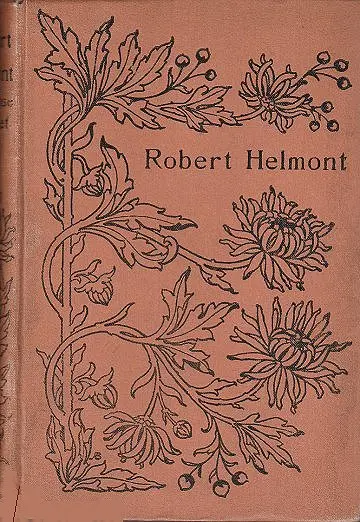
Robert Helmont: Diary of a Recluse, 1870-1871
Alphonse Daudet
THE CLASSIC COLLECTION · 1898
"Fromont and Risler — Complete" by Alphonse Daudet is a novel written during the late 19th century, specifically in the context of the Naturalism movement in literature. The narrative centers around the lives of characters intertwined in the world of Parisian bourgeoisie, particularly focusing on Risler, a self-made and honest man, and Sidonie, his young and charming bride. The story explores themes of ambition, social class, and the complexities of human relationships as it unfolds against the backdrop of their wedding festivities and the societal structures that influence their lives. The opening of the novel introduces readers to the joyful yet emotionally charged scenes at Risler's wedding. As Risler celebrates his newfound happiness amidst friends and family at a lavish cafe, he reflects on the day’s events with overwhelming joy, particularly the presence of his bride Sidonie and her mother. However, hints of underlying tensions and unspoken concerns emerge when he interacts with various guests, including his partner Georges Fromont, who seems to have a complicated connection with Sidonie. Through a vivid depiction of characters' emotions and the dynamics of social hierarchy, Daudet sets the stage for the complex interplay of love, ambition, and societal expectations that will shape Risler's and Sidonie's lives moving forward.
Introduction adapted from the source catalogue; source summaries may be automatically generated.
Free to read · English · 85,163 words · No account needed
MAKE TIME FOR A GOOD BOOK
On by default. Untick to stop anonymous reading totals. Each page counts after 10 seconds in view. How this works.
Anonymous counting is on unless you have switched it off.
"You have business together, Messieurs; do not let me disturb you."
He added in a low tone, winking at Risler:
"I have the papers."
"The papers?" echoed Risler, in a bewildered tone.
"The estimates," whispered the actor.
Thereupon, with a great show of discretion, he withdrew within himself, and resumed the reading of his documents, his head in his hands and his fingers in his ears.
The two others conversed by his side, first in undertones, then louder, for M. Chebe's shrill, piercing voice could not long be subdued.--He wasn't old enough to be buried, deuce take it!--He should have died of ennui at Montrouge.--What he must have was the bustle and life of the Rue de Mail or the Rue du Sentier--of the business districts.
"Yes, but a shop? Why a shop?" Risler timidly ventured to ask.
"Why a shop?--why a shop?" repeated M. Chebe, red as an Easter egg, and raising his voice to its highest pitch. "Why, because I'm a merchant, Monsieur Risler, a merchant and son of a merchant. Oh! I see what you're coming at. I have no business. But whose fault is it? If the people who shut me up at Montrouge, at the gates of Bicetre, like a paralytic, had had the good sense to furnish me with the money to start in business--"
At that point Risler succeeded in silencing him, and thereafter only snatches of the conversation could be heard: "a more convenient shop--high ceilings--better air--future plans--enormous business--I will speak when the time comes--many people will be astonished."
As he caught these fragments of sentences, Delobelle became more and more absorbed in his estimates, presenting the eloquent back of the man who is not listening. Risler, sorely perplexed, slowly sipped his beer from time to time to keep himself, in countenance.
At last, when M. Chebe had grown calm, and with good reason, his son-in-law turned with a smile to the illustrious Delobelle, and met the stern, impassive glance which seemed to say, "Well! what of me?"
"Ah! Mon Dieu!--that is true," thought the poor fellow.
Changing at once his chair and his glass, he took his seat opposite the actor. But M. Chebe had not Delobelle's courtesy. Instead of discreetly moving away, he took his glass and joined the others, so that the great man, unwilling to speak before him, solemnly replaced his documents in his pocket a second time, saying to Risler:
"We will talk this over later."
Very much later, in truth, for M. Chebe had reflected:
"My son-in-law is so good-natured! If I leave him with this swindler, who knows what he may get out of him?"
Your reading position is saved on this browser. Take it to another device with a library code. Reading pages adapt to text, rather than matching a printed edition.
Alphonse Daudet
Alphonse Daudet
Alphonse Daudet
Alphonse Daudet
BEHIND THE BOOK
This eBook is for the use of anyone anywhere in the United States and most other parts of the world at no cost and with almost no restrictions whatsoever. You may copy it, give it away or re-use it under the terms of the Project Gutenberg License included with this eBook or online at www.gutenberg.org. If you are not located in the United States, you will have to check the laws of the country where you are located before using this eBook. Read the source licence.
The original source file, including credits and licence, is retained by this library. Request an original-format copy at no charge. Please include the book title and Project Gutenberg identifier #3980.
KEEP YOUR CURIOSITY GOING
Coulson Kernahan

Maurice Baring
Frances Wright
Cécile Tormay

Frederic Jesup Stimson

W. H. P. (William Henry Pope) Jarvis