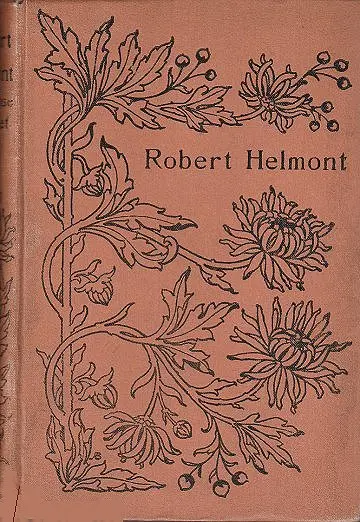
Robert Helmont: Diary of a Recluse, 1870-1871
Alphonse Daudet
THE CLASSIC COLLECTION · 1898
"Fromont and Risler — Complete" by Alphonse Daudet is a novel written during the late 19th century, specifically in the context of the Naturalism movement in literature. The narrative centers around the lives of characters intertwined in the world of Parisian bourgeoisie, particularly focusing on Risler, a self-made and honest man, and Sidonie, his young and charming bride. The story explores themes of ambition, social class, and the complexities of human relationships as it unfolds against the backdrop of their wedding festivities and the societal structures that influence their lives. The opening of the novel introduces readers to the joyful yet emotionally charged scenes at Risler's wedding. As Risler celebrates his newfound happiness amidst friends and family at a lavish cafe, he reflects on the day’s events with overwhelming joy, particularly the presence of his bride Sidonie and her mother. However, hints of underlying tensions and unspoken concerns emerge when he interacts with various guests, including his partner Georges Fromont, who seems to have a complicated connection with Sidonie. Through a vivid depiction of characters' emotions and the dynamics of social hierarchy, Daudet sets the stage for the complex interplay of love, ambition, and societal expectations that will shape Risler's and Sidonie's lives moving forward.
Introduction adapted from the source catalogue; source summaries may be automatically generated.
Free to read · English · 85,163 words · No account needed
MAKE TIME FOR A GOOD BOOK
On by default. Untick to stop anonymous reading totals. Each page counts after 10 seconds in view. How this works.
Anonymous counting is on unless you have switched it off.
"Listen to me, Sidonie! My brother's name, the name he gave his wife, is mine as well. Since Risler is so foolish, so blind as to allow the name to be dishonored by you, it is my place to defend it against your attacks. I beg you, therefore, to inform Monsieur Georges Fromont that he must change mistresses as soon as possible, and go elsewhere to ruin himself. If not--"
"If not?" queried Sidonie, who had not ceased to play with her rings
while he was speaking.
"If not, I shall tell my brother what is going on in his house, and you will be surprised at the Risler whose acquaintance you will make then--a man as violent and ungovernable as he usually is inoffensive. My disclosure will kill him perhaps, but you can be sure that he will kill you first."
She shrugged her shoulders.
"Very well! let him kill me. What do I care for that?"
This was said with such a heartbroken, despondent air that Frantz, in spite of himself, felt a little pity for that beautiful, fortunate young creature, who talked of dying with such self-abandonment.
"Do you love him so dearly?" he said, in an indefinably milder tone. "Do you love this Fromont so dearly that you prefer to die rather than renounce him?"
She drew herself up hastily.
"I? Love that fop, that doll, that silly girl in men's clothes? Nonsense!--I took him as I would have taken any other man."
"Why?"
"Because I couldn't help it, because I was mad, because I had and still have in my heart a criminal love, which I am determined to tear out, no matter at what cost."
She had risen and was speaking with her eyes in his, her lips near his, trembling from head to foot.
A criminal love?--Whom did she love, in God's name?
Frantz was afraid to question her.
Although suspecting nothing as yet, he had a feeling that that glance, that breath, leaning toward him, were about to make some horrible disclosure.
But his office of judge made it necessary for him to know all.
"Who is it?" he asked.
She replied in a stifled voice:
"You know very well that it is you."
She was his brother's wife.
For two years he had not thought of her except as a sister. In his eyes his brother's wife in no way resembled his former fiancee, and it would have been a crime to recognize in a single feature of her face the woman to whom he had formerly so often said, "I love you."
And now it was she who said that she loved him.
Your reading position is saved on this browser. Take it to another device with a library code. Reading pages adapt to text, rather than matching a printed edition.
Alphonse Daudet
Alphonse Daudet
Alphonse Daudet
Alphonse Daudet
BEHIND THE BOOK
This eBook is for the use of anyone anywhere in the United States and most other parts of the world at no cost and with almost no restrictions whatsoever. You may copy it, give it away or re-use it under the terms of the Project Gutenberg License included with this eBook or online at www.gutenberg.org. If you are not located in the United States, you will have to check the laws of the country where you are located before using this eBook. Read the source licence.
The original source file, including credits and licence, is retained by this library. Request an original-format copy at no charge. Please include the book title and Project Gutenberg identifier #3980.
KEEP YOUR CURIOSITY GOING
Coulson Kernahan

Maurice Baring
Frances Wright
Cécile Tormay

Frederic Jesup Stimson

W. H. P. (William Henry Pope) Jarvis