
Letters of Marque
Rudyard Kipling

THE CLASSIC COLLECTION · 1899
"From Sea to Sea; Letters of Travel" by Rudyard Kipling is a collection of travel letters written in the late 19th century. The text compiles correspondence and articles penned by Kipling for the "Civil and Military Gazette" and the "Pioneer" during his observations in India and other regions. The book captures Kipling's reflections and experiences as he navigates through various locales, engaging with the people and cultures he encounters. The opening of the work introduces Kipling's perspective on travel through the eyes of both an experienced observer and a somewhat critical voice towards less discerning tourists—the "Globe-trotters." He vividly describes the enchanting sight of the Taj Mahal as viewed from a train, revealing the complexities of first impressions and the deeper meanings woven into such experiences, including sorrow and beauty. Through encounters with characters like a Young Man from Manchester, Kipling illustrates the often superficial perceptions of travelers, contrasting their nonchalant attitudes with the depth of emotion tied to the places they visit. This section sets the tone for a broader exploration of India, marked by a rich blend of cultural insights and social commentary.
Introduction adapted from the source catalogue; source summaries may be automatically generated.
Free to read · English · 210,558 words · No account needed
MAKE TIME FOR A GOOD BOOK
On by default. Untick to stop anonymous reading totals. Each page counts after 10 seconds in view. How this works.
Anonymous counting is on unless you have switched it off.
But I am sorry for Bret Harte. It happened this way. A reporter asked me what I thought of the city, and I made answer suavely that it was hallowed ground to me because of Bret Harte. That was true: "Well," said the reporter, "Bret Harte claims California, but California don't claim Bret Harte. He's been so long in England that he's quite English. Have you seen our cracker-factories and the new offices of the Examiner?" He could not understand that to the outside world the city was worth a great deal less than the man.
Night fell over the Pacific, and the white sea-fog whipped through the streets, dimming the splendours of the electric lights. It is the use of this city, her men and women, to parade between the hours of eight and ten a certain street, called Kearney Street, where the finest shops are situated. Here the click of heels on the pavement is loudest, here the lights are brightest, and here the thunder of the traffic is most overwhelming. I watched Young California and saw that it was at least expensively dressed, cheerful in manner, and self-asserting in conversation. Also the women are very fair. The maidens were of generous build, large, well-groomed, and attired in raiment that even to my inexperienced eyes must have cost much. Kearney Street, at nine o'clock, levels all distinctions of rank as impartially as the grave. Again and again I loitered at the heels of a couple of resplendent beings, only to overhear, when I expected the level voice of culture, the staccato "Sez he," "Sez I," that is the mark of the white servant-girl all the world over.
This was depressing because, in spite of all that goes to the contrary, fine feathers ought to make fine birds. There was wealth--unlimited wealth--in the streets, but not an accent that would not have been dear at fifty cents. Wherefore, revolving in my mind that these folk were barbarians, I was presently enlightened and made aware that they also were the heirs of all the ages, and civilised after all. There appeared before me an affable stranger of prepossessing appearance, with a blue and an innocent eye. Addressing me by name, he claimed to have met me in New York at the Windsor, and to this claim I gave a qualified assent. I did not remember the fact, but since he was so certain of it, why then--I waited developments. "And what did you think of Indiana when you came through?" was the next question. It revealed the mystery of previous acquaintance, and one or two other things. With reprehensible carelessness, my friend of the light-blue eye had looked up the name of his victim in the hotel register and read "India" for Indiana. He could not imagine an Englishman coming through the States from West to East instead of by the regularly ordained route. My fear was that in his delight at finding me so responsive he would make remarks about New York and the Windsor which I could not understand. And indeed, he adventured in this direction once or twice, asking me what I thought of such and such streets, which, from his tone, I gathered were anything but respectable. It is trying to talk unknown New York in almost unknown San Francisco. But my friend was merciful. He protested that I was one after his own heart, and pressed upon me rare and curious drinks at more than one bar. These drinks I accepted with gratitude, as also the cigars with which his pockets were stored. He would show me the Life of the city. Having no desire to watch a weary old play again, I evaded the offer, and received in lieu of the Devil's instruction much coarse flattery. Curiously constituted is the soul of man. Knowing how and where this man lied, waiting idly for the finale, I was distinctly conscious, as he bubbled compliments in my ear, of soft thrills of gratified pride. I was wise, quoth he, anybody could see that with half an eye; sagacious; versed in the affairs of the world; an acquaintance to be desired; one who had tasted the cup of Life with discretion. All this pleased me, and in a measure numbed the suspicion that was thoroughly aroused. Eventually the blue-eyed one discovered, nay insisted, that I had a taste for cards (this was clumsily worked in, but it was my fault, in that I met him half-way, and allowed him no chance of good acting). Hereupon, I laid my head to one side, and simulated unholy wisdom, quoting odds and ends of poker-talk, all ludicrously misapplied. My friend kept his countenance admirably; and well he might, for five minutes later we arrived, always by the purest of chances, at a place where we could play cards, and also frivol with Louisiana State Lottery tickets. Would I play? "Nay," said I, "for to me cards have neither meaning nor continuity; but let us assume that I am going to play. How would you and your friends get to work? Would you play a straight game, or make me drunk, or--well, the fact is I'm a newspaper man, and I'd be much obliged if you'd let me know something about bunco-steering." My blue-eyed friend cursed me by his gods,--the Right and the Left Bower; he even cursed the very good cigars he had given me. But, the storm over, he quieted down and explained. I apologised for causing him to waste an evening, and we spent a very pleasant time together. Inaccuracy, provincialism, and a too hasty rushing to conclusions were the rocks that he had split on; but he got his revenge when he said: "How would I play with you? From all the poppycock" (Anglice, bosh) "you talked about poker, I'd ha' played a straight game and skinned you. I wouldn't have taken the trouble to make you drunk. You never knew anything of the game; but the way I was mistaken in you makes me sick." He glared at me as though I had done him an injury. To-day I know how it is that, year after year, week after week, the bunco-steerer, who is the confidence-trick and the card-sharper man of other climes, secures his prey. He slavers them over with flattery, as the snake slavers the rabbit. The incident depressed me because it showed I had left the innocent East far behind, and was come to a country where a man must look out for himself. The very hotel bristled with notices about keeping my door locked, and depositing my valuables in a safe. The white man in a lump is bad. Weeping softly for O-Toyo (little I knew then that my heart was to be torn afresh from my bosom!), I fell asleep in the clanging hotel.
Your reading position is saved on this browser. Take it to another device with a library code. Reading pages adapt to text, rather than matching a printed edition.
Rudyard Kipling
Rudyard Kipling

Rudyard Kipling
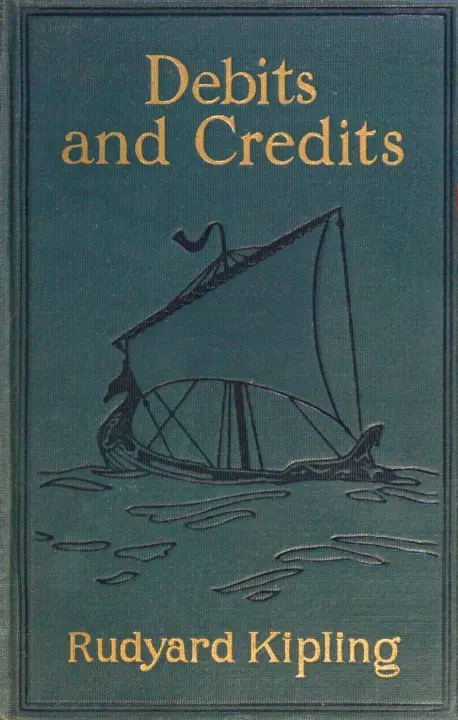
Rudyard Kipling
BEHIND THE BOOK
This eBook is for the use of anyone anywhere in the United States and most other parts of the world at no cost and with almost no restrictions whatsoever. You may copy it, give it away or re-use it under the terms of the Project Gutenberg License included with this eBook or online at www.gutenberg.org. If you are not located in the United States, you will have to check the laws of the country where you are located before using this eBook. Read the source licence.
The original source file, including credits and licence, is retained by this library. Request an original-format copy at no charge. Please include the book title and Project Gutenberg identifier #32977.
KEEP YOUR CURIOSITY GOING
Wilfrid Scawen Blunt
Wilfrid Scawen Blunt

E. W. (Edgar Watson) Howe

David Patterson (Spirit) Hatch

David Patterson (Spirit) Hatch

David Patterson (Spirit) Hatch