
Letters of Marque
Rudyard Kipling

THE CLASSIC COLLECTION · 1899
"From Sea to Sea; Letters of Travel" by Rudyard Kipling is a collection of travel letters written in the late 19th century. The text compiles correspondence and articles penned by Kipling for the "Civil and Military Gazette" and the "Pioneer" during his observations in India and other regions. The book captures Kipling's reflections and experiences as he navigates through various locales, engaging with the people and cultures he encounters. The opening of the work introduces Kipling's perspective on travel through the eyes of both an experienced observer and a somewhat critical voice towards less discerning tourists—the "Globe-trotters." He vividly describes the enchanting sight of the Taj Mahal as viewed from a train, revealing the complexities of first impressions and the deeper meanings woven into such experiences, including sorrow and beauty. Through encounters with characters like a Young Man from Manchester, Kipling illustrates the often superficial perceptions of travelers, contrasting their nonchalant attitudes with the depth of emotion tied to the places they visit. This section sets the tone for a broader exploration of India, marked by a rich blend of cultural insights and social commentary.
Introduction adapted from the source catalogue; source summaries may be automatically generated.
Free to read · English · 210,558 words · No account needed
MAKE TIME FOR A GOOD BOOK
On by default. Untick to stop anonymous reading totals. Each page counts after 10 seconds in view. How this works.
Anonymous counting is on unless you have switched it off.
The State Engineer, who is also the Jodhpur State Line, for he has no European subordinates, conceived the idea of bringing the water from the Balsaman into the city. Was the city grateful? Not in the least. It is said that the Sahib wanted the water to run uphill and was throwing money into the tank. Being true Marwaris, men betted on the subject. The canal--a built out one, for water must not touch earth in these parts--was made at a cost of something over a lakh, and the water came down because its source was a trifle higher than the city. Now, in the hot weather, the women need not go for long walks, but the Marwari cannot understand how it was that the waters came down to Jodhpur. From the Marwari to money matters is an easy step. Formerly, that is to say, up to within a very short time, the Treasury of Jodhpur was conducted in a shiftless, happy-go-lucky sort of fashion, not uncommon in Native States, whereby the Mahajuns "held the bag" and made unholy profits on discount and other things, to the confusion of the Durbar Funds and their own enrichment. There is now a Treasury modelled on English lines, and English in the important particular that money is not to be got from it for the asking, and the items of expenditure are strictly looked after.
In the middle of all this bustle of reform planned, achieved, frustrated, and replanned, and the never-ending underground warfare that surges in a Native State, move the English officers--the irreducible minimum of exiles. As a caste, the working Englishmen in Native States are curiously interesting; and the traveller whose tact by this time has been blunted by tramping, sits in judgment upon them as he has seen them. In the first place, they are, they must be, the fittest who have survived; for though, here and there, you shall find one chafing bitterly against the burden of his life in the wilderness, one to be pitied more than any chained beast, the bulk of the caste are honestly and unaffectedly fond of their work, fond of the country around them, and fond of the people they deal with. In each State their answer to a question is the same. The men with whom they are in contact are "all right" when you know them, but you've got to "know them first," as the music-hall song says. Their hands are full of work; so full that, when the incult wanderer said: "What do you find to do?" they look upon him with contempt and amazement, exactly as the wanderer himself had once looked upon a Globe-trotter, who had put to him the same impertinent query. And--but here the Englishman may be wrong--it seemed to him that in one respect their lives were a good deal more restful and concentrated than those of their brethren under the British Government. There was no talk of shiftings and transfers and promotions, stretching across a Province and a half, and no man said anything about Simla. To one who has hitherto believed that Simla is the hub of the Empire, it is disconcerting to hear: "Oh, Simla! That's where you Bengalis go. We haven't anything to do with Simla down here." And no more they have. Their talk and their interests run in the boundaries of the States they serve, and, most striking of all, the gossipy element seems to be cut altogether. It is a backwater of the river of Anglo-Indian life--or is it the main current, the broad stream that supplies the motive power, and is the other life only the noisy ripple on the surface? You who have lived, not merely looked at, both lives, decide. Much can be learnt from the talk of the caste, many curious, many amusing, and some startling things. One hears stories of men who take a poor, impoverished State as a man takes a wife, "for better or worse," and, moved by some incomprehensible ideal of virtue, consecrate--that is not too big a word--consecrate their lives to that State in all single-heartedness and purity. Such men are few, but they exist to-day, and their names are great in lands where no Englishman travels. Again the listener hears tales of grizzled diplomats of Rajputana--Machiavellis who have hoisted a powerful intriguer with his own intrigue, and bested priestly cunning, and the guile of the Oswal, simply that the way might be clear for some scheme which should put money into a tottering Treasury, or lighten the taxation of a few hundred thousand men--or both; for this can be done. One tithe of that force spent on their own personal advancement would have carried such men very far.
Your reading position is saved on this browser. Take it to another device with a library code. Reading pages adapt to text, rather than matching a printed edition.
Rudyard Kipling
Rudyard Kipling

Rudyard Kipling
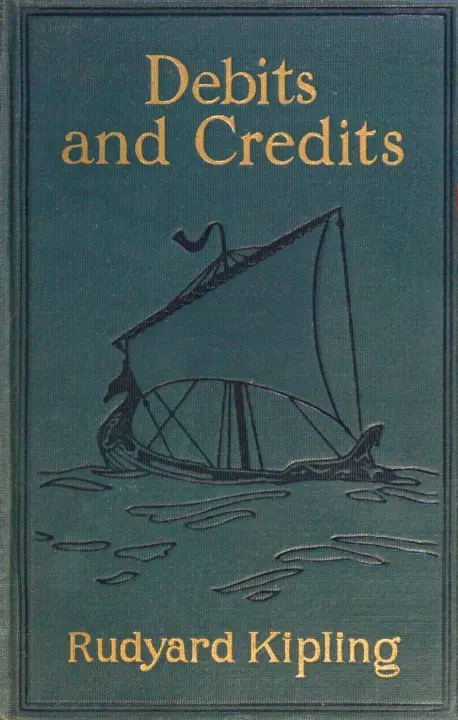
Rudyard Kipling
BEHIND THE BOOK
This eBook is for the use of anyone anywhere in the United States and most other parts of the world at no cost and with almost no restrictions whatsoever. You may copy it, give it away or re-use it under the terms of the Project Gutenberg License included with this eBook or online at www.gutenberg.org. If you are not located in the United States, you will have to check the laws of the country where you are located before using this eBook. Read the source licence.
The original source file, including credits and licence, is retained by this library. Request an original-format copy at no charge. Please include the book title and Project Gutenberg identifier #32977.
KEEP YOUR CURIOSITY GOING
Wilfrid Scawen Blunt
Wilfrid Scawen Blunt

E. W. (Edgar Watson) Howe

David Patterson (Spirit) Hatch

David Patterson (Spirit) Hatch

David Patterson (Spirit) Hatch