THE CLASSIC COLLECTION✦An outlaw’s diary: the CommuneCLASSIC FREE BOOKS
An outlaw’s diary: the Commune
Cécile Tormay
THE CLASSIC COLLECTION · 1899
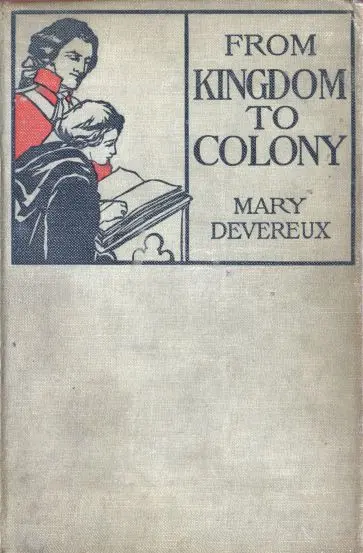
"From Kingdom to Colony" by Mary Devereux is a historical novel written in the early 20th century. The narrative seamlessly blends elements of adventure and romance against the backdrop of early American colonial life, likely spanning from the late 17th to the mid-18th century. The story revolves around the Devereux family, particularly focusing on Anne and John Devereux, as they navigate the challenges of colonization, the relationships with Native Americans, and the impending tensions leading to war with the British. The opening of the book introduces readers to a richly detailed historical setting starting in 1639, at Bromwich Castle in England, and transitions to John Devereux's new home in Marblehead, where he and his wife, Anne, prepare for their future in a land filled with unfamiliar dangers. As they settle in, they become aware of their responsibilities as the heads of their family and community, encountering both friendships and threats among the local Native American tribes. The tone shifts from pastoral and peaceful to a growing tension as outside threats loom, signaling a coming conflict that hints at the struggles to come in the chapters ahead. This opening establishes a vibrant world full of political strife and personal stakes, drawing readers into a pivotal moment in American history.
Introduction adapted from the source catalogue; source summaries may be automatically generated.
Free to read · English · 95,362 words · No account needed
MAKE TIME FOR A GOOD BOOK
On by default. Untick to stop anonymous reading totals. Each page counts after 10 seconds in view. How this works.
Anonymous counting is on unless you have switched it off.
"D--n the King and all his redcoats!" came hoarsely from another man; and then the talk was stopped by a faint sound from the water.
Doak commanded the men to keep perfectly silent, for only the keenest alertness could catch what the wind now brought to them. It was the faintest imaginable noise of working oars; and it sent a shudder, like a great sigh, through the waiting group.
Mary Broughton felt her pulses thrill as the sound became more distinct; and she glanced nervously about, and back of her,--at the dark woods on the one hand, the frowning rock-piles on the other, and at the sweep of clear meadows in the rear.
"Draw aside, Mistress Mary, do ye now, please," Doak urged, laying his hand upon her arm. "Get over there close by the rocks. For if so be there comes any surprise from the Britishers, 'twill surely be from the back of us, here; an' in such case ye'll be safe an' clear from 'em, or from flyin' bullets, if ye get behind the rocks."
She felt the wisdom of this advice, and silently complied, while he went forward to the men, now drawn down close to the water's edge.
The next moment he sent a likely-to-be-understood signal out over the water. It was the curlew's cry, which he imitated perfectly; and while it rang out softly, it was clear and penetrating.
There was a second of silence, save for the wind, and the rippling of the waves upon the shingle; then came a like cry from out the darkness, and seeming nearer than had the sound of the oars.
"Now, then, lads, face 'bout, an' watch afore ye!" Doak commanded, his voice now strong with excitement; and pushing through them until he reached the very edge of the water, he sent back another call,--loud, clear, and fearless in its sound.
The other men, with faces turned inland, stood with listening ears and keen eyes, each gripping his gun, ready to repel the onslaught of any lurking enemy that might be awaiting a favorable moment to swoop down upon them.
Following close upon Doak's second call there came the unmistakable sound of rapidly working oars. Then a sizable lump of dark shadow showed, speeding toward the beach, and soon defining its shape into that of a large rowboat.
Crouched closely against the rocks, and listening with checked breathing, Mary Broughton almost cried aloud as a step startled her. Then looking intently at the form drawing near, she recognized it, and said quickly, with a deep sigh of relief, "Oh, Dorothy!"
Your reading position is saved on this browser. Take it to another device with a library code. Reading pages adapt to text, rather than matching a printed edition.
BEHIND THE BOOK
This eBook is for the use of anyone anywhere in the United States and most other parts of the world at no cost and with almost no restrictions whatsoever. You may copy it, give it away or re-use it under the terms of the Project Gutenberg License included with this eBook or online at www.gutenberg.org. If you are not located in the United States, you will have to check the laws of the country where you are located before using this eBook. Read the source licence.
The original source file, including credits and licence, is retained by this library. Request an original-format copy at no charge. Please include the book title and Project Gutenberg identifier #34232.
KEEP YOUR CURIOSITY GOING
Cécile Tormay

Moritz Busch
Coulson Kernahan
John L. Ransom

Maurice Baring
Frances Wright