THE CLASSIC COLLECTION✦An outlaw’s diary: the CommuneCLASSIC FREE BOOKS
An outlaw’s diary: the Commune
Cécile Tormay
THE CLASSIC COLLECTION · 1899
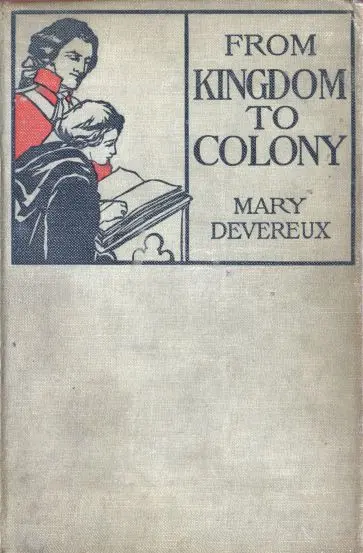
"From Kingdom to Colony" by Mary Devereux is a historical novel written in the early 20th century. The narrative seamlessly blends elements of adventure and romance against the backdrop of early American colonial life, likely spanning from the late 17th to the mid-18th century. The story revolves around the Devereux family, particularly focusing on Anne and John Devereux, as they navigate the challenges of colonization, the relationships with Native Americans, and the impending tensions leading to war with the British. The opening of the book introduces readers to a richly detailed historical setting starting in 1639, at Bromwich Castle in England, and transitions to John Devereux's new home in Marblehead, where he and his wife, Anne, prepare for their future in a land filled with unfamiliar dangers. As they settle in, they become aware of their responsibilities as the heads of their family and community, encountering both friendships and threats among the local Native American tribes. The tone shifts from pastoral and peaceful to a growing tension as outside threats loom, signaling a coming conflict that hints at the struggles to come in the chapters ahead. This opening establishes a vibrant world full of political strife and personal stakes, drawing readers into a pivotal moment in American history.
Introduction adapted from the source catalogue; source summaries may be automatically generated.
Free to read · English · 95,362 words · No account needed
MAKE TIME FOR A GOOD BOOK
On by default. Untick to stop anonymous reading totals. Each page counts after 10 seconds in view. How this works.
Anonymous counting is on unless you have switched it off.
"Ah, Dot, but you are surely a spoiled child," said Mary, with a fond glance at the winsome face.
Dorothy shrugged her small shoulders. "So Aunt Penine is always saying; but all the aunts in the world could never come 'twixt my father and me."
Little 'Bitha, who had been crooning softly to herself, and improvising, after a fashion of her own,--
"The sea is blue, blue, blue,
The sea is blue, and I love the sea,"
suddenly cried out, "Oh, Dot, look, look! What an ugly fish!"
They all looked, and saw a dead dogfish, its cruel teeth showing in the gaping jaws, go bobbing by, entangled in a mesh of floating seaweed.
"Him look like dead nigger," said Pashar, as he flung a pebble at it.
Old Leet scowled over his shoulder at his lively descendant.
"Dere'll be anudder, an' real true, dead nigger ter keep him company, ef ye don't sit still, an' quit grampussin' 'bout de boat," he growled; and. Pashar became very quiet.
They were now drawing in nearer to the shore, where the strip of sand-beach lay down below the rocky headland, upon the highest point of which stood Spray House, the home of Nicholson Broughton and his daughter Mary.
The house--a low, rambling building, with gabled roof--was perched upon the highest of a series of greenstone and syenite ledges, whose natural jaggedness had no need to be strengthened by art to render them a safe bulwark against the encroaching seas, when the storms flashed blinding mists and glittering spray about the diamond-paned windows.
These looked off over the open water, and past the point of land intervening between Great Bay and Marblehead Rock. Upon the latter was an odd beacon,--being a discarded pulpit from one of the Boston churches, whence, after hearing much of the noise and commotion of men, it had been transferred to this barren rock, there to listen to the ceaseless tumult of the battling sea.
Inland from Spray House stood the many great warehouses; and back of these stretched the pasture-lands, breaking here and there into rough hills, showing fields of golden splendor, where the wood-wax, or "dyer's weed," was growing in luxuriant wildness.
Several small boats were drawn up on the beach; and anchored a little way out, and directly opposite the front windows of Spray House, were two goodly-sized schooners, and a brig, their topmasts now touched by the fiery gold of sunset.
"I wish you were coming home with me, Mary," said Dorothy, as Leet ran the boat's nose into the shingle, and Pashar leaped out to hold the stern.
Your reading position is saved on this browser. Take it to another device with a library code. Reading pages adapt to text, rather than matching a printed edition.
BEHIND THE BOOK
This eBook is for the use of anyone anywhere in the United States and most other parts of the world at no cost and with almost no restrictions whatsoever. You may copy it, give it away or re-use it under the terms of the Project Gutenberg License included with this eBook or online at www.gutenberg.org. If you are not located in the United States, you will have to check the laws of the country where you are located before using this eBook. Read the source licence.
The original source file, including credits and licence, is retained by this library. Request an original-format copy at no charge. Please include the book title and Project Gutenberg identifier #34232.
KEEP YOUR CURIOSITY GOING
Cécile Tormay

Moritz Busch
Coulson Kernahan
John L. Ransom

Maurice Baring
Frances Wright