
John Bull’s Womankind (Les Filles de John Bull)
Max O'Rell
THE CLASSIC COLLECTION · 1887
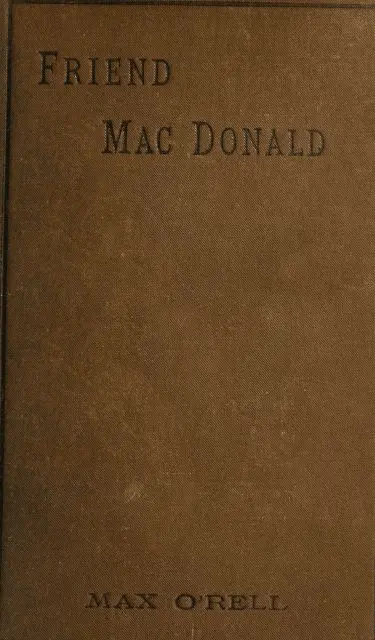
"Friend Mac Donald" by Max O'Rell is a humorous and insightful account written in the late 19th century. The book offers a lively exploration of Scottish culture, character, and anecdotes, primarily reflecting on the unique traits of Scots, particularly a character named Donald. Through lighthearted anecdotes and observations, it attempts to paint an affectionate portrait of Scotland and its people, aiming to bridge cultural understandings, especially for a French audience. The opening of "Friend Mac Donald" introduces the author reminiscing about his time in Scotland, emphasizing the rich tapestry of anecdotes he gathered during his stay. He notes that while the English believe Scots lack humor, they actually possess a distinctive wit characterized by good-humor and cleverness. The author reflects on his conversations with Donald, highlighting the pride and lively spirit embedded in Scottish culture. Additionally, he briefly touches on how Scots, while increasingly incorporating English aspects into their daily lives, retain core elements of their identity, particularly their matter-of-fact good humor and cultural pride. This sets the tone for an engaging exploration of Scottish life filled with wit and a deep appreciation for the Caledonian spirit.
Introduction adapted from the source catalogue; source summaries may be automatically generated.
Free to read · English · 42,836 words · No account needed
MAKE TIME FOR A GOOD BOOK
On by default. Untick to stop anonymous reading totals. Each page counts after 10 seconds in view. How this works.
Anonymous counting is on unless you have switched it off.
The blessing was asked, the kiss was taken, and the worthy divine, perfectly overcome with the blissful sensation, rapturously exclaimed:
"Eh, lass, but it is guid. We'll return thanks."
This they did, and the biographer adds that, six months later, this
pious couple were made one flesh and lived a long life of happy
usefulness.
The following little scene, of which a friend was witness in Scotland, will show that if Scotch people in general can see through a joke, there are also a few who belong to the type described by Sydney Smith, and for whom the surgical operation is a sad necessity.
Several persons had met together in a Scotch drawing-room, and were passing the evening in playing at simple games. One of these games consisted in each person going out of the room in turn, while the company agreed upon a word to be guessed at by the absent member on his or her return.
A young lady had just gone out of the room.
During her absence the word passionately was chosen.
The young lady having been recalled, each member of the party in turn went through a little performance that should lead her to guess the word, addressing her in passionate language, while expressing with the features as much love, despair, or anger, as possible.
A Scotchman, who looked ill at ease, whispered in my friend's ear:
"What must I do?"
"Try to look madly in love," said my friend, ready to burst out laughing at the sight of the long serious face of his neighbour.
"Couldn't you suggest me something to say?"
"Why, make the young lady a declaration of love. Say: 'It is useless to hide my feelings from you any longer; I love you, I adore you,' and then throw yourself at her feet and----"
"Excuse me," said the poor fellow quite upset, "but I'm married."
When the young lady came to him, he begged her politely to excuse him, and thought himself safe; unhappily he was not at the end of his troubles yet.
My friend, whose turn came next, threw himself on his knees, and, with haggard eyes and ruffled hair, thus addressed her:
"Dear young lady, this gentleman, whom you see at my side, is nervous and shy; he loves you and dares not to tell his love."
"But, excuse me," cried the Scotchman.
"Listen not to him, he is dying of love. If you do not return his flame, I know him, he will do something desperate. Have pity on him, dear lady, have pity."
"Passionately!" cried the young girl.
Your reading position is saved on this browser. Take it to another device with a library code. Reading pages adapt to text, rather than matching a printed edition.
Max O'Rell
Max O'Rell
Max O'Rell
Max O'Rell
BEHIND THE BOOK
This eBook is for the use of anyone anywhere in the United States and most other parts of the world at no cost and with almost no restrictions whatsoever. You may copy it, give it away or re-use it under the terms of the Project Gutenberg License included with this eBook or online at www.gutenberg.org. If you are not located in the United States, you will have to check the laws of the country where you are located before using this eBook. Read the source licence.
The original source file, including credits and licence, is retained by this library. Request an original-format copy at no charge. Please include the book title and Project Gutenberg identifier #33883.
KEEP YOUR CURIOSITY GOING
Wilfrid Scawen Blunt
Wilfrid Scawen Blunt

E. W. (Edgar Watson) Howe
Francis Greenleaf Allinson & Anne C. E. (Anne Crosby Emery) Allinson
Cyrenus Cole

John Martineau