
The Writing of News A Handbook with Chapters on Newspaper Correspondence and Copy Reading
Charles G. (Charles Griffith) Ross
THE CLASSIC COLLECTION · 1909
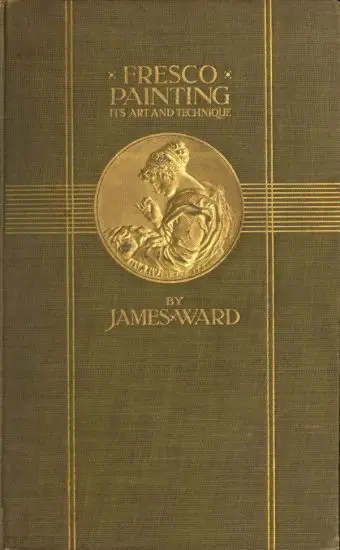
"Fresco Painting" by James Ward is a technical treatise on the art and technique of fresco painting written in the early 20th century. This book explores the historical significance and various methods of fresco, particularly focusing on the buon-fresco and spirit-fresco techniques. It serves as a practical guide for students and artists, drawing on the author's extensive experience in the field and the conditions influencing fresco durability, particularly in different climates. The opening of the treatise begins with a preface where the author establishes his goal to provide practical insights and commentary on fresco painting techniques derived from his experience. He reflects on common criticisms of fresco as a method of wall decoration, especially in the damp English climate, while asserting the value of the buen-fresco and spirit-fresco processes. The initial chapter discusses the intricate relationship between mural painting and architecture, highlighting how each form of art complements and enhances the others, thus laying the groundwork for the technical explanations that will follow throughout the book.
Introduction adapted from the source catalogue; source summaries may be automatically generated.
Free to read · English · 17,873 words · No account needed
MAKE TIME FOR A GOOD BOOK
On by default. Untick to stop anonymous reading totals. Each page counts after 10 seconds in view. How this works.
Anonymous counting is on unless you have switched it off.
Although the palette in buon-fresco painting is very simple and restricted as to the number of the colours which may be trusted to withstand the caustic action of the lime, at the same time a fairly rich and luminous colour scheme may be obtained, notwithstanding the limited range of the palette. The following list may be safely relied upon:--
WHITE. Lime white (hydrate of lime).
YELLOW. Raw sienna (a ferruginous earth).
“ . Cadmium yellow (cadmium sulphide).
RED. Vermilion (sulphide of mercury).
“ . Light red (calcined Oxford ochre).
“ . Indian red (ferric peroxide).
BLUE. Cobalt blue (phosphate of cobalt and alumina).
GREEN. Oxide of chromium (anhydrous sesquioxide of chromium).
“ . Emerald oxide of chromium (hydrated oxide of chromium and
borax).
“ . Cobalt green (oxides of cobalt and zinc).
ORANGE. Burnt sienna (raw sienna calcined).
BROWN. Raw umber (oxides of iron, manganese, and clay).
“ . Burnt umber (raw umber calcined).
BLACK. Ivory black (charred bones).
There are other pigments that might be used, but are really not necessary, and some of them are doubtful as to their permanence. One colour, not in our list, is the genuine ultramarine, a splendid blue, and thoroughly permanent in buon-fresco, but its great price prohibits its use, except in very small quantities, or on small portions of the work. French, or factitious, ultramarine is also very permanent, and withstands the action of the lime, but at the same time it is a most harsh and disagreeable colour when used in lime or in any other kind of fresco; when used alone it destroys by its intensity of hue the proper values of other colours in the scheme; on the other hand, if any attempt is made to tone it down by mixing it with another pigment, or by glazing another colour over it, the result is cold and muddy in the extreme, so it is best left out of the list, as it is almost unmanageable in fresco. Vermilion is rendered durable in fresco by pouring lime-water over the powdered colour, and then draining this water off, without disturbing the colour. This washing is repeated four or five times, before the vermilion is ready for use. Permanent white, which is a barium sulphate, and tin white, or tin binoxide, may both be used in lime frescoes, but they are unnecessary, and not so good for the purpose as lime white. Lemon yellow, Naples yellow, aureolin, Venetian red, and terre-verte may be used with lime, but it all depends on the manufacture of these colours as to whether or not they may be used with safety. For example, the Naples yellow, Venetian red, and terre-verte pigments of to-day are quite different in their chemical constituents to the same named colours of the fourteenth and fifteenth centuries. Yellow ochre, though it has been used very much by the old Italian frescanti, is not to be depended upon when used in lime fresco in this country, as it consists of a mixture or combination of hydrate of iron and clay; it therefore attracts the damp that is nearly always present in our atmosphere. Of course, it can be safely used in very dry climates, but it may be mentioned that it has been one of the pigments which has largely perished in some of the frescos of the Houses of Parliament. Another objection to its use in fresco is, that the caustic nature of the lime is apt to change yellow ochre to a light red, an after effect which may not be altogether desirable. Raw sienna, however, more than takes the place of yellow ochre, and is one of the most useful colours in fresco painting. We should say that the three most permanent and beautiful colours for use on the lime plaster are raw sienna, burnt umber, and Indian red, and whether used in transparent washes or in solid tints, as when mixed with lime-white, or in the full strength of their hues, they always dry out luminous and brilliant. All the colours should be ground very finely in water, and kept in covered jars or wide-mouthed glass bottles. The lime-white should be strained through muslin and kept covered. A bone or ivory palette knife must be used, and the palette should be made of tinned metal, having a series of small circular wells to hold the various colours. Brushes are of the ordinary kind, hog-hair, and a few long sable riggers. Hog-hair brushes are best for use when they are of a flat shape, but of a roundish finish at the end, like an old or half-worn brush, so that when in use they will not disturb the surface of the wet plaster, which a new or square-ended brush is apt to do.
Your reading position is saved on this browser. Take it to another device with a library code. Reading pages adapt to text, rather than matching a printed edition.
BEHIND THE BOOK
This eBook is for the use of anyone anywhere in the United States and most other parts of the world at no cost and with almost no restrictions whatsoever. You may copy it, give it away or re-use it under the terms of the Project Gutenberg License included with this eBook or online at www.gutenberg.org. If you are not located in the United States, you will have to check the laws of the country where you are located before using this eBook. Read the source licence.
The original source file, including credits and licence, is retained by this library. Request an original-format copy at no charge. Please include the book title and Project Gutenberg identifier #58159.
KEEP YOUR CURIOSITY GOING
Charles G. (Charles Griffith) Ross
Hannah Webster Foster

Emily Lawless
Edwin Hamlin Carr

Charles De Lano Hine
Andrew Ure