The orchestra and its instruments
Esther Singleton
THE CLASSIC COLLECTION · 1903
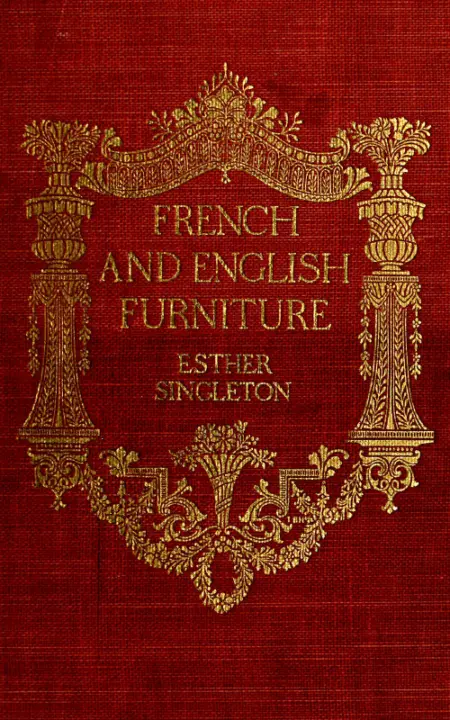
"French and English Furniture" by Esther Singleton is a historical account written in the early 20th century. The work provides an in-depth exploration of furniture styles and decorative arts from the French Renaissance to various English decorative periods, focusing on distinctive characteristics, functions, and historical contexts. Singleton aims to serve collectors, students, and interior decorators by offering a comprehensive guide to furnishing rooms in any given style. The opening of the text reveals Singleton's purpose of providing an extensive overview of French and English furniture from the Renaissance onward. She emphasizes the lack of comparable works that effectively describe and illustrate various styles, asserting that her book aims to enable readers to understand how to appropriately furnish rooms in specific historical styles, such as Louis XV or Heppelwhite. The preface also discusses the intricate details of the furniture, including upholstery, cabinetry, and decorative elements, highlighting the artistic achievements and evolution in taste from one period to another. Additionally, she mentions the inclusion of illustrations sourced from contemporary materials and designers to enrich the reader's understanding.
Introduction adapted from the source catalogue; source summaries may be automatically generated.
Free to read · English · 96,415 words · No account needed
MAKE TIME FOR A GOOD BOOK
On by default. Untick to stop anonymous reading totals. Each page counts after 10 seconds in view. How this works.
Anonymous counting is on unless you have switched it off.
“Vitruvius with great reason condemns an over-licentiousness in compositions of this kind, and blames the painters of his time for introducing monstrous extravagances. We mean not to vindicate anything that deserves such appellations, but surely in light and gay compositions, designed merely to amuse, it is not altogether necessary to exclude the whimsical and bizarre.”
Footnote 24:
“Rainceau, apparently derived from rain, an old French word, signifying the branch of a tree. This French term is also used by the artists of this country, to express the winding and twisting of the stalk or stem of the acanthus plant, which flowing round in many graceful turnings spreads its foliage with great beauty and variety, and is often intermixed with human figures, animals and birds, imaginary or real; also with flowers and fruits.
“This gay and fanciful diversity of agreeable objects, well composed and delicately executed in stucco or painting, attains a wonderful power of pleasing.”
Footnote 25:
E. Balch, Glimpses of Old English Homes.
Quite different from the sumptuous book by Robert and James Adam is the one that was published in 1788 by the firm of “A. Heppelwhite & Co., Cabinet-Makers.” This is a collection of three hundred designs by cabinet-makers for cabinet-makers and gentlemen. The title-page, which is also a table of contents, reads as follows:
“The Cabinet-Maker and Upholsterer’s Guide, or Repository of Designs, for every article of Household Furniture, in the Newest and most approved Taste, displaying a great variety of patterns for Chairs, Stools, Sofas, Confidante, Duchesse, Side Boards, Pedestal and Vases, Cellerets, Knife-Cases, Desk and Book-Cases, Secretary and Book-Cases, Library-Cases, Library-Tables, Reading-Desks, Chests-of-Drawers, Urn-Stands, Tea-Caddies, Tea-Trays, Card-Tables, Pier-Tables, Pembroke-Tables, Tambour-Tables, Dressing-Glasses, Dressing-Tables and Drawers, Commodes, Rudd’s Table, Bidets, Night-Tables, Bason-Stands, Wardrobes, Pot-Cupboards, Brackets, Hanging-Shelves, Fire-Screens, Beds, Field-Beds, Sweep Tops for Ditto, Bed-Pillars, Candle-Stands, Lamps, Pier-Glasses, Terms for Busts, Cornices for Library-Cases, Wardrobes, etc., at large, Ornamented Tops for Pier-Tables, Pembroke-Tables, Commodes, etc., etc., in the Plainest and most Enriched Styles.”
In his preface, Heppelwhite explains his ideas as follows:
“To unite elegance and utility, and blend the useful with the agreeable, has ever been considered a difficult, but an honourable task.
Your reading position is saved on this browser. Take it to another device with a library code. Reading pages adapt to text, rather than matching a printed edition.
Esther Singleton
Esther Singleton
Esther Singleton
Esther Singleton
BEHIND THE BOOK
This eBook is for the use of anyone anywhere in the United States and most other parts of the world at no cost and with almost no restrictions whatsoever. You may copy it, give it away or re-use it under the terms of the Project Gutenberg License included with this eBook or online at www.gutenberg.org. If you are not located in the United States, you will have to check the laws of the country where you are located before using this eBook. Read the source licence.
The original source file, including credits and licence, is retained by this library. Request an original-format copy at no charge. Please include the book title and Project Gutenberg identifier #54866.
KEEP YOUR CURIOSITY GOING
Cécile Tormay

Moritz Busch
John L. Ransom
Frances Wright
Cécile Tormay

Mabel Potter Daggett