THE CLASSIC COLLECTION✦An American tragedy, v. 2CLASSIC FREE BOOKS
An American tragedy, v. 2
Theodore Dreiser
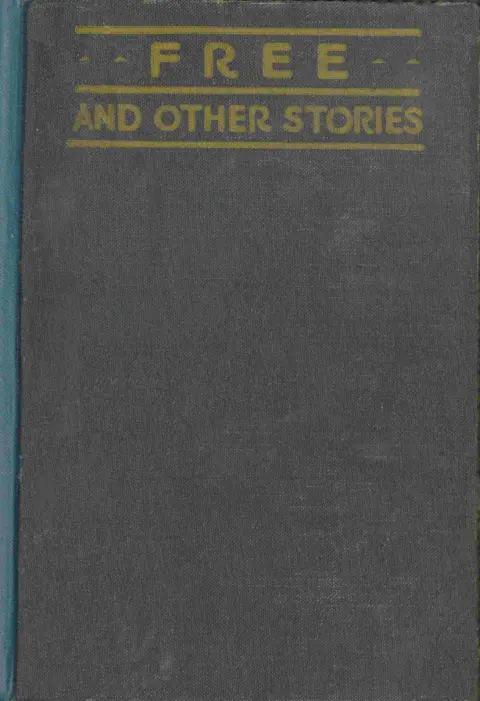
THE CLASSIC COLLECTION · 1918
"Free and Other Stories" by Theodore Dreiser is a collection of narratives written in the early 20th century. The initial story, "Free," revolves around the introspective and complex struggles of Rufus Haymaker, an architect grappling with the illness and potential death of his wife, Ernestine. As he reflects on his life and marital dissatisfaction, the tension between his desires for freedom and his sense of duty creates a poignant exploration of happiness, regret, and the societal expectations surrounding marriage. The opening of the collection introduces Rufus Haymaker in his Central Park West apartment, where he contemplates the gray morning outside while dealing with the anguish of his wife's serious illness. Throughout this thoughtful segment, Haymaker oscillates between feelings of sympathy for his wife and a deep-seated yearning for liberation from his long-unhappy marriage. As he interacts with medical professionals and reflects on their life together, the narrative delves into his bleak realizations about love, obligation, and the complexity of marital dynamics. This opening segment sets a melancholic tone, urging readers to consider the costs of societal conventions on personal happiness.
Introduction adapted from the source catalogue; source summaries may be automatically generated.
Free to read · English · 104,954 words · No account needed
MAKE TIME FOR A GOOD BOOK
On by default. Untick to stop anonymous reading totals. Each page counts after 10 seconds in view. How this works.
Anonymous counting is on unless you have switched it off.
Hesitating before the door, Davies finally knocked. Receiving no answer he looked in on the battered cane chairs and aged furniture with considerable interest. It was a typical negro cabin, poor beyond the need of description. After a time a door in the rear of the room opened and a little negro girl entered carrying a battered tin lamp without any chimney. She had not heard his knock and started perceptibly at the sight of his figure in the doorway. Then she raised her smoking lamp above her head in order to see better, and approached.
There was something ridiculous about her unformed figure and loose gingham dress, as he noted. Her feet and hands were so large. Her black head was strongly emphasized by little pigtails of hair done up in white twine, which stood out all over her head. Her dark skin was made apparently more so by contrast with her white teeth and the whites of her eyes.
Davies looked at her for a moment but little moved now by the oddity which ordinarily would have amused him, and asked, “Is this where Ingalls lived?”
The girl nodded her head. She was exceedingly subdued, and looked as if she might have been crying.
“Has the body been brought here?”
“Yes, suh,” she answered, with a soft negro accent.
“When did they bring it?”
“Dis moanin’.”
“Are you his sister?”
“Yes, suh.”
“Well, can you tell me how they caught him? When did he come back, and what for?” He was feeling slightly ashamed to intrude thus.
“In de afternoon, about two.”
“And what for?” repeated Davies.
“To see us,” answered the girl. “To see my motha’.”
“Well, did he want anything? He didn’t come just to see her, did he?”
“Yes, suh,” said the girl, “he come to say good-by. We doan know when dey caught him.” Her voice wavered.
“Well, didn’t he know he might get caught?” asked Davies sympathetically, seeing that the girl was so moved.
“Yes, suh, I think he did.”
She still stood very quietly holding the poor battered lamp up, and
looking down.
“Well, what did he have to say?” asked Davies.
“He didn’ have nothin’ much to say, suh. He said he wanted to see motha’. He was a-goin’ away.”
The girl seemed to regard Davies as an official of some sort, and he
knew it.
“Can I have a look at the body?” he asked.
The girl did not answer, but started as if to lead the way.
“When is the funeral?” he asked.
“Tomorra’.”
Your reading position is saved on this browser. Take it to another device with a library code. Reading pages adapt to text, rather than matching a printed edition.
Theodore Dreiser
Theodore Dreiser
Theodore Dreiser
Theodore Dreiser
BEHIND THE BOOK
This eBook is for the use of anyone anywhere in the United States and most other parts of the world at no cost and with almost no restrictions whatsoever. You may copy it, give it away or re-use it under the terms of the Project Gutenberg License included with this eBook or online at www.gutenberg.org. If you are not located in the United States, you will have to check the laws of the country where you are located before using this eBook. Read the source licence.
The original source file, including credits and licence, is retained by this library. Request an original-format copy at no charge. Please include the book title and Project Gutenberg identifier #68542.
KEEP YOUR CURIOSITY GOING
Coulson Kernahan

Maurice Baring
Frances Wright
Cécile Tormay

Frederic Jesup Stimson

W. H. P. (William Henry Pope) Jarvis