THE CLASSIC COLLECTION✦An American tragedy, v. 2CLASSIC FREE BOOKS
An American tragedy, v. 2
Theodore Dreiser

THE CLASSIC COLLECTION · 1918
"Free and Other Stories" by Theodore Dreiser is a collection of narratives written in the early 20th century. The initial story, "Free," revolves around the introspective and complex struggles of Rufus Haymaker, an architect grappling with the illness and potential death of his wife, Ernestine. As he reflects on his life and marital dissatisfaction, the tension between his desires for freedom and his sense of duty creates a poignant exploration of happiness, regret, and the societal expectations surrounding marriage. The opening of the collection introduces Rufus Haymaker in his Central Park West apartment, where he contemplates the gray morning outside while dealing with the anguish of his wife's serious illness. Throughout this thoughtful segment, Haymaker oscillates between feelings of sympathy for his wife and a deep-seated yearning for liberation from his long-unhappy marriage. As he interacts with medical professionals and reflects on their life together, the narrative delves into his bleak realizations about love, obligation, and the complexity of marital dynamics. This opening segment sets a melancholic tone, urging readers to consider the costs of societal conventions on personal happiness.
Introduction adapted from the source catalogue; source summaries may be automatically generated.
Free to read · English · 104,954 words · No account needed
MAKE TIME FOR A GOOD BOOK
On by default. Untick to stop anonymous reading totals. Each page counts after 10 seconds in view. How this works.
Anonymous counting is on unless you have switched it off.
“Well, mate,” the captain observed to the latter in the presence of the bos’n’s mate, with a lusty wink and a leer, “you know how it goes with these here insubordinates, don’t you? No more hot coffee at noon time, unless there’s more order here. No more cleanin’ up in the captain’s tub. No more settin’ in the captain’s window takin’ in the cool mornin’ breeze, as well as them yachts. What say? Eh? We know what to do with these here now insubordinates, don’t we, mate, eh?” This last with a very huge wink.
“You’re right, Captain. Very right,” the mate replied. “You’re on the right track now. No more favors--unless---- Order must be maintained, you know.”
“Oh, all right,” replied little Ike now, fully in earnest and thinking we were. “If I can’t, I can’t. Jist the same I don’t pick up no shavin’s after four,” and off he strolled.
Think of it, final and complete mutiny, and there was nothing more
really to be done.
All we could do now was to watch him as he idled by himself at odd free moments down by the waterside in an odd corner of the point, a lonely figure, his trousers and coat too large, his hands and feet too big, his yellow teeth protruding. No one of the other workingmen ever seemed to be very enthusiastic over Ike, he was so small, so queer; no one, really, but the captain and the mate, and now they had deserted him.
It was tough.
Yet still another ill descended on us before we came to the final loss, let us say, of the good craft Idlewild. In another evil hour the captain and the mate themselves fell upon the question of priority, a matter which, so long as they had had Ike to trifle with, had never troubled them. Now as mate and the originator of this sea-going enterprise, I began to question the authority of the captain himself occasionally, and to insist on sharing as my undeniable privilege all the dignities and emoluments of the office--to wit: the best seat in the window where the wind blew, the morning paper when the boss was not about, the right to stand in the doorway, use the locker, etc. The captain objected, solely on the ground of priority, mind you, and still we fell a-quarreling. The mate in a stormy, unhappy hour was reduced by the captain to the position of mere scullion, and ordered, upon pain of personal assault, to vacate the captain’s cabin. The mate reduced the captain to the position of stoker and stood in the doorway in great glee while the latter, perforce, owing to the exigencies of his position, was compelled to stoke whether he wanted to or no. It could not be avoided. The engine had to be kept going. In addition, the mate had brought many morning papers, an occasional cigar for the captain, etc. There was much rancor and discord and finally the whole affair, ship, captain, mate and all, was declared by the mate to be a creation of his brain, a phantom, no less, and that by his mere act of ignoring it the whole ship--officers, men, masts, boats, sails--could be extinguished, scuttled, sent down without a ripple to that limbo of seafaring men, the redoubtable Davy Jones’s locker.
Your reading position is saved on this browser. Take it to another device with a library code. Reading pages adapt to text, rather than matching a printed edition.
Theodore Dreiser
Theodore Dreiser
Theodore Dreiser
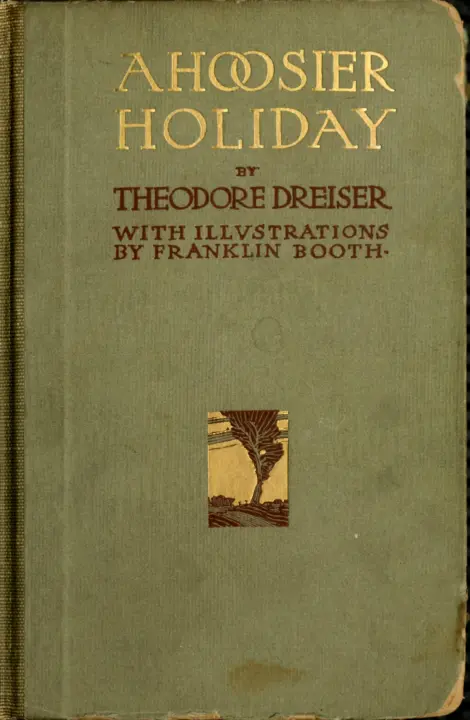
Theodore Dreiser
BEHIND THE BOOK
This eBook is for the use of anyone anywhere in the United States and most other parts of the world at no cost and with almost no restrictions whatsoever. You may copy it, give it away or re-use it under the terms of the Project Gutenberg License included with this eBook or online at www.gutenberg.org. If you are not located in the United States, you will have to check the laws of the country where you are located before using this eBook. Read the source licence.
The original source file, including credits and licence, is retained by this library. Request an original-format copy at no charge. Please include the book title and Project Gutenberg identifier #68542.
KEEP YOUR CURIOSITY GOING
Coulson Kernahan

Maurice Baring
Frances Wright
Cécile Tormay

Frederic Jesup Stimson

W. H. P. (William Henry Pope) Jarvis