
Switch off
Oliver Optic
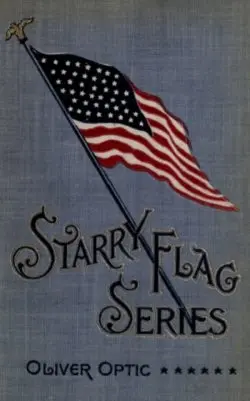
THE CLASSIC COLLECTION · 1896
"Freaks of Fortune; or, Half Round the World" by Oliver Optic is a fictional novel written in the late 19th century. The narrative centers around the main character Levi Fairfield, a young man of integrity and ingenuity, as he navigates the challenges of his complex relationship with his miserly uncle, Nathan Fairfield, while embarking on adventurous voyages. The story explores themes of morality, trust, and the pursuit of happiness against a backdrop of thrilling escapades at sea. The opening of the novel introduces Levi as he recalls his childhood project of building a sawmill, setting the stage for his pursuit of mechanical mastery. As he shares this memory with Bessie Watson, a charming young woman, their dynamic hints at a budding romance. The tranquility of their banter is abruptly interrupted by the discovery of smoke billowing from Uncle Nathan's dilapidated house, which leads to a chaotic scene as they rush to extinguish the flames. After the fire is put out, Uncle Nathan reveals the shocking news of his missing gold, leading to the dire suspicion that Levi may have been involved in both the fire and the theft. This inciting incident shapes the rest of the story, driving the tension between the characters and the unfolding mystery of the stolen money.
Introduction adapted from the source catalogue; source summaries may be automatically generated.
Free to read · English · 59,062 words · No account needed
MAKE TIME FOR A GOOD BOOK
On by default. Untick to stop anonymous reading totals. Each page counts after 10 seconds in view. How this works.
Anonymous counting is on unless you have switched it off.
"The doctor? No; he charges a dollar a visit," replied the old man, fearfully; for the idea of paying a physician's bill filled him with horror. "You say there ain't no bones broke; so I don't need no doctor."
"He don't need no doctor," added Mrs. Fairfield.
"I don't think you do myself. I've had worse cases than this aboard my vessel, and I got along without any doctors. You'll be all right in a week or two, Squire Fairfield."
"It's jest my luck," sighed the miser. "Everything's goin' wrong with me. I shouldn't be a grain surprised if the house burned down over my head afore I got out agin. I shan't ketch no dog-fish to-day, that's sartain. There's ten dollars out o' my pocket, as sure's you live!"
Dock was a rough comforter; but he spoke such words of consolation as the occasion required and his vocabulary contained.
"It's jest my luck," repeated the miser. "Every other man in town might have walked over that plank, and it wouldn't gin away. I walked over that plank last night, and airly this morning. I see, when I stepped on to it, that somebody had been a movin' on it; but I didn't know the 'tother eend was only just ketched on to the rock."
"Who moved it?" asked Dock, rather disturbed by this suggestion of a
suspicion.
"I don't know nothin' about it; but somebody's been a movin' on it, or it wouldn't a gin away under me, and let me down."
"But who could have moved the plank?" persisted Dock.
"I donno; the eend I stepped on was kinder hauled up."
"You say the plank was all right in the morning, when you went down?"
"Sartin it was. I went over it, and fixed the dory, ready to go arter dog-fish, arter breakfast."
"Well, the question is, Who has been down to the P'int since you went?"
"I donno; but I believe somebody's tryin' to kill me--that's what I
believe."
"O, nonsense! who should want to kill you?"
"I donno," replied Mr. Fairfield, hastily, and in a tone which implied that he knew very well who intended to kill him, but he did not wish to name the person. "If I hadn't been as tough as an old black-fish, it would have killed me, as sure as fate; that's the whole truth on't!"
"But who could have set such a trap?" persisted Dock.
"You didn't--did you?" added the old man, innocently.
"Of course I didn't. You don't think I'd do such a thing as that," said
Dock, laughing.
"My wife didn't--did she?"
Your reading position is saved on this browser. Take it to another device with a library code. Reading pages adapt to text, rather than matching a printed edition.
BEHIND THE BOOK
This eBook is for the use of anyone anywhere in the United States and most other parts of the world at no cost and with almost no restrictions whatsoever. You may copy it, give it away or re-use it under the terms of the Project Gutenberg License included with this eBook or online at www.gutenberg.org. If you are not located in the United States, you will have to check the laws of the country where you are located before using this eBook. Read the source licence.
The original source file, including credits and licence, is retained by this library. Request an original-format copy at no charge. Please include the book title and Project Gutenberg identifier #24631.
KEEP YOUR CURIOSITY GOING
Coulson Kernahan

Maurice Baring
Frances Wright
Cécile Tormay

Frederic Jesup Stimson

W. H. P. (William Henry Pope) Jarvis
