
Switch off
Oliver Optic
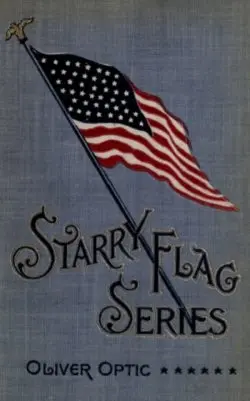
THE CLASSIC COLLECTION · 1896
"Freaks of Fortune; or, Half Round the World" by Oliver Optic is a fictional novel written in the late 19th century. The narrative centers around the main character Levi Fairfield, a young man of integrity and ingenuity, as he navigates the challenges of his complex relationship with his miserly uncle, Nathan Fairfield, while embarking on adventurous voyages. The story explores themes of morality, trust, and the pursuit of happiness against a backdrop of thrilling escapades at sea. The opening of the novel introduces Levi as he recalls his childhood project of building a sawmill, setting the stage for his pursuit of mechanical mastery. As he shares this memory with Bessie Watson, a charming young woman, their dynamic hints at a budding romance. The tranquility of their banter is abruptly interrupted by the discovery of smoke billowing from Uncle Nathan's dilapidated house, which leads to a chaotic scene as they rush to extinguish the flames. After the fire is put out, Uncle Nathan reveals the shocking news of his missing gold, leading to the dire suspicion that Levi may have been involved in both the fire and the theft. This inciting incident shapes the rest of the story, driving the tension between the characters and the unfolding mystery of the stolen money.
Introduction adapted from the source catalogue; source summaries may be automatically generated.
Free to read · English · 59,062 words · No account needed
MAKE TIME FOR A GOOD BOOK
On by default. Untick to stop anonymous reading totals. Each page counts after 10 seconds in view. How this works.
Anonymous counting is on unless you have switched it off.
"What is it? What's all gone? Why don't you tell a body what has
happened?"
"My money is all gone! Somebody has stolen it--robbed me, ruined me!"
"Who on airth stole it?"
"I donno," replied Mr. Fairfield, glancing at Levi.
"How much was stole?"
"Four thousand dollars," sighed the miser.
"For massy sake!" exclaimed Mrs. Fairfield; and it was a question whether she would not faint, for such a sum of money was beyond her comprehension.
"Where was it, uncle Nathan?" asked Levi, who pitied the sufferings of
the old man.
The miser looked at his nephew. People always suspect those whom they hate. If any wicked deed is done, they charge it upon those they love the least, regardless of circumstances.
"Levi Fairfield, you stole my money!" continued the old man, fiercely.
"Nonsense, Nathan!" interposed Mrs. Fairfield. "Levi didn't do nothin'
of the sort."
"Didn't you tell me he went up in the attic before the fire? Didn't you tell me you gave him a piece of candle?" demanded Mr. Fairfield, earnestly; and doubtless he felt that Levi was guilty, for his impulsive charge was made on the strength of a course of reasoning he had followed out.
"What if I did tell you so? Levi didn't steal no four thousand dollars. There's no sense nor reason in sayin' so," added aunt Susan.
"I say he did steal it. I know he did now," persisted the miser. "He set the house afire, and then took the money. That boy hates me, and he's bad enough to do anything, if he is go'n' to jine the church."
"Levi has money enough," argued Mrs. Fairfield. "Why should he steal
your money?"
"Cause he hates me."
"Uncle Nathan, I don't hate you, and I didn't steal your money," said Levi, who had calmly listened to the debate between his uncle and aunt.
"Yes, you did; you set the house afire, so's to git a chance to git the money. It's all plain enough to me," continued the old man, striding up and down the room more rapidly than before.
"I suppose it will be useless for me to say anything," added Levi, more in pity than in anger. "I am willing to do anything I can to help you find the money, if it is lost, or catch the thief, if it was stolen."
"'Tain't no use for you to talk no more, Levi Fairfield," said the old man, stopping in front of him. "You know all about it, and you took the money. If you're a mind to give it all back to me, I won't say a word to nobody about it."
Your reading position is saved on this browser. Take it to another device with a library code. Reading pages adapt to text, rather than matching a printed edition.
BEHIND THE BOOK
This eBook is for the use of anyone anywhere in the United States and most other parts of the world at no cost and with almost no restrictions whatsoever. You may copy it, give it away or re-use it under the terms of the Project Gutenberg License included with this eBook or online at www.gutenberg.org. If you are not located in the United States, you will have to check the laws of the country where you are located before using this eBook. Read the source licence.
The original source file, including credits and licence, is retained by this library. Request an original-format copy at no charge. Please include the book title and Project Gutenberg identifier #24631.
KEEP YOUR CURIOSITY GOING
Coulson Kernahan

Maurice Baring
Frances Wright
Cécile Tormay

Frederic Jesup Stimson

W. H. P. (William Henry Pope) Jarvis
