The Young Wild-Fowlers
Harry Castlemon
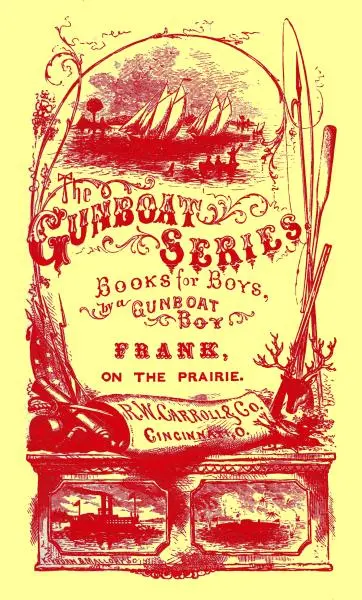
THE CLASSIC COLLECTION · 1868
"Frank on the Prairie" by Harry Castlemon is a novel written in the late 19th century. This story follows two adventurous boys, Frank and Archie, as they embark on a thrilling journey across the American prairie, guided by their Uncle James and a seasoned trapper, Dick Lewis. Their adventures involve hunting, encounters with Native Americans, and various challenges of frontier life, illustrating themes of courage, exploration, and the spirit of adventure. At the start of the novel, Frank and Archie are excitedly recounting their previous hunting exploits when Uncle James arrives from California, stirring their imaginations about adventure. They soon learn they will accompany him across the plains, exciting the boys. After preparations with Uncle James and the trapper, Dick, the group sets off on their adventure. The boys eagerly anticipate their first hunt, and in the opening, they encounter challenges as they learn about prairie life, showing their youthful enthusiasm mixed with a touch of naivety. The narrative sets the stage for their forthcoming trials and tribulations on the prairie.
Introduction adapted from the source catalogue; source summaries may be automatically generated.
Free to read · English · 51,837 words · No account needed
MAKE TIME FOR A GOOD BOOK
On by default. Untick to stop anonymous reading totals. Each page counts after 10 seconds in view. How this works.
Anonymous counting is on unless you have switched it off.
“It war ’bout five mile to the place whar the Injuns had made their camp, an’ while on the way thar I warn’t bothered at all, fur they seed that I warn’t skeered easy. When we reached the village--which must have had nigh two hundred Injuns in it--I found that I warn’t the only pris’ner, fur thar war Pete Simons, Bill’s brother, tied to a post in the middle of the camp, an’ he war surrounded by men, women, and young uns, who war beatin’ him with sticks, an’ tormentin’ him every way they knowed how; but findin’ that they couldn’t make Pete show fear--fur that war something he didn’t have in him--they left him, when I came up, and pitched into me. I didn’t mind ’em much, howsomever, although I did wince jest the least bit when one feller struck at me with his tomahawk, and jest grazed my face; but they didn’t see it; an’ purty quick one big feller ketched me by the har, an’, arter draggin’ me up to the post, tied me with my back to Pete’s. It then wanted ’bout three hours of sundown, an’ the Injuns, arter holdin’ a leetle council, made up their minds to have some fun; so they untied me an’ Pete, an’ led us out on the prairy ’bout three or four hundred yards, an’ thar left us. We looked back an’ seed the Injuns all drawed up in a line, with their we’pons in their hands, an’ knowed that the varlets had give us a chance to run for our lives. In course they didn’t mean fur us to git away, but they wanted the fun of seein’ us run, never dreamin’ but some of their fleet braves would ketch us afore we had gone fur. I never looked fur ’em to give us sich a chance fur life as that, an’ I made up my mind that I would learn ’em to think twice afore they give a white trapper the free use of his legs ag’in. I a’most knowed I war safe, but I felt shaky ’bout Peter, fur the Injuns had shot him with two arrers afore they ketched him, an’ he war hurt bad. I didn’t think he could run far--nor he didn’t, neither; fur when we shook hands an’ wished each other good luck, he said to me, ‘Bob, I wish I had my rifle.’ He meant by that, if he had his ole shootin’ iron in his hands, he wouldn’t die alone; he would have fit the Injuns as long as he could stand. Wal, as I war sayin’, we shook hands an’ bid each other good-by, an’ jest then I heered a yell. I jumped like a flash of lightnin’, an’ made t’wards a little belt of tim’er which I could see, ’bout two miles acrost the prairy. I war runnin’ fur my life, an’ I reckon I made the best time I knowed how. I soon left poor Pete behind, an’, when I had gone about a mile, I heered a yell, that told me as plain as words, that he had been ketched. I never stopped to look back, but kept straight ahead, an’ in a few minits more I war in the woods. The yellin’ of the Injuns had been growin’ louder an’ louder, so I knowed that they were gainin’ on me, an’ that if I kept on they would soon ketch me; so, as soon as I found myself fair in the tim’er, I turned square off to the right, an’ takin’ to every log I could find, so as to leave as leetle trail as possible fur them to foller, I ran ’bout a hundred yards further, an’ then dived into a thick clump of bushes, whar I hid myself in the leaves an’ brush. I had kinder bothered the varlets, for a leetle while arter, they came into the woods, an’ went on through, as if they thought I had kept on t’wards the prairy. But I knowed that they wouldn’t be fooled long; an’ when I heered by their yellin’ that they had left the woods, I crawled out of the bushes to look up a better hidin’-place. Arter listenin’ an’ lookin’, to be sartin that thar war no Injuns ’round, I ag’in broke into a run, an’ finally found a holler log at the bottom of a gully, whar I thought I had better stop; so I crawled into the log, an’ jest then I heered the Injuns coming back. They knowed that I war hid somewhar in the tim’er, an’ they all scattered through the woods, hopin’ to find me afore it ’come dark--yellin’ all the while, as though they didn’t feel very good-natured ’bout bein’ fooled that ar’ way. I knowed that they couldn’t foller my trail easy, but thar war so many of ’em, that I war afraid somebody might happen to stumble on my hidin’-place. But they didn’t; an’ arter awhile it ’come dark, an’ the varlets had to give up the search. I waited till every thing war still, an’ then crawled out of my log, and struck fur the prairy. I warn’t green enough to b’lieve that they war all gone, fur I knowed that thar war Injuns layin’ ’round in them woods watchin’ an’ waitin’ fur me. In course I didn’t want to come acrost none of ’em, fur I had no we’pon, and I would have been ketched sartin; so I war mighty keerful; an’ I b’lieve I war two hours goin’ through the hundred yards of woods that lay atween me an’ the prairy. When I reached the edge of the tim’er, I broke into a run. If thar war any Injuns ’round, they couldn’t see me, fur the night war dark; an’ they couldn’t hear me, neither, fur my moccasins didn’t make no noise in the grass. I kept on, at a steady gait, fur ’bout two hours, an’ finally reached the place whar I war captur’d. Arter a leetle lookin’ and feelin’, I found my belt and we’pons. I felt a heap better then, fur I had something to defend myself with; but still I didn’t feel like laughin’, fur I war afoot, an’, havin’ no rifle, I couldn’t think how I war to git grub to eat. But I war better off nor while I war a pris’ner ’mong the Injuns; so I knowed I hadn’t oughter complain. Arter takin’ one look at poor Bill, whom the Injuns, arter havin’ scalped, had left whar he had fallen, an’ promisin’ that every time I seed a Blackfoot Injun I would think of him, I ag’in sot out. Arter I had gone ’bout half a mile further, the moon riz, an’, as I war running along, I seed something ahead of me. I stopped to onct, fur I didn’t know but it might be a Injun; but another look showed me it war a hoss. He war feedin’ when he fust seed me, but, when he heered me comin’, he looked up, an’ give a leetle whinny that made me feel like hollerin’. It war Bill Simons’s hoss. How glad I war to see him! An’ he must a been glad to see me, too, fur he let me ketch him; an’ when I got on his back, I didn’t keer, jest then, fur all the Injuns on the plains. The critter had had a good rest, an’, when I spoke to him, he started off just as lively as though he war good fur a hundred mile. Wal, I rid all that night, an’, ’arly the next mornin’, I found myself nigh a patch of woods whar we allers made our camp when goin’ to an’ from the Saskatchewan, an’ I thought I would stop thar and git a leetle rest, fur I war tired an’ hungry. So I rid through the woods, an’, when I come in sight o’ our ole campin’ ground, I seed something that made me feel like hollerin’ ag’in; an’ I did holler; fur thar war two of our comp’ny--the only ones that ’scaped ’sides me--jest gettin’ ready to start off. They stopped when they seed me--an’, youngsters, you may be sartin that we war glad to meet each other ag’in. One of ’em war Bill Coffee, who I thought war dead. He war bad hurt, but he got off without losin’ his har, an’ he felt mighty jolly over it. Arter they had told me ’bout their fight with the Injuns--an’ they jest did get away, an’ that war all--I told ’em ’bout Bill Simons bein’ killed, and how me an’ Pete had run a race with the varlets, an’ we all swore that the Blackfeet wouldn’t make nothin’ by rubbin’ out them two fellers. I stayed thar long enough to rest a little an’ eat a piece of meat that one of ’em give me, an’ then we all sot out fur the fort, which we reached all right. We laid ’round fur ’bout a month, an’ then--would you b’lieve it?--we three fellers made up another comp’ny, an’ put fur the Saskatchewan ag’in. None of us ever forgot our promise, an’ every time we drawed a bead on a Blackfoot, we thought of Bill an’ Pete Simons.”
Your reading position is saved on this browser. Take it to another device with a library code. Reading pages adapt to text, rather than matching a printed edition.
Harry Castlemon
Harry Castlemon
Harry Castlemon
Harry Castlemon
BEHIND THE BOOK
This eBook is for the use of anyone anywhere in the United States and most other parts of the world at no cost and with almost no restrictions whatsoever. You may copy it, give it away or re-use it under the terms of the Project Gutenberg License included with this eBook or online at www.gutenberg.org. If you are not located in the United States, you will have to check the laws of the country where you are located before using this eBook. Read the source licence.
The original source file, including credits and licence, is retained by this library. Request an original-format copy at no charge. Please include the book title and Project Gutenberg identifier #42101.
KEEP YOUR CURIOSITY GOING
Coulson Kernahan

Maurice Baring
Frances Wright
Cécile Tormay

Frederic Jesup Stimson

W. H. P. (William Henry Pope) Jarvis