The Young Wild-Fowlers
Harry Castlemon
THE CLASSIC COLLECTION · 1868
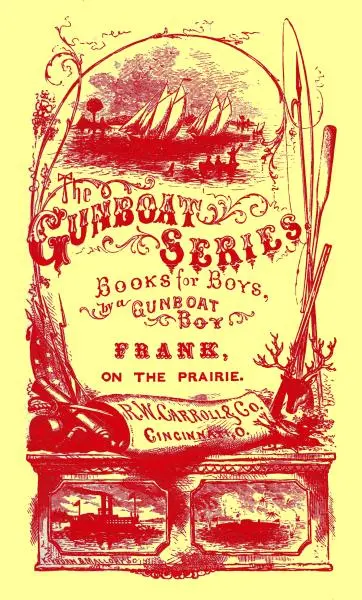
"Frank on the Prairie" by Harry Castlemon is a novel written in the late 19th century. This story follows two adventurous boys, Frank and Archie, as they embark on a thrilling journey across the American prairie, guided by their Uncle James and a seasoned trapper, Dick Lewis. Their adventures involve hunting, encounters with Native Americans, and various challenges of frontier life, illustrating themes of courage, exploration, and the spirit of adventure. At the start of the novel, Frank and Archie are excitedly recounting their previous hunting exploits when Uncle James arrives from California, stirring their imaginations about adventure. They soon learn they will accompany him across the plains, exciting the boys. After preparations with Uncle James and the trapper, Dick, the group sets off on their adventure. The boys eagerly anticipate their first hunt, and in the opening, they encounter challenges as they learn about prairie life, showing their youthful enthusiasm mixed with a touch of naivety. The narrative sets the stage for their forthcoming trials and tribulations on the prairie.
Introduction adapted from the source catalogue; source summaries may be automatically generated.
Free to read · English · 51,837 words · No account needed
MAKE TIME FOR A GOOD BOOK
On by default. Untick to stop anonymous reading totals. Each page counts after 10 seconds in view. How this works.
Anonymous counting is on unless you have switched it off.
“I say, Frank,” exclaimed Archie one day, as he burst into the study, where his cousin was engaged in cleaning his gun preparatory to a muskrat hunt, “there’s something in the wind. Just now, as I came through the sitting-room, I surprised our folks and Uncle James talking very earnestly about something. But they stopped as soon as I came in, and, as that was a gentle hint that they didn’t want me to know any thing about it, I came out. There’s something up, I tell you.”
“It’s about uncle’s business, I suppose,” replied Frank. But if that was the subject of the conversation, Archie came to the conclusion that his affairs must be in a very unsettled state, for when they returned from their hunt that night the same mysterious conversation was going on again. It ceased, however, as the boys entered the room, which made Archie more firm in his belief than ever that there was “something up.”
The next morning, at the breakfast-table, Archie’s father announced his intention of returning to Portland at once, as his business needed his attention; and, turning to the boys, inquired:
“Well, have you had hunting enough this winter to satisfy you?”
“Yes, sir,” was the answer.
“Then I suppose you don’t want to go across the plains with your Uncle
James?”
“Hurrah!” shouted Archie, springing to his feet, and upsetting his coffee-cup. “Did you say we might go?”
“Be a little more careful, Archie,” said his father. “No, I did not
say so.”
“Well, it amounts to the same thing,” thought Archie, “for father never would have said a word about it if he wasn’t intending to let us go. I knew there was something up.”
We need not stop to repeat the conversation that followed. Suffice it to say, that Uncle James, having fully made up his mind to return to the village as soon as he could settle up his business, had asked permission for his nephews to accompany him across the plains. Their parents, thinking of the fight with the moose, and knowing the reckless spirit of the boys, had at first objected. But Uncle James, promising to keep a watchful eye on them, had, after considerable argument, carried the day, and it was finally decided that the boys could go.
“But remember,” said Mr. Winters, “you are to be governed entirely by Uncle James; for, if you have no one to take care of you, you will be in more fights with bears and panthers.”
The boys readily promised obedience, and, hardly waiting to finish their breakfast, went into the study to talk over their plans.
Your reading position is saved on this browser. Take it to another device with a library code. Reading pages adapt to text, rather than matching a printed edition.
Harry Castlemon
Harry Castlemon
Harry Castlemon
Harry Castlemon
BEHIND THE BOOK
This eBook is for the use of anyone anywhere in the United States and most other parts of the world at no cost and with almost no restrictions whatsoever. You may copy it, give it away or re-use it under the terms of the Project Gutenberg License included with this eBook or online at www.gutenberg.org. If you are not located in the United States, you will have to check the laws of the country where you are located before using this eBook. Read the source licence.
The original source file, including credits and licence, is retained by this library. Request an original-format copy at no charge. Please include the book title and Project Gutenberg identifier #42101.
KEEP YOUR CURIOSITY GOING
Coulson Kernahan

Maurice Baring
Frances Wright
Cécile Tormay

Frederic Jesup Stimson

W. H. P. (William Henry Pope) Jarvis