THE CLASSIC COLLECTION✦Frank Merriwell’s dangerCLASSIC FREE BOOKS
Frank Merriwell’s danger
Burt L. Standish
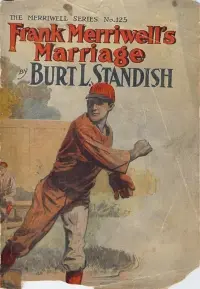
THE CLASSIC COLLECTION · 1905
"Frank Merriwell's Marriage; Or, Inza's Happiest Day" by Burt L. Standish is a novel written in the early 20th century. The story is centered around Frank Merriwell, a character known for his athletic prowess and moral integrity, exploring themes of competition, personal growth, and social dynamics among elite amateur athletes. As one of the prominent figures in the Merriwell series, Frank's reputation and abilities are put to the test as he navigates a world filled with rivalry and old grievances. The opening of the book sets the stage for a series of athletic events at the Eagle Heights Athletic Club, where Frank Merriwell is expected to compete. As members gossip about him, it becomes clear that there are tensions between Frank and some other young men, notably Hobart Manton, who are skeptical of his accomplishments. The chapter introduces a lively atmosphere of rivalry and camaraderie, with different athletes expressing excitement, jealousy, and intrigue surrounding Frank's presence. Discussions among the characters foreshadow challenges and competitions that will unfold throughout the story, framing Frank as both a celebrated and contested figure in the athletic community.
Introduction adapted from the source catalogue; source summaries may be automatically generated.
Free to read · English · 76,584 words · No account needed
MAKE TIME FOR A GOOD BOOK
On by default. Untick to stop anonymous reading totals. Each page counts after 10 seconds in view. How this works.
Anonymous counting is on unless you have switched it off.
Creel had looked for the usual drop of the spit ball, and he struck
under.
“Strike one!”
The batter looked surprised. He knew the ball had taken some kind of a queer shoot, but he did not know just what had happened.
“Hit it where you missed it, Creel, old boy!” urged Wiley. “Look out for the double-shoot. He’ll hand one up in a minute, and you will have an opportunity to demonstrate the ease with which we can project it to yonder fence.”
Frank pitched again and tried the other sweep.
The ball seemed to start toward the outside of the plate. Suddenly it swept upward and inward, and again Creel missed.
“Strike two!”
Creel gasped.
“What’s that he’s throwing?” he muttered.
“Oh, hit the ball!” chuckled Hodge. “It’s easy enough!”
“I’ll hit the next one!” growled Creel.
“Bet you don’t.”
“I will if I swing at it.”
“Bet you don’t.”
“Don’t talk to that catcher, Tip,” commanded Hurley sharply.
Creel was silenced. He set his teeth, gripped his bat and waited. At the same time, although ready to strike, he more than half expected Frank would “waste” one or two balls.
Merry saw the fellow was ready to swing if the ball came over. Again he delivered it a trifle wide, but it swept in and upward, being caught by Hodge almost directly behind the batter’s shoulder. In fact, it seemed to pass under Creel’s arm as the latter swung at it.
“You’re out!” announced the umpire.
“I’d like to know what sort of a curve he used on me!” muttered Tip Creel, as he reseated himself on the bench. “It had a mighty queer twist.”
Hurley was watching closely.
“It wasn’t the double-shoot Wiley has been teaching us to hit,” he
said.
“If it was,” said Creel, “Merriwell throws it entirely different from
Wiley.”
“Look here, cap’n,” demanded Swatt, “have you been deceiving us?”
“Not on your autograph;” answered the sailor. “He has not yet promulgated the double-shoot through the sunny atmosphere. Perchance I made a mistake in admitting to him that we intended to bat it with extreme vigor the moment he passed it out to us. But linger yet a while and I prophesy that he will hand it forth.”
Marcey, the third baseman, now came up. He did not attempt to hit the first ball pitched, for it seemed too wide. It swept in over the outside corner, however, and the umpire, who had a good eye and knew his business, declared it a strike.
Marcey flung down his bat, sprang onto the plate and glared at the
umpire.
Your reading position is saved on this browser. Take it to another device with a library code. Reading pages adapt to text, rather than matching a printed edition.
Burt L. Standish
Burt L. Standish

Burt L. Standish

Burt L. Standish
BEHIND THE BOOK
This eBook is for the use of anyone anywhere in the United States and most other parts of the world at no cost and with almost no restrictions whatsoever. You may copy it, give it away or re-use it under the terms of the Project Gutenberg License included with this eBook or online at www.gutenberg.org. If you are not located in the United States, you will have to check the laws of the country where you are located before using this eBook. Read the source licence.
The original source file, including credits and licence, is retained by this library. Request an original-format copy at no charge. Please include the book title and Project Gutenberg identifier #62072.
KEEP YOUR CURIOSITY GOING
Coulson Kernahan

Maurice Baring
Frances Wright
Cécile Tormay

Frederic Jesup Stimson

W. H. P. (William Henry Pope) Jarvis