
The Writing of News A Handbook with Chapters on Newspaper Correspondence and Copy Reading
Charles G. (Charles Griffith) Ross
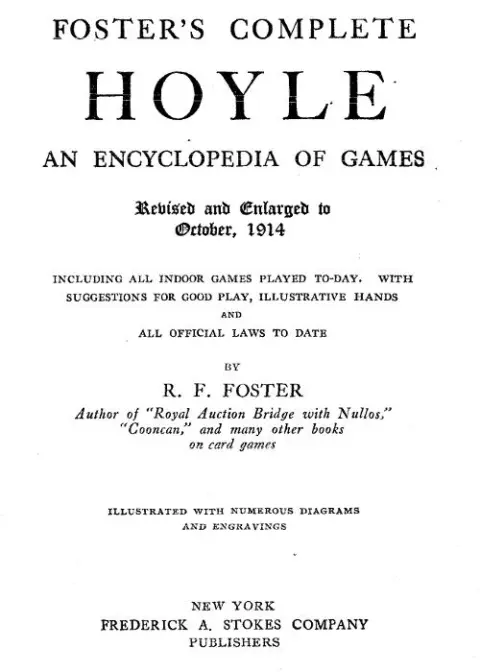
THE CLASSIC COLLECTION · 1914
"Foster's Complete Hoyle: An Encyclopedia of Games" by R. F. Foster is an exhaustive reference work on indoor games, likely written in the early 20th century. The book serves as a comprehensive guide that catalogues a multitude of games, offering systematic instructions and rules that can enhance players' understanding and enjoyment of both new and traditional games. It aims to provide clarity on the official laws governing these games, alongside suggestions for good play and illustrative hands. The opening of the work establishes its authority by discussing the historical significance of the term "Hoyle," which has come to embody the ultimate reference for game rules. Foster emphasizes that the rules of many popular games, particularly card games, vary widely among localities and that his compilation aims to offer a standardized set of rules. By tracing the development and variations of various games, he sets the stage for a systematic presentation of games, beginning with foundational insights into the whist family, thereby enabling readers to grasp both the diversity and the common principles underlying indoor gaming.
Introduction adapted from the source catalogue; source summaries may be automatically generated.
Free to read · English · 319,976 words · No account needed
MAKE TIME FOR A GOOD BOOK
On by default. Untick to stop anonymous reading totals. Each page counts after 10 seconds in view. How this works.
Anonymous counting is on unless you have switched it off.
=First Position.=
27-32
8 11
32-27
11 7
27-23
7 10
22-26
A 10 6
26-31
6 9
31-26
9 6
26-22
6 10
23-18
10 6
18-14
6 1
22-18
1 6
18-15
6 1
15-10
1 5
10- 6
5 1
14-13
1 5
6- 1
5 9
1- 5
9 13
10-14
13 9
14-18
9 6
18-15
30 25
15-18
6 10
5- 1
25 21
1- 5
10 6
18-15
21 17
5- 1
6 9
15-18
17 13
18-15
9 14
1- 5
14 17
15-10
17 22
10-14
22 25
5- 1
25 22
1- 6
22 25
6-10
25 22
10-15
22 25
15-18
25 21
B wins
------
Var A.
30 25
23-18
10 6
18-14
6 1
26-30
25 21
30-25
1 5
25-22
5 1
22-18
1 5
18-15
5 1
15-10
1 5
10- 6
5 1
14-10
1 5
6- 1
5 9
10-15
B 9 5
15-18
5 9
1- 5
9 6
18-15
21 17
5- 1
6 9
15-18
9 5
18-22
17 14
1- 6
5 1
6- 2
1 5
22-17
14 9
B wins
------
Var B.
9 14
1- 5
21 17
5- 1
17 13
1- 5
14 17
15-10
B wins
=Second Position.=
1- 5
8 11
5- 9
11 15
9-14
15 11
14-18
11 16
18-15
16 20
15-11
20 24
3- 7
24 19
7-10
19 23
10-15
23 27
15-19
27 32
19-24
32 28
24-27
28 32
27-31
32 28
31-27
28 32
27-23
32 28
23-18
28 24
18-14
24 19
6-10
19 23
10-15
23 27
15-19
27 32
19-24
32 28
24-27
28 24
27-32
24 28
32-27
28 32
27-24
32 28
24-19
28 32
19-15
32 28
15-10
28 24
10- 6
24 19
14-10
19 24
10-15
24 28
15-19
28 32
19-24
32 28
11-16
28 19
16-23
12 8
23-18
8 4
18-14
4 8
6- 1
8 11
14- 9
13 6
1-10
11 16
10-15
16 20
15-19
B wins
=Third Position.=
White to move
18 15
A 6- 1
14 9
24-28
23 19
1- 5
9 6
B 28-32
19 24
5- 1
24 19
W wins
-----
Var A.
24-28
23 27
6- 1
14 10
28-32
27 24
1- 5
10 6
W wins
------
Var B.
5- 1
6 10
W wins
------
Black to move
6- 1
18 15
C 1- 6
14 10
6- 9
23 19
24-27
15 18
D 27-32
19 24
9- 5
10 14
32-28
24 27
W wins
------
Var C.
1- 5
14 10
24-28
23 19
28-32
15 18
32-27
10 6
27-32
19 23
5- 1
6 9
W wins
------
Var D.
9- 5
10 6
27-32
19 23
5- 1
6 9
32-28
23 27
W wins
=Fourth Position.=
Black to play
28-24
32 28
24-20
28 32
22-18
31 27
23-19
27 31
19-24
32 27
24-28
27 32
18-22
31 27
22-26
30 23
28-24
B wins
-----
White to play
31 27
23-19
27 31
19-24
32 27
24-20
27 32
22-18
31 27
28-24
27 31
18-23
31 26
Drawn
=Traps.= The beginner should be on his guard against being caught, “two for one,” especially in such positions as those shown in Diagrams Nos. 6 and 7.
In No. 6, White will play 19 16, forcing you to jump, and will then play 27 23, forcing you to jump again. In No. 7, White will play 30 26, making your man a King. He will then play 32 28, and wait for your newly made King to jump. This will give him three of your men, and he will catch the other before it gets to the king row.
Another common form of trap is to get a player into such a position in the end game, when he has only one or two men, that he cannot get to the king row without being caught; sometimes because he is driven to the side of the board by the man following him, and sometimes because the man meeting him can head him off. The adversary can do this only when he has “the move.”
Your reading position is saved on this browser. Take it to another device with a library code. Reading pages adapt to text, rather than matching a printed edition.
BEHIND THE BOOK
This eBook is for the use of anyone anywhere in the United States and most other parts of the world at no cost and with almost no restrictions whatsoever. You may copy it, give it away or re-use it under the terms of the Project Gutenberg License included with this eBook or online at www.gutenberg.org. If you are not located in the United States, you will have to check the laws of the country where you are located before using this eBook. Read the source licence.
The original source file, including credits and licence, is retained by this library. Request an original-format copy at no charge. Please include the book title and Project Gutenberg identifier #53881.
KEEP YOUR CURIOSITY GOING
Charles G. (Charles Griffith) Ross
Hannah Webster Foster

Emily Lawless
Edwin Hamlin Carr

Charles De Lano Hine
Andrew Ure