
The lost dirigible
Ralph Henry Barbour
THE CLASSIC COLLECTION · 1908
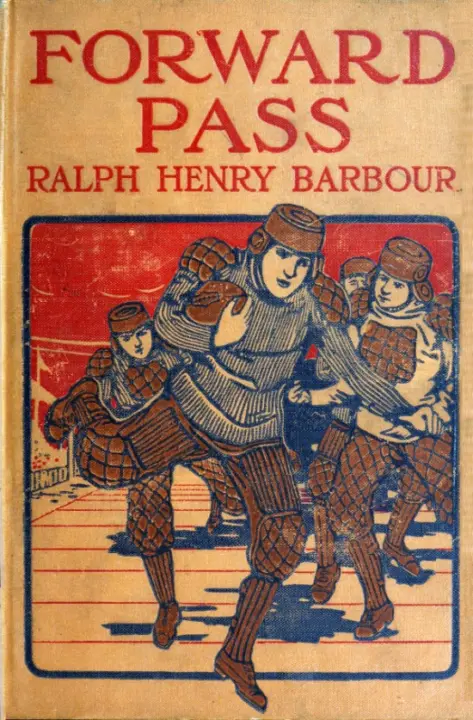
"Forward Pass: A Story of the 'New Football'" by Ralph Henry Barbour is a novel written in the early 20th century, likely in the early 1900s. The story revolves around the main character, Dan Vinton, who embarks on an exciting journey from his hometown in Ohio to Yardley Hall School in Connecticut, motivated by dreams of a rich boarding school experience and a passion for football. As Dan settles into his new environment, the narrative explores themes of education, youth friendship, and the challenges of fitting in at a prestigious institution. The opening of the story begins with Dan's emotional departure from his family while boarding a train to Yardley Hall. Reflecting on his aspirations for a spirited education away from his close-knit hometown, Dan is filled with both excitement and trepidation about the adventures that await him. Once at the school, he navigates the complexities of establishing new friendships, particularly that with his roommate Tubby Jones, who has a contrary personality. The narrative sets the stage for Dan's growth and challenges as he prepares for football tryouts and adjusts to the different social dynamics in a new setting, all while reminiscing about home and striving to prove himself in this new chapter of his life.
Introduction adapted from the source catalogue; source summaries may be automatically generated.
Free to read · English · 73,430 words · No account needed
MAKE TIME FOR A GOOD BOOK
On by default. Untick to stop anonymous reading totals. Each page counts after 10 seconds in view. How this works.
Anonymous counting is on unless you have switched it off.
“Oh, I only came near freezing once,” responded Mr. Vinton pleasantly. “But that was a close shave. I guess if Farmer Hutchins hadn’t come along just when he did that time--”
“I don’t want to hear about it again!” declared Dan’s mother. “If that’s your idea of having a good time it isn’t mine! And you can just believe that no son of mine ever goes to boarding-school!”
“Well, as for that, ma, I dare say boarding-schools have changed some since my day,” responded Mr. Vinton.
But in spite of this assertion Russellville Academy remained to Mr. Vinton a typical boarding-school, and remembering how little he had learned there and, when the rose-tinted glasses were laid aside, how many unhappy moments he had spent there, he was resolved in his own mind that his wife’s decision was a wise one.
In the end Dan had given up all hope of getting to boarding-school, without, however, ceasing to desire it. In June he had graduated high in his class at the grammar school with every prospect of entering the High School in September. But toward the last of July a conversation had occurred at the dinner table which later put a different complexion on things.
“Well, son, what you been doing to-day?” asked Mr. Vinton, absentmindedly tucking his napkin into his collar, yanking it quickly away again and glancing apologetically at his wife.
“Nothing much, sir. I played baseball for awhile and then ‘Chad’ Sleeper and Billy Nourse and Frank Whipple and I went over to Saunders’ Creek and went in bathing.”
Mr. Vinton frowned.
“‘Chad’ Sleeper, eh? Is that old Dillingway Sleeper’s boy?”
“Yes, sir.”
“And young Nourse and that Whipple boy, you said, didn’t you?”
“Yes, sir.”
“See a good deal of those boys, do you? Go around with them a lot, eh?”
“Yes, sir, a good deal.”
“I thought Frank Whipple was going to work this summer in his father’s
store.”
“He did start to,” answered Dan, “but--I don’t know. I guess he didn’t
like it.”
“Didn’t like it, eh? Did he tell you so?”
“Well, he said it was pretty hard work; said the store was awfully hot and his mother was afraid he’d take sick.”
Mr. Vinton grunted.
“All those boys in your class next fall?”
“Yes, sir.”
“Which one is your especial chum?”
“‘Chad,’ I guess. I like him better than the others.”
“What is it you like about him, son?”
“Oh, I don’t know. He’s a good baseball player, and a dandy half-back; you know he played half on the team last fall, sir.”
Your reading position is saved on this browser. Take it to another device with a library code. Reading pages adapt to text, rather than matching a printed edition.
Ralph Henry Barbour
Ralph Henry Barbour

Ralph Henry Barbour

Ralph Henry Barbour
BEHIND THE BOOK
This eBook is for the use of anyone anywhere in the United States and most other parts of the world at no cost and with almost no restrictions whatsoever. You may copy it, give it away or re-use it under the terms of the Project Gutenberg License included with this eBook or online at www.gutenberg.org. If you are not located in the United States, you will have to check the laws of the country where you are located before using this eBook. Read the source licence.
The original source file, including credits and licence, is retained by this library. Request an original-format copy at no charge. Please include the book title and Project Gutenberg identifier #55982.
KEEP YOUR CURIOSITY GOING
Coulson Kernahan

Maurice Baring
Frances Wright
Cécile Tormay

Frederic Jesup Stimson

W. H. P. (William Henry Pope) Jarvis