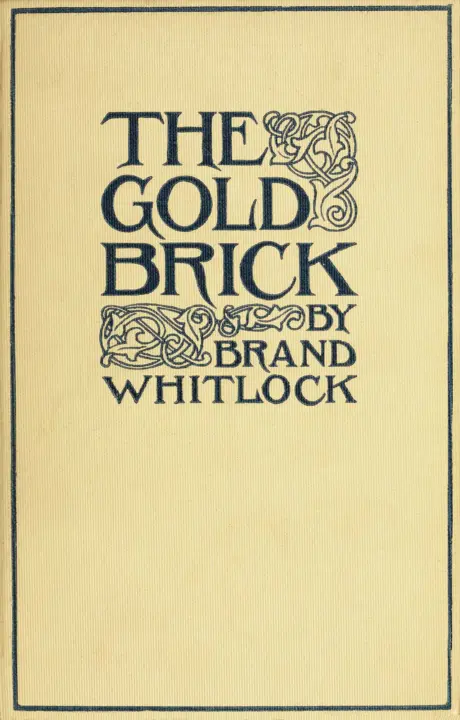
The Gold Brick
Brand Whitlock

THE CLASSIC COLLECTION · 1914
"Forty Years of It" by Brand Whitlock is a memoir written in the early 20th century. This reflective work delves into the author's personal history and the history of democracy in a Midwestern city, exploring his family legacy and key societal themes, particularly the evolution of political thought and civic responsibility. The narrative intertwines historical events with personal anecdotes, highlighting the author's relationships with influential figures and his own journey through the socio-political landscape. At the start of the book, the author recounts a formative afternoon from his childhood when he accompanies his grandfather, a notable local politician, around their town. This exploration sets the stage for the themes of memory, heritage, and the author's contemplation of democracy's impact on individual lives. The heat of the day serves as a backdrop for various observations, including the treatment of a prisoner in the town square and a discussion about political authority with his grandfather. Through these reflections, Whitlock introduces readers to characters and moments that shaped not only his understanding but also the fabric of democratic society in his era.
Introduction adapted from the source catalogue; source summaries may be automatically generated.
Free to read · English · 103,827 words · No account needed
MAKE TIME FOR A GOOD BOOK
On by default. Untick to stop anonymous reading totals. Each page counts after 10 seconds in view. How this works.
Anonymous counting is on unless you have switched it off.
He stood there a moment and looked about him undecided, while Mr. Phelps with sympathetic concern displayed great willingness to serve, but was as helpless as his chief. The American sovereigns who were loafing by the station shed looked on with the reticent detachment which characterizes the rural American. And then the train slowly pulled out and left us, and Mr. Blaine cast at it a glance of longing and of reproach, as though in its sundering of the last tie with the world of comfort, he had suffered the final indignity. There seemed to be no course other than to take the ’bus, when suddenly a committee rushed up, out of breath and out of countenance, and with a chorus of apologies explained that they had met the wrong train, or gone to another station, and so bore the premier off in triumph to dine at some rich man’s house.
The day seemed to grow worse as it progressed, as days ill begun have a way of doing, and when the premier in the afternoon appeared at the meeting he was to address, his spirits had not improved, and even if they had, the meeting was one to depress the spirits of any man. It assembled in a barren hall, a kind of skating rink, or something of the sort, that would have served better for a boxing match. The audience was small, and standing about in the mud and slush they had “tramped in,” to use our midwestern phrase, they displayed that bucolic indifference which can daunt the most exuberant speaker. It was in no way worthy of the man, and Mr. Blaine spoke with evident difficulty, and so wholly lacked spirit and enthusiasm that it was impossible for him to warm up to his subject. The speech was of that perfunctory sort which such an atmosphere compels, one of those speeches the speaker drags out, a word at a time, and is glad to be done with, and Mr. Blaine bore with his fates a little while, and then almost abruptly closed. He spoke on the tariff issue, and in defense of the McKinley Bill, and in marshaling the evidences of our glory and prosperity, all of which he attributed to the direct influence of the protective tariff system, he mentioned the number of miles of railroad that had been built, and even the increase in the nation’s population! The speech and the occasion afforded an opportunity to a newspaper of the opposition, which in those days of silly partizanship, was not to be overlooked. I went back to the little hotel and wrote my story, and since I had all the while in my mind not only partizan advantage, but the smiles that would break out on the countenances of Charlie Seymour and Peter Dunne and the other boys gathered in the Whitechapel Club I did not minimise the effect of all those babies who had come to life as a result of the protective tariff, nor all those ironical difficulties the day had heaped upon the great man. It was not, perhaps, quite fair, nor quite nice, but it was as fair and as nice as newspaper ethics and political etiquette--if there are such things--require, and Mr. Blaine himself most have had some consciousness of his partial failure, some dissatisfaction with his effort, for I was just about to put my story on the wire at six o’clock when he appeared, with his rich host, and asked for me. I talked to him through the little wicket of the telegraph office, and the conversation began inauspiciously by the rich man’s peremptorily commanding me to let him see my stuff; he wished, he said, to “look it over”! I was not as patient with his presumption then as I think I could be now, for I had not learned that it was the factory system that produces such types, men who bully the women at home and the women and clerks and operatives in their shops, and I denied him the right, of course. He became very angry, and blustered through the little window, while the operator, an old telegrapher I had known in Toledo, sat behind me waiting to send the story clicking into Chicago on The Herald’s wire. After the rich man had exhausted himself, Mr. Blaine took his place at the window and in a mild and calm manner, asked me for my copy, saying that he was not well, and that he had made some slips in his speech which he did not care to have go to the country. It was those unfortunate or fortunate babies of the protective tariff system, and he said that the correspondent of a press association had agreed to make the excisions if I would do so, and he would consider it a favor if I would oblige him.
Your reading position is saved on this browser. Take it to another device with a library code. Reading pages adapt to text, rather than matching a printed edition.
Brand Whitlock

Brand Whitlock
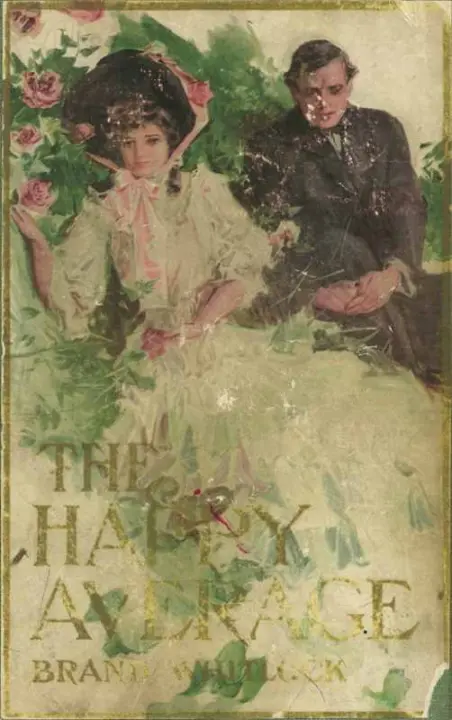
Brand Whitlock
Brand Whitlock
BEHIND THE BOOK
This eBook is for the use of anyone anywhere in the United States and most other parts of the world at no cost and with almost no restrictions whatsoever. You may copy it, give it away or re-use it under the terms of the Project Gutenberg License included with this eBook or online at www.gutenberg.org. If you are not located in the United States, you will have to check the laws of the country where you are located before using this eBook. Read the source licence.
The original source file, including credits and licence, is retained by this library. Request an original-format copy at no charge. Please include the book title and Project Gutenberg identifier #67648.
KEEP YOUR CURIOSITY GOING
Cécile Tormay

Moritz Busch
John L. Ransom
Frances Wright
Cécile Tormay

Mabel Potter Daggett