
The Gold Brick
Brand Whitlock

THE CLASSIC COLLECTION · 1914
"Forty Years of It" by Brand Whitlock is a memoir written in the early 20th century. This reflective work delves into the author's personal history and the history of democracy in a Midwestern city, exploring his family legacy and key societal themes, particularly the evolution of political thought and civic responsibility. The narrative intertwines historical events with personal anecdotes, highlighting the author's relationships with influential figures and his own journey through the socio-political landscape. At the start of the book, the author recounts a formative afternoon from his childhood when he accompanies his grandfather, a notable local politician, around their town. This exploration sets the stage for the themes of memory, heritage, and the author's contemplation of democracy's impact on individual lives. The heat of the day serves as a backdrop for various observations, including the treatment of a prisoner in the town square and a discussion about political authority with his grandfather. Through these reflections, Whitlock introduces readers to characters and moments that shaped not only his understanding but also the fabric of democratic society in his era.
Introduction adapted from the source catalogue; source summaries may be automatically generated.
Free to read · English · 103,827 words · No account needed
MAKE TIME FOR A GOOD BOOK
On by default. Untick to stop anonymous reading totals. Each page counts after 10 seconds in view. How this works.
Anonymous counting is on unless you have switched it off.
The scenes and the experiences of that journey remain with me in a distinctness that is keen in my senses still; because I suppose I felt that in the race with time we were then engaged upon, if we were to reach Columbus that evening for the meeting which was to close the campaign, I was in a symbolic manner racing with my own fate; that campaign a success and I should be free. I should have liked to linger a while in Delaware, where I had spent a portion of my boyhood when my father was a pastor there, and where in the University my uncle William F. Whitlock had been a professor of Latin and literature for half a century, dean of the faculty, and, for a while, president. As we passed by the chapel in the shade of the old elms on the campus I felt that I could still hear the solemn strains of the noble hymn they sang at his funeral, the lusty young voices of a thousand students, united with the quivering trebles of some old clergymen, in “Faith of Our Fathers, Living Still.”
My eyes could pierce the walls of the chapel, closed and silent that afternoon for the autumn term had not opened, and I could see myself sitting there in the pew with our family, and looking at the portrait in oil of my uncle on the wall, among the portraits of the other presidents of the University, faintly adumbrating on his great smoothly shaven face the smile of quizzical humor which he wears in my memory. I sat there,
by these tears a little boy again,
and thought of those days so long before when at evening he would come to our house and stand spreading his hands before the fire for a while; he generally brought under his arm a book for my father to read. I remembered that he used to carry papers in his high hat, and that his coat stood away from his neck, round which he wore a low standing collar, with a black cravat. He seemed to carry in the pocket of his waistcoat an endless succession of eyeglasses; he would use a pair, take them down from his high nose, lay them on the table, forget them, and, when he wished to read again, draw another pair from his waistcoat pocket. And I went on thinking of him as he looked over his glasses on that evening when I had gone late into his study and found him bent over his desk with the “Satires” of Juvenal before him, studying his lesson for the morrow, he said. I thought he knew all the Latin there was left in this world, but, “Oh, no,” he said, and added: “If you would sometimes study at this hour of the night perhaps----” He did not finish his sentence, since it finished itself.... “I don’t exactly know how to render that passage, Professor,” a student, blundering through an unmastered lesson, said in conciliatory accents one morning. “Ah, that has been evident for some time,” my uncle replied.... And now there he lay in his coffin, on the spot in that dim chapel where he had so often stood up to address the students; he was gone with all those others whose portraits hung on the wall, men who had stood to me in my boyhood as the great figures of the world. I should see him walking under those trees no more, his tall form stooped in habitual meditation.... They were all big, those Whitlock forbears of mine, six feet tall every one of them, grim Puritans, I think, when they first came to this country three centuries ago.... And I had a vision of my uncle as walking that afternoon in other groves with all these dark ministerial figures that towered over my boyhood. They were all Puritans, too, strong and rugged men, inflexible, obdurate, much enduring, stern pioneers whose like is known no more. And I, who could join in the lofty strains of that old hymn, as a memorial to my uncle, could find unavailing regret in my reverence.... But all changes, and it was a time of change, one of those periods which make up the whelming tragedy of this life. And, as they had gone, so all the old combinations had disappeared with them, resolved into the elements that make up that shadowy vale we call the past.... But we were driving on, racing away from that past as fast as we could go, on by the cemetery where my uncle lies in his grave, on by the rocky ledges of the Olentangy, the little stream where we boys used to swim, and, just as darkness was falling, besmattered with mud, we drove into Columbus, and along High Street, hideous in the crazy decorations that were hung out in honor of the State Fair, and up to the Neil House--and across the street on the steps of the old state house four or five thousand people already gathered for the meeting at which I was to be the only speaker. A bath and a bite of supper, and then across the street to the meeting, and I was standing there before that vast crowd, and over us the shadowy mass of the old capitol, in which my grandfather had made the first motion that was ever put in it as a member of the senate half a century before; he told me that his two sons danced all night at the ball with which its opening was celebrated....
Your reading position is saved on this browser. Take it to another device with a library code. Reading pages adapt to text, rather than matching a printed edition.
Brand Whitlock

Brand Whitlock
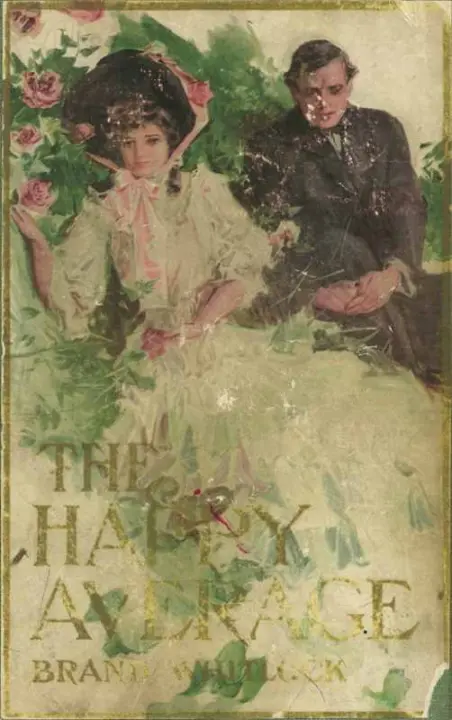
Brand Whitlock
Brand Whitlock
BEHIND THE BOOK
This eBook is for the use of anyone anywhere in the United States and most other parts of the world at no cost and with almost no restrictions whatsoever. You may copy it, give it away or re-use it under the terms of the Project Gutenberg License included with this eBook or online at www.gutenberg.org. If you are not located in the United States, you will have to check the laws of the country where you are located before using this eBook. Read the source licence.
The original source file, including credits and licence, is retained by this library. Request an original-format copy at no charge. Please include the book title and Project Gutenberg identifier #67648.
KEEP YOUR CURIOSITY GOING
Cécile Tormay

Moritz Busch
John L. Ransom
Frances Wright
Cécile Tormay

Mabel Potter Daggett