The Shogun’s Daughter
Robert Ames Bennet
THE CLASSIC COLLECTION · 1905
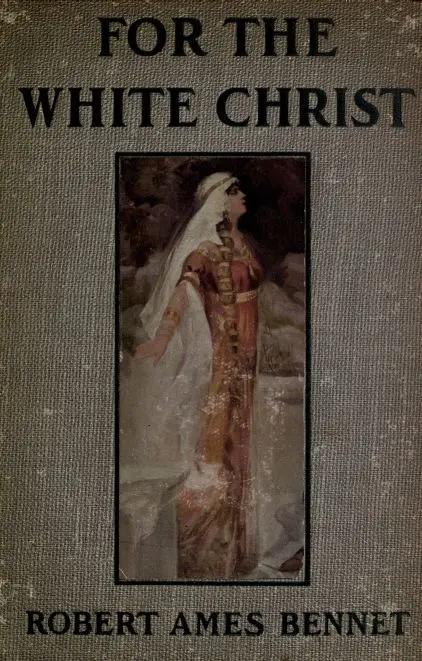
"For the White Christ: A Story of the Days of Charlemagne" by Robert Ames Bennet is a historical novel written in the early 20th century. This tale is set during the time of Charlemagne and intertwines themes of honor, warfare, and the clash of cultures between the Franks and the Vikings. The story primarily follows Roland, a Frankish count, and his interactions with various characters, including the earl Olvir, amidst their entangled fates shaped by battles and the quest for identity and loyalty in a world marked by conflict and ambition. The opening of the novel introduces readers to a dramatic scene aboard a Frisian trade-ship navigating the Seine estuary in 778. As the ship drifts through the mists, we meet Roland, an honorable Frank, who is accompanied by the young princess Rothada. Their journey takes a perilous turn when they encounter Viking ships, creating an atmosphere of tension and impending conflict. As the Franks prepare for battle, Roland emerges as a courageous defender of Rothada, displaying both valor and dedication. The dialogue reveals deep-seated rivalries and alliances, hinting at the larger saga unfolding within the turbulent political landscape of Charlemagne's reign. This initial chapter establishes the characters and stakes that will drive the narrative forward, combining action with the exploration of loyalty, heritage, and the shadow of fate over their lives.
Introduction adapted from the source catalogue; source summaries may be automatically generated.
Free to read · English · 124,412 words · No account needed
MAKE TIME FOR A GOOD BOOK
On by default. Untick to stop anonymous reading totals. Each page counts after 10 seconds in view. How this works.
Anonymous counting is on unless you have switched it off.
"So," he murmured, "love and friendship are dead; and I--I had my part in the slaying. Would that I had been less harsh with him--ay, and with--her! Ah, well; what is past is past. Let Urd hold the bitter; I 'll look to Skuld. And now to go. I cannot face those merry ones."
Half sighing, the Northman turned into the coppice and disappeared. A little later he stepped out on the river's bank into the midst of the wassailing oarsmen, and spoke a word in Floki's ear: "Take joy! I 've seen your werwolf's teeth. I go downstream afoot."
Before Floki could reply, Olvir stepped back into the thicket, and was gone. The other vikings, intent upon their black mead, had scarcely glanced up at their earl. But Floki for some time sat staring at the spot where Olvir had vanished, his brows bent in deep thought. At last his frown relaxed, and he smiled grimly.
"All's well," he muttered. "Grief will pass. I see a fairer bride."
As though the words had been a spell, hardly were they uttered when Rothada appeared before the speaker. Floki's jaw dropped. But then he caught sight of Gerold behind the girl, and rose to meet them. The young count looked at him gravely, and pointed to the boats.
"Make ready at once," he said. "The queen would return. She comes
now."
Floki uttered a word of command; and while the grumbling wassailers manned the oars he kept a sharp eye on the approaching party. There was no more merriment to be heard among the young Franks. Even the royal children were sobered. Hildegarde, who was leaning heavily upon Roland's arm, looked both grieved and harassed. Close after, between Lupus and young Worad, walked Fastrada, with drooping body and pale, downcast face. Last of all, behind the whispering pages and bower-maidens, came Liutrad, apart from the others.
Roland seated the queen and the children, as before, in his boat; but Fastrada passed by Olvir's boat with a shudder. As she accepted Worad's silent invitation, Hildegarde looked up and spoke half hesitatingly: "How of--Lord Olvir?"
"Let his boat wait," suggested her brother.
"No," put in Floki, curtly.
"Why not?" demanded Roland, and he leaned toward the tall giant,
frowning.
"What use, when he has gone?" rejoined Floki.
"You 've seen him!" exclaimed Liutrad.
"Ay, lad."
"What did he say, man?" asked Worad, sharply.
Floki eyed the questioner with a cold stare; but then, smiling in a peculiar way, he answered dryly: "The earl bade me take joy."
"Take joy!--why take joy?" asked the queen.
Your reading position is saved on this browser. Take it to another device with a library code. Reading pages adapt to text, rather than matching a printed edition.
Robert Ames Bennet
Robert Ames Bennet
Robert Ames Bennet
BEHIND THE BOOK
This eBook is for the use of anyone anywhere in the United States and most other parts of the world at no cost and with almost no restrictions whatsoever. You may copy it, give it away or re-use it under the terms of the Project Gutenberg License included with this eBook or online at www.gutenberg.org. If you are not located in the United States, you will have to check the laws of the country where you are located before using this eBook. Read the source licence.
The original source file, including credits and licence, is retained by this library. Request an original-format copy at no charge. Please include the book title and Project Gutenberg identifier #42050.
KEEP YOUR CURIOSITY GOING
Cécile Tormay

Moritz Busch
Coulson Kernahan
John L. Ransom

Maurice Baring
Frances Wright