THE CLASSIC COLLECTION✦An outlaw’s diary: the CommuneCLASSIC FREE BOOKS
An outlaw’s diary: the Commune
Cécile Tormay
THE CLASSIC COLLECTION · 1866
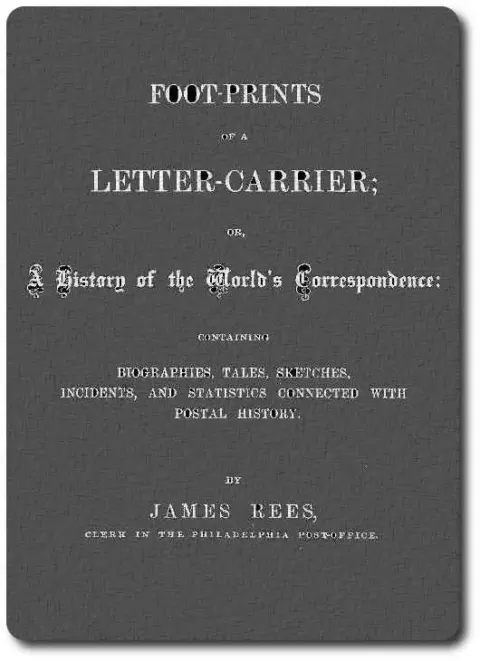
"Foot-prints of a Letter Carrier; or, A History of the World's Correspondence" by James Rees is a historical account written in the mid-19th century. The book explores the development and significance of postal systems throughout history, particularly in the context of the United States. It promises to delve into various aspects of postal history, including biographies, anecdotes, and statistics that underscore the social and political importance of postal services. The opening portion of the work establishes a foundational understanding of the post office's history, emphasizing its significant yet often overlooked role in society. The author reflects on the general disinterest in postal history, despite its relevance to daily life and national affairs. Rees discusses the evolution of communication methods from ancient times, introducing the concept of post as a governmental necessity linked to trade and commerce. He sets the stage for a narrative that connects various developments in postal services across nations while highlighting the profound impact these systems have had on the progression of civilization.
Introduction adapted from the source catalogue; source summaries may be automatically generated.
Free to read · English · 119,279 words · No account needed
MAKE TIME FOR A GOOD BOOK
On by default. Untick to stop anonymous reading totals. Each page counts after 10 seconds in view. How this works.
Anonymous counting is on unless you have switched it off.
“animum pictura pascit inani”[20]
than they do of the principle conveyed in this line from Virgil,—
“Animus lucis contemtor.”[21]
The English post-office, to a certain extent, is a political one; but there is one feature in it which differs materially from our own, and it is one that reflects the highest credit on the English government; and that is, a man is not discharged from office simply on political grounds, but is retained as long as he attends to his business and conducts himself properly. The reward of merit and long service is, when incapable of attending to his duties, a pension from his government. With these remarks, elicited by contrasting the two systems, we annex the following synopsis of the London postal arrangements:—
(From the London “Postal Guide” for 1864.)
The London district comprises all places within a circle of twelve miles from the general post-office, including Cheshunt, Hampton, Hampton Court, and Sunbury, and the post towns of Barnet, Waltham Cross, Romford, Bromley, Croydon, Kingston, and Hounslow. It is divided into ten postal districts, each of which is treated, in many respects, as a separate post town. The following are the names of the districts, with their abbreviations, viz.:—
Northern N.
Northeastern N.E.
Northwestern N.W.
Southern S.
Southeastern S.E.
Southwestern S.W.
Eastern E.
Eastern Central E.C.
Western W.
Western Central W.C.
By adding the initials of the postal districts to the addresses of letters for London and its neighborhood, the public will much facilitate the arrangements of the post-office.
The district initials for every important street or place are given in
the street list.
The portion of each district within about three miles of the general post-office is designated the town delivery, and the remainder the suburban delivery.
Within the town limits there are twelve deliveries of letters daily. The first, or general post delivery, including all inland, colonial, and foreign letters arriving in sufficient time, commences about 7.30 A.M., and is generally completed throughout London by nine o’clock, except on Mondays, or on other days when there are large arrivals of letters from abroad.
The second delivery, which commences about nine A.M., includes the correspondence received by the night mails from Ireland and France, and letters from the provinces and abroad which may arrive too late for the first delivery, as well as those posted in the nearer suburbs by 6.30 A.M., as specified in the tables for each district.
The next nine deliveries are made hourly, and include all letters reaching the general post-office or the district offices in time for each despatch.
The last delivery commences about 7.45 P.M.
Your reading position is saved on this browser. Take it to another device with a library code. Reading pages adapt to text, rather than matching a printed edition.
BEHIND THE BOOK
This eBook is for the use of anyone anywhere in the United States and most other parts of the world at no cost and with almost no restrictions whatsoever. You may copy it, give it away or re-use it under the terms of the Project Gutenberg License included with this eBook or online at www.gutenberg.org. If you are not located in the United States, you will have to check the laws of the country where you are located before using this eBook. Read the source licence.
The original source file, including credits and licence, is retained by this library. Request an original-format copy at no charge. Please include the book title and Project Gutenberg identifier #47190.
KEEP YOUR CURIOSITY GOING
Cécile Tormay

Moritz Busch
John L. Ransom
Frances Wright
Cécile Tormay

Mabel Potter Daggett