THE CLASSIC COLLECTION✦An outlaw’s diary: the CommuneCLASSIC FREE BOOKS
An outlaw’s diary: the Commune
Cécile Tormay
THE CLASSIC COLLECTION · 1866
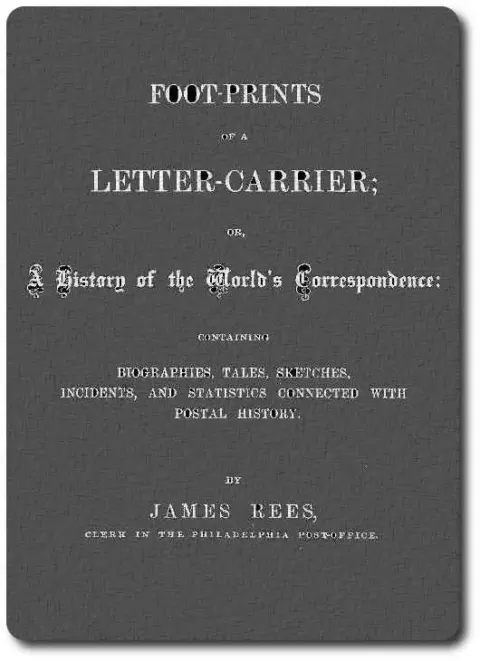
"Foot-prints of a Letter Carrier; or, A History of the World's Correspondence" by James Rees is a historical account written in the mid-19th century. The book explores the development and significance of postal systems throughout history, particularly in the context of the United States. It promises to delve into various aspects of postal history, including biographies, anecdotes, and statistics that underscore the social and political importance of postal services. The opening portion of the work establishes a foundational understanding of the post office's history, emphasizing its significant yet often overlooked role in society. The author reflects on the general disinterest in postal history, despite its relevance to daily life and national affairs. Rees discusses the evolution of communication methods from ancient times, introducing the concept of post as a governmental necessity linked to trade and commerce. He sets the stage for a narrative that connects various developments in postal services across nations while highlighting the profound impact these systems have had on the progression of civilization.
Introduction adapted from the source catalogue; source summaries may be automatically generated.
Free to read · English · 119,279 words · No account needed
MAKE TIME FOR A GOOD BOOK
On by default. Untick to stop anonymous reading totals. Each page counts after 10 seconds in view. How this works.
Anonymous counting is on unless you have switched it off.
[52] We were told by an officer of the department that the meaning of this section of the postal law is not made sufficiently clear, but it is generally understood by those who have control of an office. This is not the case; for we know one large newspaper (weekly) proprietor who, taking the section literally, sends a very large edition of his paper through the Philadelphia post-office to all his subscribers, and defends himself under this order from the general post-office:— “Weekly newspapers (one copy only) sent by the publisher to actual subscribers within the county where printed and published, free.”
[53] New York Review.
[54] For a number of these addresses the author is indebted to that excellent paper entitled the “United States Mail.”
[55] There is a small paper published in Albany, New York, entitled the “Stamp Collector’s Record.” It is entirely devoted to the cause of stamps and their collectors. It furnishes also considerable information upon the subject in connection with foreign stamps.
[56] The number of individuals employed in the English post-office is very considerable. On the 31st of December, 1857, it gave employment to twenty-three thousand seven hundred and thirty-one persons, while the number has been since considerably increased. More than two thousand of these clerks are employed in the chief office in London. The number of persons employed in the post-office of France amounts to twenty-six thousand and seventy-one; but then it should be remembered that the extent and population of France are greater than the extent and population of Great Britain.
[57] It may be added here that these deliveries are distinct from what is termed the “general delivery.” As all the principal mails arrive in London in the morning, there are but three deliveries a day by the carriers of the general post. These carriers are distinguished from those belonging to the two-penny post or city delivery by wearing the livery of the department, viz.: a scarlet coat with a blue collar, and buttons stamped with an impression of the royal arms.
[58] Persons anxious to examine more closely into this subject, which, however, is now settled, no doubt finally, by a compromise with the parties, are referred to the opinion of the court, “United States vs. Kochersperger,” in report of the postmaster-general for the year 1860.
A Chapter of Accidents, 366.
Abolition Papers in the South, 195.
Addenda, 410.
Addresses on Letters should be legible, 337.
Advertised Letters, 314.
African Post, 88.
Alphabets of Different Nations, 30.
American Flag, 173.
Ancient Writing-Materials, 35.
Ink, 41.
Ruins, 19.
Andersonville Post-Office, 365.
Appointment-Office, Postal, 268.
Appleton’s Postal Guide, 339.
Augustus Cæsar, 14, 20.
Austria, the Carrier System, 364.
Bache, Richard, 146.
Barry, William T., Postmaster-General, 190.
Bells, Christ Church, 97.
Your reading position is saved on this browser. Take it to another device with a library code. Reading pages adapt to text, rather than matching a printed edition.
BEHIND THE BOOK
This eBook is for the use of anyone anywhere in the United States and most other parts of the world at no cost and with almost no restrictions whatsoever. You may copy it, give it away or re-use it under the terms of the Project Gutenberg License included with this eBook or online at www.gutenberg.org. If you are not located in the United States, you will have to check the laws of the country where you are located before using this eBook. Read the source licence.
The original source file, including credits and licence, is retained by this library. Request an original-format copy at no charge. Please include the book title and Project Gutenberg identifier #47190.
KEEP YOUR CURIOSITY GOING
Cécile Tormay

Moritz Busch
John L. Ransom
Frances Wright
Cécile Tormay

Mabel Potter Daggett