THE CLASSIC COLLECTION✦An outlaw’s diary: the CommuneCLASSIC FREE BOOKS
An outlaw’s diary: the Commune
Cécile Tormay
THE CLASSIC COLLECTION · 1866
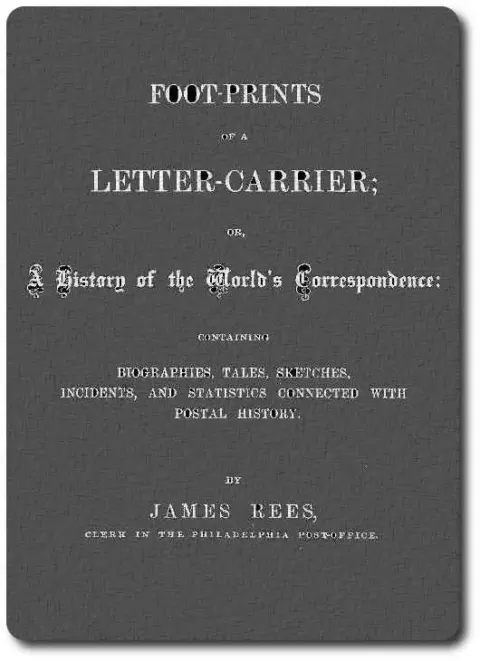
"Foot-prints of a Letter Carrier; or, A History of the World's Correspondence" by James Rees is a historical account written in the mid-19th century. The book explores the development and significance of postal systems throughout history, particularly in the context of the United States. It promises to delve into various aspects of postal history, including biographies, anecdotes, and statistics that underscore the social and political importance of postal services. The opening portion of the work establishes a foundational understanding of the post office's history, emphasizing its significant yet often overlooked role in society. The author reflects on the general disinterest in postal history, despite its relevance to daily life and national affairs. Rees discusses the evolution of communication methods from ancient times, introducing the concept of post as a governmental necessity linked to trade and commerce. He sets the stage for a narrative that connects various developments in postal services across nations while highlighting the profound impact these systems have had on the progression of civilization.
Introduction adapted from the source catalogue; source summaries may be automatically generated.
Free to read · English · 119,279 words · No account needed
MAKE TIME FOR A GOOD BOOK
On by default. Untick to stop anonymous reading totals. Each page counts after 10 seconds in view. How this works.
Anonymous counting is on unless you have switched it off.
“Though grief may blight, or sin deface
Our youth’s fair promise, or disgrace
May brand with infamy and shame.
* * * * *
A mother, though her heart may break,
From that fond heart will never tear
The child whose last retreat is there.”
It was a cold, dreary morning in the month of December, a heavy snow lay upon the ground, and the wind whistled around the northeast corner of the post-office; the streets were nearly deserted; none ventured out but those whose business rendered it absolutely necessary. I sat at the window watching the flakes of snow as they peeled from the roofs of the opposite houses and scattered their whitened particles on the pavement beneath.
The Southern mail had arrived, and all the business-letters were delivered; a drowsy feeling crept over me, and I was just falling into the Lethean lake of forgetfulness,—that dreamy portion of our life, without which this paradise, this glorious world, with its riches and its charms, would be as a howling desert.
“Sleep, sweet restorer, balmy sleep.”
But I am digressing. I was awakened from my slumber by a slight touch upon the elbow and a tremulous voice uttering the words, “Sir! sir!”
“Madam!” cried I, starting up.
“I am sorry to disturb you, sir, but I wish to know if there are any
letters from my son?”
Honest creature: she looked the picture of distress; the widow of hope as well as kin, her age apparently about fifty, her dress neat but indicating poverty,—the hand of Time had furrowed her cheek and left his impress there.
“From your son, madam?”
“Yes, sir, my only son: a good, brave boy, and my only dependence; he lives in New Orleans, and sends me my little allowance every month. Is there any, sir?”
“What is your name?”
“Williams, sir,—Mary Williams.”
“Here are two letters, ma’am, for Mary Williams.”
“That is me, sir; and that is his handwriting, dear, good boy! he never will forget his aged mother.”
“Fifty cents, ma’am.”
“Fifty cents, sir! my William always pays for the letters.”
“In this instance he has failed to do so.”
“What shall I do?”
“I think you said, ma’am, that your son sends you a monthly allowance: so probably one of these letters contains it.”
The letter was opened, and, as I anticipated, a ten-dollar bill was
enclosed.
Your reading position is saved on this browser. Take it to another device with a library code. Reading pages adapt to text, rather than matching a printed edition.
BEHIND THE BOOK
This eBook is for the use of anyone anywhere in the United States and most other parts of the world at no cost and with almost no restrictions whatsoever. You may copy it, give it away or re-use it under the terms of the Project Gutenberg License included with this eBook or online at www.gutenberg.org. If you are not located in the United States, you will have to check the laws of the country where you are located before using this eBook. Read the source licence.
The original source file, including credits and licence, is retained by this library. Request an original-format copy at no charge. Please include the book title and Project Gutenberg identifier #47190.
KEEP YOUR CURIOSITY GOING
Cécile Tormay

Moritz Busch
John L. Ransom
Frances Wright
Cécile Tormay

Mabel Potter Daggett