THE CLASSIC COLLECTION✦An outlaw’s diary: the CommuneCLASSIC FREE BOOKS
An outlaw’s diary: the Commune
Cécile Tormay
THE CLASSIC COLLECTION · 1866
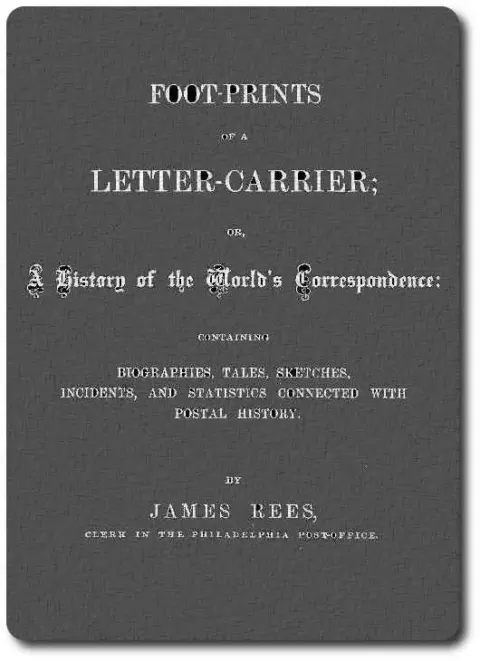
"Foot-prints of a Letter Carrier; or, A History of the World's Correspondence" by James Rees is a historical account written in the mid-19th century. The book explores the development and significance of postal systems throughout history, particularly in the context of the United States. It promises to delve into various aspects of postal history, including biographies, anecdotes, and statistics that underscore the social and political importance of postal services. The opening portion of the work establishes a foundational understanding of the post office's history, emphasizing its significant yet often overlooked role in society. The author reflects on the general disinterest in postal history, despite its relevance to daily life and national affairs. Rees discusses the evolution of communication methods from ancient times, introducing the concept of post as a governmental necessity linked to trade and commerce. He sets the stage for a narrative that connects various developments in postal services across nations while highlighting the profound impact these systems have had on the progression of civilization.
Introduction adapted from the source catalogue; source summaries may be automatically generated.
Free to read · English · 119,279 words · No account needed
MAKE TIME FOR A GOOD BOOK
On by default. Untick to stop anonymous reading totals. Each page counts after 10 seconds in view. How this works.
Anonymous counting is on unless you have switched it off.
“Every letter, no matter what trifles are in it, should begin with the post-office, State, and poor terrestrial date, day, month, and year. It is all very fine to write from ‘Clover Lawn,’ or ‘Willow-Tree,’ or ‘Sweet Home,’ and date it ‘Sunday Eve,’ ‘Birthday,’ or ‘Moonshine;’ but suppose the post-mark is dim, and the letter gets into this marble cemetery, what then? And then as to the superscription. By the present fashion we have first the name, life-size, and, if the sex will possibly allow it, Esquired; then the post-office; last and least, and tucked in a corner like a naughty boy, the State.
“Now, is not this reversing the order of things,—cribbing the greater and magnifying the less? People, I presume, will not be persuaded to change their mode of address, letters dead or alive; but how would it do to direct a letter thus?—
‘MASSACHUSETTS, Boston,
‘DR. O. W. HOLMES.’
“The little traveller would be sure to get into the right State at the first dash, make straight for the post-office, and finding the funny doctor would be an easy business.”
The large number of letters written by persons in the military service of the United States, whose locality could not be ascertained, contributed very considerably to the increase of “dead-letters.” But the great proportion of ordinary dead-letters which were returned was decidedly those of the careless order. Many were not even signed, and others so imperfectly directed that it was totally impossible to decipher even the name or residence of the writer. Time after time have postmasters called public attention to this state of things, and, strange as the fact may appear, this very timely (as it was supposed) suggestion had the contrary effect: the number of ill-spelt and ill-directed letters increased!
Among the “mail-matters” which had accumulated at the dead-letter-office in Washington since 1848, and which were sold to the highest bidder on the 6th of December, 1859, were the following articles:—coats, hats, socks, drawers, gloves, scarfs, suspenders, patent inhaling-tubes, gold pens, pencils, ladies’ slippers half worn, all kinds of jewelry, undersleeves, fans, handkerchiefs, box of dissecting-instruments, pocket-Bibles, religious books, others not quite so acceptable to the moral portion of the community, shirts, bed-quilts, boots, spurs, gaffs for game-fowls, shawls, gaiters, tobacco, razors, &c. &c.
Advertised letters, uncalled for and sent to the dead-letter-office, cost the government annually over $60,000! This is a dead loss, as, from the very nature of the superscription and imperfect direction, such letters have no more chance of reaching their places of destination than a sinner has of going to heaven.
Your reading position is saved on this browser. Take it to another device with a library code. Reading pages adapt to text, rather than matching a printed edition.
BEHIND THE BOOK
This eBook is for the use of anyone anywhere in the United States and most other parts of the world at no cost and with almost no restrictions whatsoever. You may copy it, give it away or re-use it under the terms of the Project Gutenberg License included with this eBook or online at www.gutenberg.org. If you are not located in the United States, you will have to check the laws of the country where you are located before using this eBook. Read the source licence.
The original source file, including credits and licence, is retained by this library. Request an original-format copy at no charge. Please include the book title and Project Gutenberg identifier #47190.
KEEP YOUR CURIOSITY GOING
Cécile Tormay

Moritz Busch
John L. Ransom
Frances Wright
Cécile Tormay

Mabel Potter Daggett