THE CLASSIC COLLECTION✦An outlaw’s diary: the CommuneCLASSIC FREE BOOKS
An outlaw’s diary: the Commune
Cécile Tormay
THE CLASSIC COLLECTION · 1866
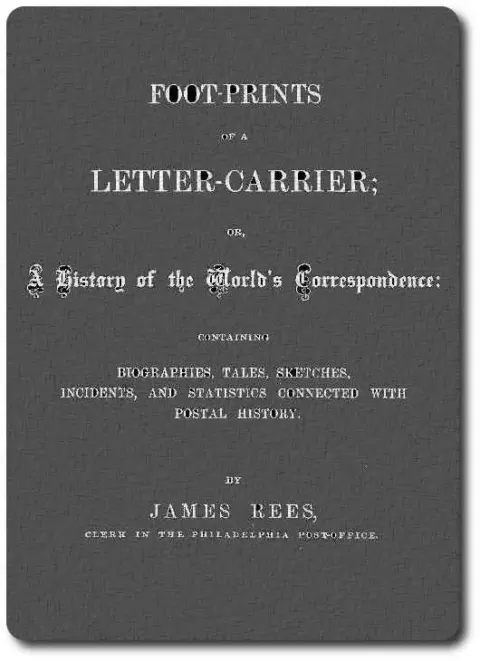
"Foot-prints of a Letter Carrier; or, A History of the World's Correspondence" by James Rees is a historical account written in the mid-19th century. The book explores the development and significance of postal systems throughout history, particularly in the context of the United States. It promises to delve into various aspects of postal history, including biographies, anecdotes, and statistics that underscore the social and political importance of postal services. The opening portion of the work establishes a foundational understanding of the post office's history, emphasizing its significant yet often overlooked role in society. The author reflects on the general disinterest in postal history, despite its relevance to daily life and national affairs. Rees discusses the evolution of communication methods from ancient times, introducing the concept of post as a governmental necessity linked to trade and commerce. He sets the stage for a narrative that connects various developments in postal services across nations while highlighting the profound impact these systems have had on the progression of civilization.
Introduction adapted from the source catalogue; source summaries may be automatically generated.
Free to read · English · 119,279 words · No account needed
MAKE TIME FOR A GOOD BOOK
On by default. Untick to stop anonymous reading totals. Each page counts after 10 seconds in view. How this works.
Anonymous counting is on unless you have switched it off.
“The number of letters containing checks, bills of exchange, deeds, and other papers of value was 15,304, with a nominal value of $3,329,888, of which 13,746, containing $3,246,149, were delivered, leaving unclaimed 1558, of the value of $83,739.
“The number containing photographs, jewelry, and miscellaneous articles was 69,902. Of these, 41,600 were delivered, and 28,302 remain for disposal, or, being worthless, have been destroyed. The number of valuable letters sent out was 107,979,—an increase of 38,792 over the previous year.
“There were returned to public offices, including franked letters,
28,677.
“The number containing stamps and articles of small value was 8289, and of unpaid and misdirected letters, 166,215.
“The number of ordinary dead-letters returned to the writers was 1,188,599, and the number not delivered was 297,304, being about 23 per cent. of the whole. Of those not delivered, less than 4 per cent. were refused by the writers.
“The number of foreign letters returned was 167,449, and the number received from foreign countries was 88,361.
“In the last report the attention of Congress was called to the expediency of restoring prepaid letters to the owners free of postage. The measure is again commended, with the additional suggestion that letters be forwarded at the request of the party addressed from one post-office to another without extra charge.
“The number of letters conveyed in the mails during 1865 is estimated at 467,591,600. Of these, 4,368,087 were returned to the dead-letter-office, including 566,097 army and navy letters, the non-delivery of which was not chargeable to the postal service, they having passed beyond its control into the custody of the military and naval authorities. Deducting 1,156,401 letters returned to writers or held as valuable, the total number lost or destroyed was 2,352,424, or one in every two hundred mailed for transmission and delivery. Fully three-fourths of the letters returned as dead fail to reach the parties addressed through faults of the writers, so that the actual losses from irregularities of service and casualties, ordinary and incidental to the war, did not exceed one in every eight hundred of the estimated number intrusted to the mails.
“The returns of dead-letters from cities are largely in excess of proportions based upon population. To them special efforts have been directed to secure the most efficient service, and it is believed improvements in operation, chiefly that of free delivery, will diminish the number of undelivered letters at offices in densely-populated districts.
“The number of applications for missing letters was 8664,—an increase of 3552 over the previous year. A misapprehension prevails in regarding the dead-letter-office as a depository for the safe keeping of undelivered letters, and not as the agent for their final disposal, to correct which the regulations are appended.
“The amount deposited in the treasury under act of 3d of March last
were:—
On account of sales of waste paper $9,420 67 Unclaimed dead-letter money 7,722 70 —————————— $17,143 37
Your reading position is saved on this browser. Take it to another device with a library code. Reading pages adapt to text, rather than matching a printed edition.
BEHIND THE BOOK
This eBook is for the use of anyone anywhere in the United States and most other parts of the world at no cost and with almost no restrictions whatsoever. You may copy it, give it away or re-use it under the terms of the Project Gutenberg License included with this eBook or online at www.gutenberg.org. If you are not located in the United States, you will have to check the laws of the country where you are located before using this eBook. Read the source licence.
The original source file, including credits and licence, is retained by this library. Request an original-format copy at no charge. Please include the book title and Project Gutenberg identifier #47190.
KEEP YOUR CURIOSITY GOING
Cécile Tormay

Moritz Busch
John L. Ransom
Frances Wright
Cécile Tormay

Mabel Potter Daggett