THE CLASSIC COLLECTION✦An outlaw’s diary: the CommuneCLASSIC FREE BOOKS
An outlaw’s diary: the Commune
Cécile Tormay
THE CLASSIC COLLECTION · 1866
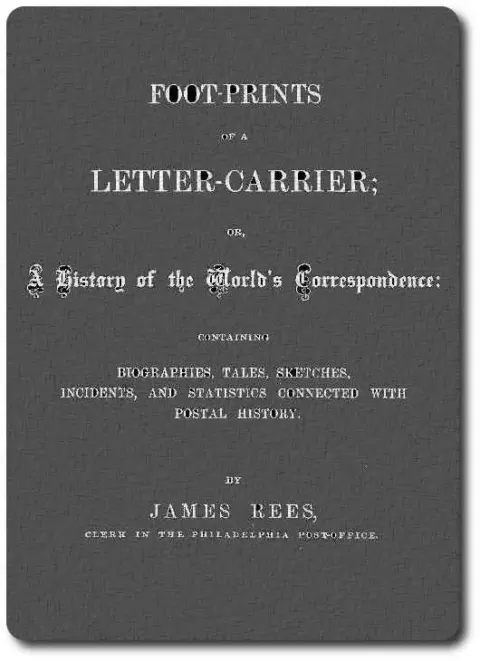
"Foot-prints of a Letter Carrier; or, A History of the World's Correspondence" by James Rees is a historical account written in the mid-19th century. The book explores the development and significance of postal systems throughout history, particularly in the context of the United States. It promises to delve into various aspects of postal history, including biographies, anecdotes, and statistics that underscore the social and political importance of postal services. The opening portion of the work establishes a foundational understanding of the post office's history, emphasizing its significant yet often overlooked role in society. The author reflects on the general disinterest in postal history, despite its relevance to daily life and national affairs. Rees discusses the evolution of communication methods from ancient times, introducing the concept of post as a governmental necessity linked to trade and commerce. He sets the stage for a narrative that connects various developments in postal services across nations while highlighting the profound impact these systems have had on the progression of civilization.
Introduction adapted from the source catalogue; source summaries may be automatically generated.
Free to read · English · 119,279 words · No account needed
MAKE TIME FOR A GOOD BOOK
On by default. Untick to stop anonymous reading totals. Each page counts after 10 seconds in view. How this works.
Anonymous counting is on unless you have switched it off.
James Monroe, President. There is no record in the Journals of Congress of his having taken the oath of office.
Daniel D. Tompkins, Vice-President.
ELECTORAL VOTE—For President, James Monroe, 231; John Quincy
Adams, Massachusetts, 1.—Total, 232. Twenty-four States
voting.
For Vice-President, Daniel D. Tompkins, 218; Richard Stockton, New Jersey, 8; Robert G. Harper, 1; Richard Rush, Pennsylvania, 1; Daniel Rodney, Delaware, 1.
1825 to 1829.
John Quincy Adams, of Massachusetts, President, inaugurated March 4, 1825. He was born at Quincy, Massachusetts, July 11, 1767, died at Washington City, February 23, 1848.
John Caldwell Calhoun, of South Carolina, Vice-President. Born in Abbeville district, South Carolina, March 18, 1782, died March 31, 1850, in Washington City.
POPULAR VOTE—For President, John Quincy Adams, 105,321; Andrew Jackson, Tennessee, 152,899; William H. Crawford, Georgia, 47,265; Henry Clay, Kentucky, 47,087.
ELECTORAL VOTE—For President, Andrew Jackson, 99; John Quincy Adams, 84; William H. Crawford, 41; Henry Clay, 37.—Total, 261. Twenty-four States voting.
There being no choice by the Electoral colleges, the vote was taken into the House of Representatives, when upon ballot it appeared that Adams had received the vote of thirteen States, Jackson seven, and Crawford four. John Quincy Adams was therefore declared elected President.
For Vice-President, the Electoral vote was John C. Calhoun, South Carolina, 182; Nathan Sanford, New York, 30; Nathaniel Macon, Georgia, 24; Andrew Jackson, Tennessee, 13; Martin Van Buren, New York, 9; Henry Clay, Kentucky, 2.
1829 to 1833.
Andrew Jackson, of Tennessee, President, inaugurated March 4, 1829. He was born in Mecklenburg county, North Carolina, near the Waxhaw Settlements, which are in South Carolina, March 15, 1767, died at the Hermitage, Tennessee, June 8, 1845.
John Caldwell Calhoun, Vice-President, until his resignation,
December 28, 1832.
POPULAR VOTE—For President, Andrew Jackson, 650,028; John
Quincy Adams, 512,158.
ELECTORAL VOTE—For President, Andrew Jackson, 178; John Quincy Adams, 83.—Total, 261. Twenty-four States voting.
For Vice-President, John C. Calhoun, 171; Richard Rush, Pennsylvania, 83; William Smith, South Carolina, 7.
1833 to 1837.
Andrew Jackson, President, inaugurated March 4, 1833.
Martin Van Buren, of New York, Vice-President. He was born at Kinderhook, New York, December 5, 1782. Died, July 24, 1864.
POPULAR VOTE—For President, Andrew Jackson, 687,502; Henry Clay, 550,189; opposition (John Floyd, Virginia, and William Wirt, Maryland), 33,108.
ELECTORAL VOTE—For President, Andrew Jackson, 219; Henry Clay, 49; John Floyd, 11; William Wirt, 7,—Total, 288. Twenty-four States voting.
For Vice-President, Martin Van Buren, 189; John Sergeant, Pennsylvania, 49; William Wilkins, Pennsylvania, 30; Henry Lee, Massachusetts, 11; Amos Ellmaker, Pennsylvania, 7.
1837 to 1841.
Martin Van Buren, President, inaugurated March 4, 1837.
Richard M. Johnson, of Kentucky, Vice-President. He was born
in 1780; died November 19, 1850.
POPULAR VOTE—For President, Martin Van Buren, 762,149; opposition (William H. Harrison, Hugh L. White, Daniel Webster, W.P. Mangum), 736,736.
ELECTORAL VOTE—For President, Martin Van Buren, 170; William H. Harrison, Ohio, 73; Hugh L. White, Tennessee, 26; Daniel Webster, Massachusetts, 14; W.P. Mangum, 11.—Total, 294. Twenty-six States voting.
For Vice-President, Richard M. Johnson, Kentucky, 147; Francis Granger, New York, 77; John Tyler, Virginia, 47; William Smith, Alabama, 23.
1841 to 1845.
Your reading position is saved on this browser. Take it to another device with a library code. Reading pages adapt to text, rather than matching a printed edition.
BEHIND THE BOOK
This eBook is for the use of anyone anywhere in the United States and most other parts of the world at no cost and with almost no restrictions whatsoever. You may copy it, give it away or re-use it under the terms of the Project Gutenberg License included with this eBook or online at www.gutenberg.org. If you are not located in the United States, you will have to check the laws of the country where you are located before using this eBook. Read the source licence.
The original source file, including credits and licence, is retained by this library. Request an original-format copy at no charge. Please include the book title and Project Gutenberg identifier #47190.
KEEP YOUR CURIOSITY GOING
Cécile Tormay

Moritz Busch
John L. Ransom
Frances Wright
Cécile Tormay

Mabel Potter Daggett