
Dead letters
Maurice Baring
THE CLASSIC COLLECTION · 1903
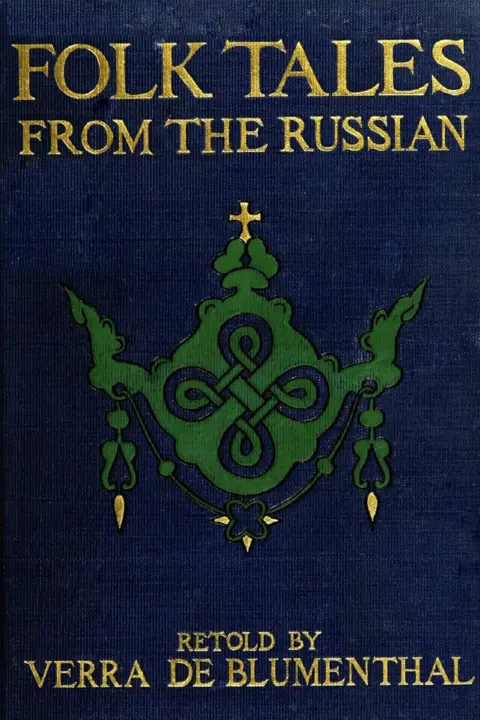
"Folk Tales from the Russian" by Verra Xenophontovna Kalamatiano De Blumenthal is a collection of traditional Russian folklore retold for children, likely written in the early 20th century. The book serves to preserve the rich tapestry of Russian fairy tales, legends, and folktales that depict the joys, struggles, and moral lessons of early Slavic life. Through stories featuring charming characters like the brave Tsarevitch Ivan and the enigmatic Baba Yaga, this collection seeks to introduce American children to the enchanting worldview of Russian folklore. The opening of this collection features the foreword which emphasizes the urgency to preserve vanishing folk tales in the face of modernization. The first tale introduced is "The Tsarevna Frog," where the youngest prince, Ivan Tsarevitch, must marry a frog after his arrow lands in a swamp, leading to unexpected mystical adventures involving his frog bride, who reveals a hidden beauty and wisdom. The tale unfolds as Ivan Tsarevitch grapples with his fate, navigating challenges and finding friendship and courage in the unlikeliest of circumstances. Throughout the opening, the importance of accepting one's destiny and understanding the value of love beyond appearances is poignantly illustrated.
Introduction adapted from the source catalogue; source summaries may be automatically generated.
Free to read · English · 22,611 words · No account needed
MAKE TIME FOR A GOOD BOOK
On by default. Untick to stop anonymous reading totals. Each page counts after 10 seconds in view. How this works.
Anonymous counting is on unless you have switched it off.
The holy icons are pictures or mosaics of Christ, or the Virgin Mary, or of some saint or martyr of the Russian church. In every Russian house there is one or more, hung in a prominent place. Every one who enters the house at once bows and utters a prayer before the icons before he does anything else. This is an old Russian custom which is still kept up by peasants.
Strong green wine. This is the phrase still used by Russian story-tellers to describe the drink which it was an honor to receive from the royal hand. Its strength was magical in that it was not acquired by keeping, but was always the same.
For a cloudy day is the Russian idiom very similar to our
own.
It is a peasant's trade is a Russian saying which means,
"It doesn't amount to much."
Moujik, a peasant: his duties are those of a farm laborer, yet this phrase would not be a fair translation. This word, which is rendered "tiller of the soil," has no exact equivalent in English.
Korolevitch, from korol: king. The endings evitch and evna show descent, korolevitch meaning son of a king; korolevna meaning daughter of a king.
Dutch trumpet, i.e., an imported trumpet. Anything foreign
is "Dutch" to the Russian peasant.
Honey drink, a drink made by fermenting honey and water. It is quite common in Russia, and is about the same as our mead.
Russian and other Slavonic tales often have queer endings, similar to the one here given by the story-teller at the end of the story, which is no part of the tale. To the Russian they give a poetic touch, a little sense of confusion and mystery which is certainly delightful.
The Language of the Birds
Holy Russia. To the Russian his country is sacred; everything outside is profane by comparison. The phrase suggests the Holy Roman Empire of history, or the Celestial Kingdom of the Chinese.
Ivanoushka the Simpleton
In the peasant's house there is often a large stove of brick or tile on which the family sleep in cold weather.
A day in and an equal day out, the Russian idiom. Observe
how very like our own.
Woe Bogotir
Kabak, a drinking saloon.
The ruble is the principal coin of Russia, as the dollar is in the United States. It is equal to 100 copecks, and at this time (1903) is worth only about 50 cents.
Honey to drink, i.e., fermented honey, or mead.
Baba Yaga
Baba, a peasant woman, or grandmother; granny.
Yaga, witch. Baba Yaga, therefore, is the familiar
"Grandmother Witch."
Izba, a hut. Izboushka, a tiny hut.
Father Frost
Schouba, a large fur-lined cloak.
Your reading position is saved on this browser. Take it to another device with a library code. Reading pages adapt to text, rather than matching a printed edition.
BEHIND THE BOOK
This eBook is for the use of anyone anywhere in the United States and most other parts of the world at no cost and with almost no restrictions whatsoever. You may copy it, give it away or re-use it under the terms of the Project Gutenberg License included with this eBook or online at www.gutenberg.org. If you are not located in the United States, you will have to check the laws of the country where you are located before using this eBook. Read the source licence.
The original source file, including credits and licence, is retained by this library. Request an original-format copy at no charge. Please include the book title and Project Gutenberg identifier #12851.
KEEP YOUR CURIOSITY GOING
Maurice Baring
Francis Greenleaf Allinson & Anne C. E. (Anne Crosby Emery) Allinson

Abby Morton Diaz
Helen Hunt Jackson
Mary Frances Blaisdell
Stuart Dodgson Collingwood