
Dead letters
Maurice Baring
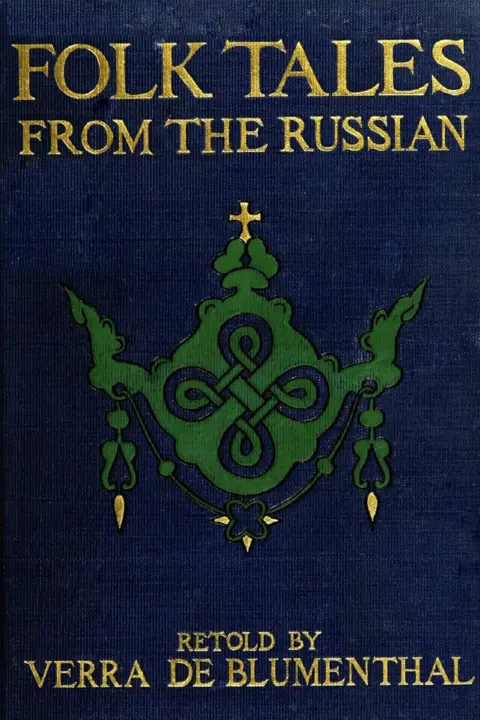
THE CLASSIC COLLECTION · 1903
"Folk Tales from the Russian" by Verra Xenophontovna Kalamatiano De Blumenthal is a collection of traditional Russian folklore retold for children, likely written in the early 20th century. The book serves to preserve the rich tapestry of Russian fairy tales, legends, and folktales that depict the joys, struggles, and moral lessons of early Slavic life. Through stories featuring charming characters like the brave Tsarevitch Ivan and the enigmatic Baba Yaga, this collection seeks to introduce American children to the enchanting worldview of Russian folklore. The opening of this collection features the foreword which emphasizes the urgency to preserve vanishing folk tales in the face of modernization. The first tale introduced is "The Tsarevna Frog," where the youngest prince, Ivan Tsarevitch, must marry a frog after his arrow lands in a swamp, leading to unexpected mystical adventures involving his frog bride, who reveals a hidden beauty and wisdom. The tale unfolds as Ivan Tsarevitch grapples with his fate, navigating challenges and finding friendship and courage in the unlikeliest of circumstances. Throughout the opening, the importance of accepting one's destiny and understanding the value of love beyond appearances is poignantly illustrated.
Introduction adapted from the source catalogue; source summaries may be automatically generated.
Free to read · English · 22,611 words · No account needed
MAKE TIME FOR A GOOD BOOK
On by default. Untick to stop anonymous reading totals. Each page counts after 10 seconds in view. How this works.
Anonymous counting is on unless you have switched it off.
"Why so sad, master?" Woe would ask, when the poor man sighed. "Listen to me, I want to teach thee a song, my beloved little song:
"I am Woe, the brave,
I am Woe, the bold;
He who lives with me
Has his griefs controlled,
And when money is lacking
I'll find him gold.
Attention, master, thou hast twenty-five copecks; let us go and buy some wine; let us have a jolly good time."
The poor man obeyed. They went and spent all in drink. After this the unlucky fellow, with the faithful Woe on his shoulders, came home. His wife was sad, his little children were hungry and in tears, but he, under the influence of Woe and wine, danced and sang.
On the next day Woe began to sigh and said:
"I have a drunken headache. Let us drink more."
"I have no money," answered the poor man.
"Hast thou forgotten my little song? Let us trade the harrow, the plow, the sledge, the telega for money, and let us have a good time."
"All right."
The poor, weak man had no courage to refuse, and Woe Bogotir became his master and ruler. They went to a kabak and spent everything; drank, sang, and had a good time.
On the next day Woe sighed again and said to the peasant:
"Let us drink; let us have a jolly time; let us sell or trade
everything left, even ourselves."
Then the fellow understood that his ruin was near and decided to deceive the sorrowful Woe, so he said:
"I once heard the old people say that behind the village, near the dark forest, there is buried a treasure, yes, a great treasure, but it is buried under a large, heavy stone, too heavy a stone for one man to move. If we could only remove that stone, thou and I, Woe Bogotir, could have a good time and plenty to drink."
"Let us hasten!" screamed Woe; "the Bitter Woe is strong enough to do harder things than to move stones."
They went a roundabout way behind the village and saw the great big stone, such a heavy stone that five or six strong peasants could never begin to move it. But our poor fellow with his faithful Woe Bogotir removed it at once. They looked inside. Under the stone there was a pit, a dark, deep pit. At the bottom of that pit something was twinkling. The peasant said to Woe:
"Thou bold Woe, jump in, throw the gold out to me and I will hold the
stone."
Woe jumped in and laughed out loud.
Your reading position is saved on this browser. Take it to another device with a library code. Reading pages adapt to text, rather than matching a printed edition.
BEHIND THE BOOK
This eBook is for the use of anyone anywhere in the United States and most other parts of the world at no cost and with almost no restrictions whatsoever. You may copy it, give it away or re-use it under the terms of the Project Gutenberg License included with this eBook or online at www.gutenberg.org. If you are not located in the United States, you will have to check the laws of the country where you are located before using this eBook. Read the source licence.
The original source file, including credits and licence, is retained by this library. Request an original-format copy at no charge. Please include the book title and Project Gutenberg identifier #12851.
KEEP YOUR CURIOSITY GOING
Maurice Baring
Francis Greenleaf Allinson & Anne C. E. (Anne Crosby Emery) Allinson

Abby Morton Diaz
Helen Hunt Jackson
Mary Frances Blaisdell
Stuart Dodgson Collingwood