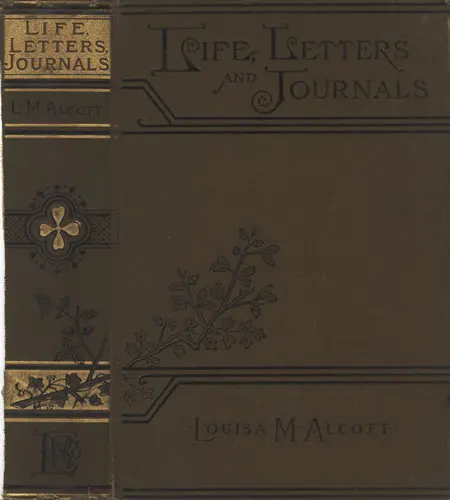
Louisa May Alcott : Her Life, Letters, and Journals
Louisa May Alcott
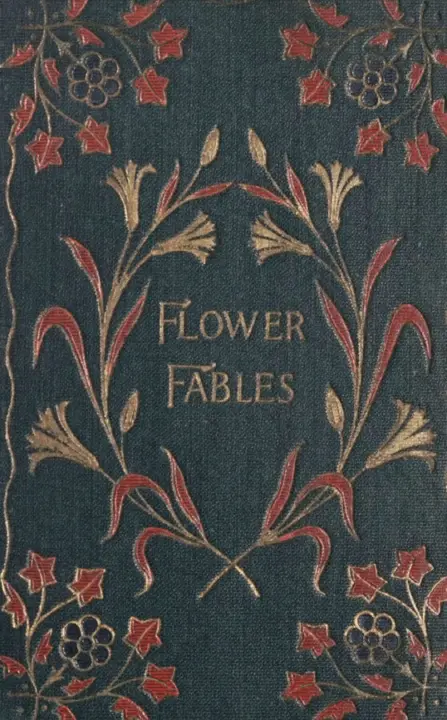
THE CLASSIC COLLECTION · 1854
"Flower Fables" by Louisa May Alcott is a collection of enchanting tales written in the mid-19th century. These fables explore themes of kindness, love, and moral lessons through the whimsical adventures of fairies and other mystical beings, each story conveying important virtues as they interact with the world around them. The opening portion of "Flower Fables" introduces readers to a vibrant fairyland where fairies gather under the summer moon to share stories. The main fairy, Violet, reveals the plight of her realm, which is threatened by the cruel Frost-King. As she expresses her desire to save the flowers from his cold grasp, the fairies engage in a council to find a solution. Violet bravely volunteers to confront the Frost-King, believing that love can thaw his icy heart. This sets the stage for a tale about the power of love and sacrifice, emphasizing the importance of compassion and selflessness in overcoming adversity.
Introduction adapted from the source catalogue; source summaries may be automatically generated.
Free to read · English · 34,238 words · No account needed
MAKE TIME FOR A GOOD BOOK
On by default. Untick to stop anonymous reading totals. Each page counts after 10 seconds in view. How this works.
Anonymous counting is on unless you have switched it off.
“I too, like Star-Twinkle, have nothing but a song to offer,” replied the Fairy; and then, while the nightingale’s sweet voice mingled with her own, she sang,—
In a quiet, pleasant meadow,
Beneath a summer sky,
Where green old trees their branches waved,
And winds went singing by;
Where a little brook went rippling
So musically low,
And passing clouds cast shadows
On the waving grass below;
Where low, sweet notes of brooding birds
Stole out on the fragrant air,
And golden sunlight shone undimmed
On all most fresh and fair;—
There bloomed a lovely sisterhood
Of happy little flowers,
Together in this pleasant home,
Through quiet summer hours.
No rude hand came to gather them,
No chilling winds to blight;
Warm sunbeams smiled on them by day,
And soft dews fell at night.
So here, along the brook-side,
Beneath the green old trees,
The flowers dwelt among their friends,
The sunbeams and the breeze.
One morning, as the flowers awoke,
Fragrant, and fresh, and fair,
A little worm came creeping by,
And begged a shelter there.
“Ah! pity and love me,” sighed the worm,
“I am lonely, poor, and weak;
A little spot for a resting-place,
Dear flowers, is all I seek.
I am not fair, and have dwelt unloved
By butterfly, bird, and bee.
They little knew that in this dark form
Lay the beauty they yet may see.
Then let me lie in the deep green moss,
And weave my little tomb,
And sleep my long, unbroken sleep
Till Spring’s first flowers come.
Then will I come in a fairer dress,
And your gentle care repay
By the grateful love of the humble worm;
Kind flowers, O let me stay!”
But the wild rose showed her little thorns,
While her soft face glowed with pride;
The violet hid beneath the drooping ferns,
And the daisy turned aside.
Little Houstonia scornfully laughed,
As she danced on her slender stem;
While the cowslip bent to the rippling waves,
And whispered the tale to them.
A blue-eyed grass looked down on the worm,
As it silently turned away,
And cried, “Thou wilt harm our delicate leaves,
And therefore thou canst not stay.”
Then a sweet, soft voice, called out from far,
“Come hither, poor worm, to me;
The sun lies warm in this quiet spot,
And I’ll share my home with thee.”
The wondering flowers looked up to see
Who had offered the worm a home:
’T was a clover-blossom, whose fluttering leaves
Seemed beckoning him to come;
It dwelt in a sunny little nook,
Where cool winds rustled by,
And murmuring bees and butterflies came,
On the flower’s breast to lie.
Down through the leaves the sunlight stole,
And seemed to linger there,
As if it loved to brighten the home
Of one so sweet and fair.
Its rosy face smiled kindly down,
As the friendless worm drew near;
And its low voice, softly whispering, said
“Poor thing, thou art welcome here;
Close at my side, in the soft green moss,
Thou wilt find a quiet bed,
Where thou canst softly sleep till Spring,
With my leaves above thee spread.
I pity and love thee, friendless worm,
Though thou art not graceful or fair;
For many a dark, unlovely form,
Hath a kind heart dwelling there;
No more o’er the green and pleasant earth,
Lonely and poor, shalt thou roam,
For a loving friend hast thou found in me,
And rest in my little home.”
Then, deep in its quiet mossy bed,
Sheltered from sun and shower,
The grateful worm spun its winter tomb,
In the shadow of the flower.
And Clover guarded well its rest,
Till Autumn’s leaves were sere,
Till all her sister flowers were gone,
And her winter sleep drew near.
Then her withered leaves were softly spread
O’er the sleeping worm below,
Ere the faithful little flower lay
Beneath the winter snow.
Your reading position is saved on this browser. Take it to another device with a library code. Reading pages adapt to text, rather than matching a printed edition.
Louisa May Alcott
Louisa May Alcott
Louisa May Alcott
Louisa May Alcott
BEHIND THE BOOK
This eBook is for the use of anyone anywhere in the United States and most other parts of the world at no cost and with almost no restrictions whatsoever. You may copy it, give it away or re-use it under the terms of the Project Gutenberg License included with this eBook or online at www.gutenberg.org. If you are not located in the United States, you will have to check the laws of the country where you are located before using this eBook. Read the source licence.
The original source file, including credits and licence, is retained by this library. Request an original-format copy at no charge. Please include the book title and Project Gutenberg identifier #163.
KEEP YOUR CURIOSITY GOING
Coulson Kernahan

Maurice Baring
Frances Wright
Cécile Tormay
Francis Greenleaf Allinson & Anne C. E. (Anne Crosby Emery) Allinson

Frederic Jesup Stimson