THE CLASSIC COLLECTION✦Norma: A Flower ScoutCLASSIC FREE BOOKS
Norma: A Flower Scout
Lillian Elizabeth Roy
THE CLASSIC COLLECTION · 1915
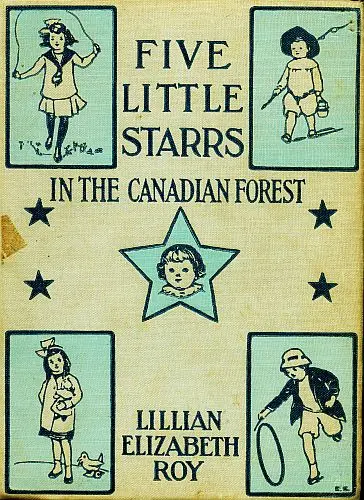
"Five Little Starrs in the Canadian Forest" by Lillian Elizabeth Roy is a children's adventure novel written in the early 20th century. The story centers around the Starr family— particularly the lively twins, Don and Dot—as they prepare for and experience life in a lumber camp in Canada during the winter. The narrative highlights themes of exploration, family bonding, and the wonders of nature as the children engage with their new environment. The opening of the story introduces the Starr family as they travel to the lumber camp aboard a local train, where their excitement is palpable despite the discomfort of the ride. Mr. and Mrs. Starr entertain their children, who exhibit curiosity and enthusiasm for the adventure that awaits them. As they arrive at the unfamiliar town, they are greeted by friends, setting the stage for their winter journey into the Canadian wilderness. The initial chapters establish the family dynamics, the children’s personalities, and foreshadow the various adventures and challenges they will face in the lumber camp, from interactions with lumbermen to encounters with wildlife.
Introduction adapted from the source catalogue; source summaries may be automatically generated.
Free to read · English · 25,309 words · No account needed
MAKE TIME FOR A GOOD BOOK
On by default. Untick to stop anonymous reading totals. Each page counts after 10 seconds in view. How this works.
Anonymous counting is on unless you have switched it off.
"They have been cutting out rough roads from our timber to the river, and have taken their dinner in pails, as it is too far for them to come to camp and then return afterward," said Mr. Starr.
"What river, Daddum?" asked Don, quickly.
"The river down which the logs float in the spring," said Mr. Starr.
"Do you own the river?" asked Dot, wondering how much of the earth her
father possessed.
"We own the right to use it for our logging business," replied Mr. Starr, and smiled at his little girl's disappointed look.
"Why do they cut roads, Daddum? Aren't there any ready made that you can
use?" asked Dot.
"Not in the forests, Dot. We have to break out roadways so the heavy skidding and loading machines can go in among the trees and lift the cut timber up and on the sledges that will cart it down to the water," explained Mr. Starr.
"You will soon be able to see the way it has to be done and then you will understand better," added Mr. Latimer.
"When can we see--this afternoon?" asked Don, impatiently.
"Maybe you will have time to go with me directly after dinner," hinted
Mr. Latimer.
"Yes, yes! Of course we will, 'cause we don't begin lessons 'till Monday, you know," exclaimed Don and Dot together.
The rice pudding was almost forgotten that day, so eager were the children to go and see the interesting work of the men of the camp.
They trudged along the newly cut road which they had travelled over in the morning, but, after walking for half a mile, Mr. Latimer left the road and went along a narrow trail that ran into the thick forest. Walking along this for a mile or so, the children heard the sound of chopping, and crashes every now and then, and the shouting of men to each other. In about ten minutes' time they could see moving figures between the thick trunks of trees, and soon came to the place where the road was being broken out.
Here, indeed, was activity and exciting work. The children were
cautioned about the danger.
Don watched with every faculty strained to its utmost. He saw an opening through the thick growth of pine trees running far into the depths of the forest. In the opposite direction, where the men were working, the forest remained intact.
"Guess that's the road Daddum said they were breaking out," he
commented, to the other children.
"An' that's what they have to cut down to get out to the river," added Paul, pointing toward the thick trees on the other side.
Your reading position is saved on this browser. Take it to another device with a library code. Reading pages adapt to text, rather than matching a printed edition.
Lillian Elizabeth Roy
Lillian Elizabeth Roy
Lillian Elizabeth Roy
Lillian Elizabeth Roy
BEHIND THE BOOK
This eBook is for the use of anyone anywhere in the United States and most other parts of the world at no cost and with almost no restrictions whatsoever. You may copy it, give it away or re-use it under the terms of the Project Gutenberg License included with this eBook or online at www.gutenberg.org. If you are not located in the United States, you will have to check the laws of the country where you are located before using this eBook. Read the source licence.
The original source file, including credits and licence, is retained by this library. Request an original-format copy at no charge. Please include the book title and Project Gutenberg identifier #31786.
KEEP YOUR CURIOSITY GOING
Coulson Kernahan

Maurice Baring
Frances Wright
Cécile Tormay

Frederic Jesup Stimson

W. H. P. (William Henry Pope) Jarvis