
Whitewash
Horace Annesley Vachell
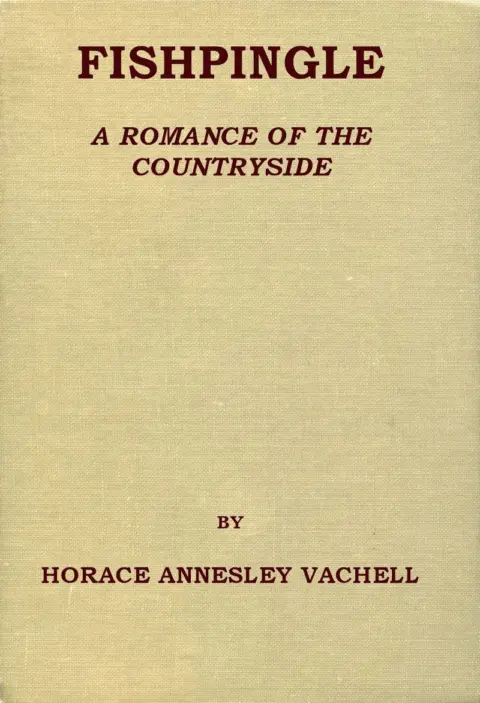
THE CLASSIC COLLECTION · 1917
"Fishpingle: A Romance of the Countryside" by Horace Annesley Vachell is a novel written in the early 20th century. This work captures the essence of rural English life, centered around the character Benoni Fishpingle, who serves as the butler and steward at Pomfret Court. The narrative delves into themes of estate management, class structures, and the intricacies of romance and relationships in the countryside, particularly focusing on the connections between the landowning gentry and their loyal servants. The opening of the novel introduces the reader to the unique atmosphere of the Pomfret estate through the room of Fishpingle, whose meticulous nature is highlighted through his interactions with the underfootmen Alfred and Prudence. Their playful banter reveals much about their personalities and the social dynamics of their setting. As Fishpingle, a man of extensive knowledge about the estate, engages in light-hearted yet insightful conversations with the Squire, Sir Geoffrey Pomfret, the groundwork for larger themes surrounding duty, love, and the challenges facing traditional landowners is established. The narrative hints at the evolving societal landscape, blending humor with a thoughtful critique of class and agricultural issues within England.
Introduction adapted from the source catalogue; source summaries may be automatically generated.
Free to read · English · 78,761 words · No account needed
MAKE TIME FOR A GOOD BOOK
On by default. Untick to stop anonymous reading totals. Each page counts after 10 seconds in view. How this works.
Anonymous counting is on unless you have switched it off.
“Horrible!” the Squire agreed.
“Your fences and gates are in apple-pie order.” She smiled at the Squire, who beamed back at her.
“You notice these trifles, my dear?”
His tone was almost paternal.
“At once,” she answered crisply. Then she turned to Lady Pomfret. That shrewd observer detected a subtle change in her manner, a caressing deference slightly feline.
“Don’t you think, Lady Pomfret, that we are sharper than men in noticing significant trifles?”
“You are, I am sure.”
“A lone orphan has to be. Perhaps you disregard things and focus your attention upon persons?”
“Yes; I think I do.”
Lady Margot turned to Lionel, addressing him quite easily, as if she had
known him for years.
“Have you a cigarette? My case is in the motor.”
“If you like Turkish.”
She lay back, puffing contentedly, surveying the Pomfrets through half-closed eyes. They were sitting under a big walnut tree, said to be a sanctuary from gnats and midges. The great lawn, bordered by beeches, stretched far away into the distance till it melted into the park. Beyond the undulating park and below it lay the Avon valley now embellished by a soft haze—the finest view in Wiltshire, according to the Squire. Visitors praised this view. Lady Margot, guessing as much, said nothing. However, her attitude, her air of being contentedly at home, might be considered better than any compliment. She murmured lazily:
“How delicious it is here!”
She blew a tiny circle of smoke, and watched it melt away, smiling like a child. The Squire said heartily:
“We shall measure your approval by the length of your visit. A
fortnight, at least.”
Presently Fishpingle and Alfred approached to take away the tea. Lady Margot greeted the butler by name.
“How do you do, Mr. Fishpingle?”
“I am quite well, my lady, thank you.”
She smiled pleasantly at Alfred, who knew his place and remained impassive. Her cleverness in speaking to an old retainer delighted Sir Geoffrey. He glanced at his son, as if saying, “She’s the right sort, you see—a pleasant word for everybody.”
As the men-servants moved away, she said to Lionel:
“Your butler is a dear.”
“You remembered his name,” chuckled the Squire. “That pleased him. I could hear the old boy purring.”
“But who could forget his name? Where did he get it? Is it a local
name?”
The Squire stiffened. Lady Margot perceived that she had been
indiscreet. He answered formally:
“It is not a local name. How he came by it I can’t tell you.”
Your reading position is saved on this browser. Take it to another device with a library code. Reading pages adapt to text, rather than matching a printed edition.
Horace Annesley Vachell
Horace Annesley Vachell
Horace Annesley Vachell
Horace Annesley Vachell
BEHIND THE BOOK
This eBook is for the use of anyone anywhere in the United States and most other parts of the world at no cost and with almost no restrictions whatsoever. You may copy it, give it away or re-use it under the terms of the Project Gutenberg License included with this eBook or online at www.gutenberg.org. If you are not located in the United States, you will have to check the laws of the country where you are located before using this eBook. Read the source licence.
The original source file, including credits and licence, is retained by this library. Request an original-format copy at no charge. Please include the book title and Project Gutenberg identifier #50255.
KEEP YOUR CURIOSITY GOING
Coulson Kernahan

Maurice Baring
Frances Wright
Cécile Tormay

Frederic Jesup Stimson

W. H. P. (William Henry Pope) Jarvis